REVIEW · SINGAPORE
Exploring Singapore’s Forgotten Hills
Book on Viator →Operated by TangTang Adventures · Bookable on Viator
Singapore has quieter hills than you think. This 3.5-hour morning walk links Southern Ridges views with Labrador mangroves and a 140-year-old coastal fort, all in one compact route. It’s a smart way to see how Singapore’s city life grew from small-coast beginnings into a major transshipment hub, without spending the whole day indoors.
What I really like is how the scenery and the stories go together. You get a short climb up Mount Faber via Marang Trail for harbor-and-sea panoramas, then easy-to-moderate trail time along the Southern Ridges with nature and built heritage in the same field of view. I also like that the guide keeps the history grounded and answer-ready, with topics that can range from local flora and fauna to British colonization, WWII Japanese occupation, and even how modern port life fits into the bigger picture.
One thing to consider: this is outdoors walking with stairs and humid conditions starting early, so plan for a moderate fitness pace. If weather turns rough, the tour can be rescheduled or refunded, so have a flexible morning.
In This Review
- Key highlights worth planning around
- Why the Southern Hills Feel Like a Different Side of Singapore
- Mount Faber Park via Marang Trail: Short Climb, Big Payoff
- Southern Ridges: Where Trail Nature and Built Heritage Meet
- Henderson Waves: Singapore’s Highest Pedestrian Bridge for a Quick Breather
- Labrador Nature Reserve: Mangroves, Then the 140-Year Coastal Fort
- The Guide Makes It a Real Story, Not Just a Walk
- Value Check: What $64.38 Buys You
- Getting There Smoothly: Harbourfront Start and Labrador Park End
- Fitness, Weather, and Pace: Know What You’re Signing Up For
- Should You Book the Forgotten Hills Walk?
- FAQ
- How long is the Singapore Forgotten Hills walking tour?
- What does the tour cost?
- Where do I start and where does it end?
- Is this tour suitable for beginners?
- Do I need to pay admission fees for the stops?
- How big is the group?
- What if the weather is poor?
Key highlights worth planning around
- Mount Faber Park + Marang Trail climb for one of the best harbor views in the south
- Southern Ridges walk mixing trail nature with older built heritage you can spot and talk through
- Henderson Waves on Singapore’s highest pedestrian bridge (a big photo stop in just 15 minutes)
- Labrador Nature Reserve mangroves in one of Singapore’s nature reserves
- A 140-year-old military coastal fort connected to protecting Singapore Harbour
- Small group limit (max 8) for a quieter feel and more back-and-forth with the guide
Why the Southern Hills Feel Like a Different Side of Singapore
I love when a city tour gives you a new angle fast, and this one does. Instead of hitting the usual skyline-and-shopping route, you spend the morning in southern Singapore where forest edges, mangroves, and “old coast” defenses sit surprisingly close to modern infrastructure.
The big idea here is the way Singapore is often described as a City in Nature—but you don’t just hear that slogan. You walk through parts of the city where nature is part of the everyday system. Then you connect that to the human story: how the area started as small coastal communities and how Singapore’s strategic position shaped what was built here.
And because the group stays small, you’re not stuck shouting over other people at the best viewpoints. You can ask why certain trees grow where they do, or what a former fort location has to do with today’s harbour. That mix of “look closely” and “understand why” is where the value shows up.
You can also read our reviews of more tours and experiences in Singapore.


Mount Faber Park via Marang Trail: Short Climb, Big Payoff
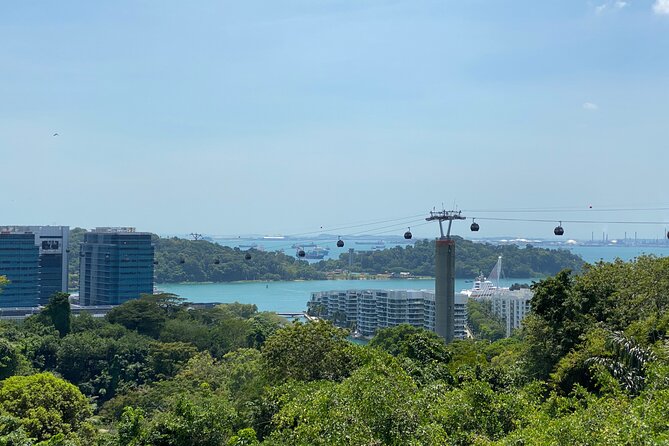
Your first segment starts at Harbourfront and heads toward Mount Faber Park. This is the “wake-up with a view” part. You’ll take a quick climb via Marang Trail to reach the highest point along the Southern Ridges trail, and the reward is a panoramic look over Singapore’s harbour and the southern seas.
What makes this stop useful is the timing and the angle. Early in the morning, the light tends to be softer, and the sea-and-harbour scenery reads better than it does at midday. Even if you’re not a hardcore hiker, the climb is meant to be manageable, not heroic. It’s the kind of ascent that gets your legs working without turning the whole tour into a sweat-fest.
Practical tip: wear shoes with solid grip. The route includes trail sections and stairs, and the ground can feel slick when the weather is damp. Bring water too; you’ll want it before you even reach the ridge views.
Southern Ridges: Where Trail Nature and Built Heritage Meet
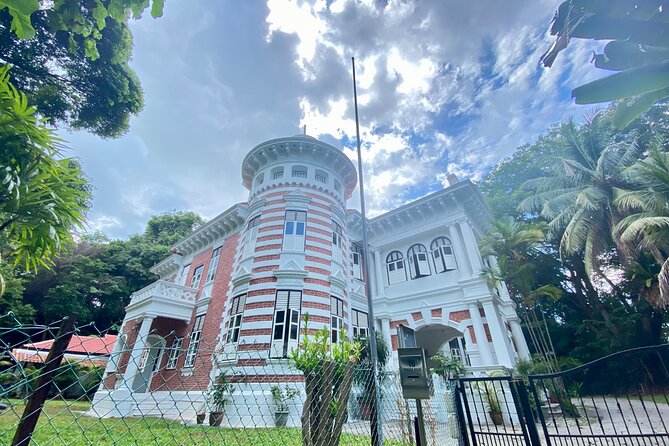
After the first viewpoint hit, you transition into the Southern Ridges portion. Expect around 1.5 hours of walking along a section of the trail, with the focus on both nature and built heritage.
This is a smart stretch for two reasons. First, you’re already warm from the climb, so the pace becomes easier to settle into. Second, the guide can point out what you’re actually seeing—tree forms, plant life, and man-made features—so you’re not just staring at greenery. The path works like an outdoor classroom that doesn’t feel like a classroom.
You’ll also notice that southern Singapore’s “heritage” isn’t only buildings. It’s how the terrain was shaped and used, and how the coast and harbour influenced what was constructed nearby. That context matters because later, at Labrador, the military story lands with more weight.
If you’re thinking about photo timing: try to pace yourself so you’re not always stopping at random. The trail is scenic, but you’ll get better results if you take your photos at key transitions—especially when the view opens up.
Henderson Waves: Singapore’s Highest Pedestrian Bridge for a Quick Breather
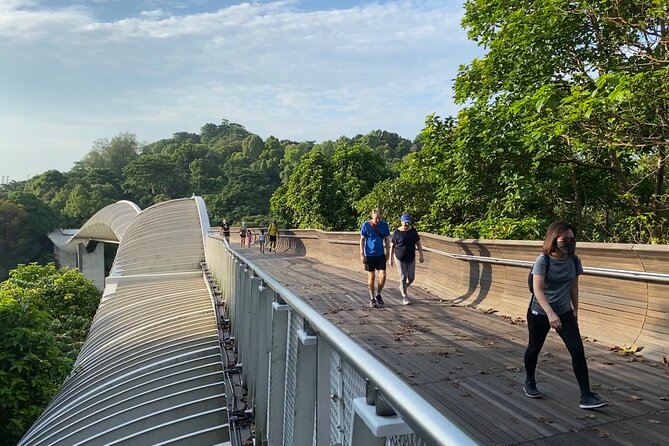
Next comes Henderson Waves, where the stop is short—about 15 minutes—but it’s a major moment on the route. Henderson Waves is the highest pedestrian bridge in Singapore, and it’s widely loved for how it looks: a wave-like structure that frames views in a very Singapore way.
This is a good “reset” stop. You get a chance to look down, look out, and let your legs recover while still staying in motion. It’s also where the air can feel a bit freer, because you’re higher up than most of the surrounding walking paths.
Practical tip: if you care about photos, bring your camera strap so you can keep moving without juggling gear. Bridges are exposed enough that wind can show up, especially when the humidity drops a little.
Labrador Nature Reserve: Mangroves, Then the 140-Year Coastal Fort

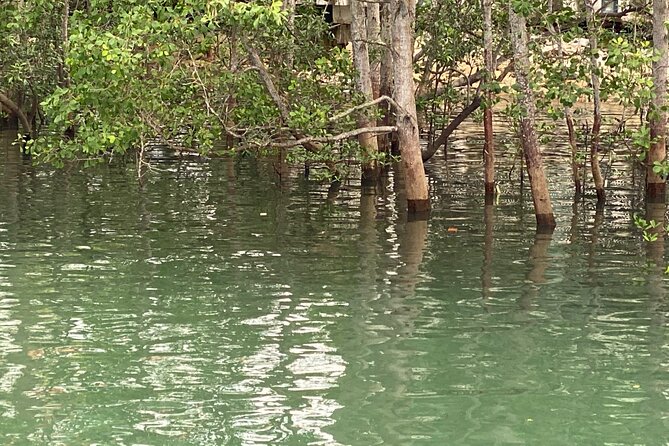
Labrador is the heart of the “forgotten hills” theme. You’ll spend about 45 minutes in Labrador Nature Reserve, one of Singapore’s nature reserves and known for mangrove wetlands in the south that you don’t encounter everywhere.
This part works well because mangroves are not just scenery. They’re an ecological system tied to the coast and to how shorelines handle storms, tides, and water quality. Even if you’re not a nature expert, the walk gives you a reason to pay attention instead of treating the greenery as background.
Then comes the historical layer: you’ll connect the mangrove setting with the story of a military fort built to protect Singapore Harbour—about 140 years old and described as a coastal artillery fort. The best value here is how the guide connects why the fort was placed where it was. When you’ve just spent time noticing the coastal geography around the nature reserve, the fort story makes more sense.
Practical tip: go slow on this final stretch. You’ll likely be tired by then, and it’s easy to rush and miss the small details that make Labrador special. If you’re traveling with kids, this is a great place to let them pause and watch how the environment changes minute to minute.




The Guide Makes It a Real Story, Not Just a Walk
This tour stays small—max 8 people—which helps a lot. It’s not just “quiet.” It also means your questions don’t get lost.
From what I’ve seen in how guide-led walks are handled, the biggest standouts here are the guide’s patience and preparation. People have described guides like TC and Tang as meticulous, with a strong narrative flow that can jump from plants and trees to Singapore’s education system (including K-12) and then into bigger historical periods like British colonization and WWII Japanese occupation. That range matters because it mirrors how Singapore itself grew in layers.
You’ll also get practical context for what you’re walking past. The guide can help you connect the trails to the broader city story—how today’s port and transshipment role relates to Singapore’s geography and strategic need to protect its harbour. In other words, the walk isn’t random; it’s a map you can understand.
If you get the kind of guide who answers everything, that’s the difference between “pretty views” and a tour you’ll remember for years.
Value Check: What $64.38 Buys You
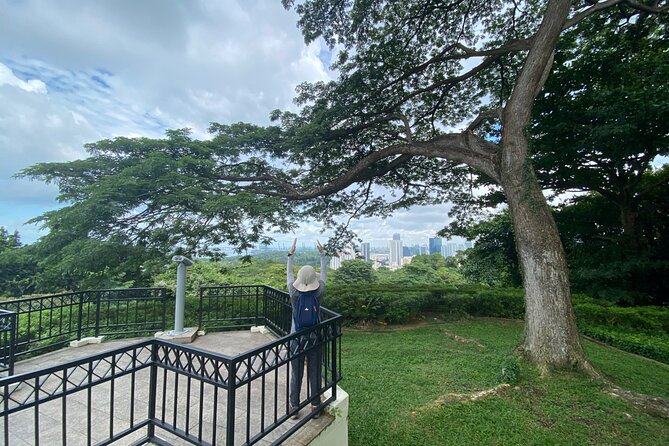
At $64.38 per person, this isn’t a cheap “just a guide walks and chats” situation, so it helps to think about value in three parts.
First, your time is focused: about 3.5 hours, starting at 8:30 am. That length is long enough for real story time and several meaningful stops, but short enough that it doesn’t eat a full day.
Second, the viewpoints are accessible without paid attractions on your end. The stops listed for Mount Faber Park, Southern Ridges, Henderson Waves, and Labrador Nature Reserve are all shown as admission-free in the tour details. That makes your money go toward the guiding and the curated route, not entry fees.
Third, the group size is small. You’re paying for fewer people competing for the guide’s attention. When you combine that with the guide’s history and nature explanations, the price starts to look reasonable rather than overpriced.
One scheduling note: the tour is often booked about 46 days in advance on average. If you have fixed dates, I’d book earlier so you’re not choosing between “this tour” and “whatever’s left.”
Getting There Smoothly: Harbourfront Start and Labrador Park End
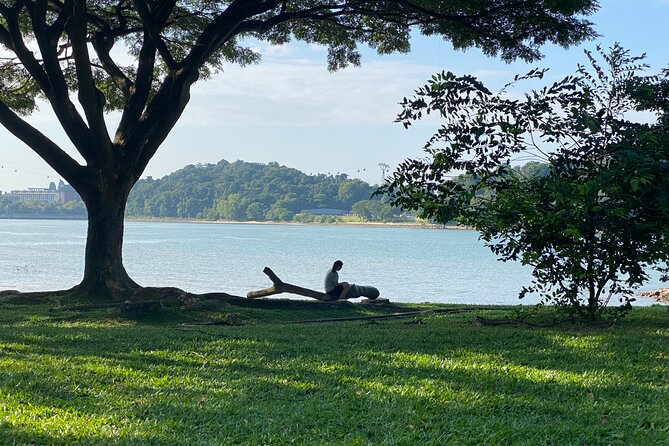
The tour begins at Harbourfront (start time 8:30 am). That’s a practical choice because Harbourfront is well connected, and you can usually get there without long taxi rides.
You’ll end outside Labrador Park MRT station on the Circle Line. Ending there matters because it gives you an easy exit from the “south hills” area. You’re not forced to backtrack to where you started, and that makes the 3.5 hours feel even more efficient.
My advice: arrive a little early at Harbourfront so you can meet up calmly. On humid mornings, a rushed start turns into a sweaty walk that’s less fun than it should be.
Fitness, Weather, and Pace: Know What You’re Signing Up For
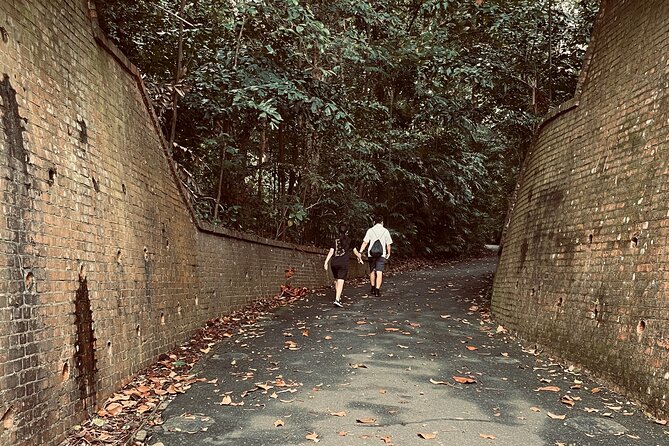
This walk is described as needing moderate physical fitness. That usually means you’re dealing with stairs and uneven or outdoor trail surfaces, plus the regular Singapore challenge: heat and humidity.
It also runs on good weather. If conditions aren’t right, the tour can be canceled and you’ll be offered another date or a full refund. That’s actually a good sign. It means you’re not paying for an “always happens no matter what” plan that becomes unsafe or miserable.
Who should go? This tour fits well if you like:
- Scenic walking that’s not too long
- A mix of nature and military/coastal history
- Learning through a route, not through a museum room
If you want a gentle stroll only, you might find the steps and ridge sections a stretch. But if you can handle a moderate pace and you’re okay with pauses for photos, you’ll get a lot out of it.
Should You Book the Forgotten Hills Walk?
Yes, if you want Singapore beyond the usual postcard routes. This is a well-shaped morning that pairs harbour views, ridge trail scenery, and mangrove ecology with a real coastal defence story—without turning the day into a marathon.
Book it especially if you care about learning details you’d miss on your own, or if you like tours where the guide can handle history questions and nature questions without sounding like they’re reading a script.
Skip it if you can’t manage stairs or if you’re traveling with limited mobility and need a flat, fully accessible route. Also, plan around weather and humidity. A morning hike in Singapore is best when the sky cooperates.
FAQ
How long is the Singapore Forgotten Hills walking tour?
It runs for about 3 hours 30 minutes.
What does the tour cost?
The price is $64.38 per person.
Where do I start and where does it end?
You start at Harbourfront and end outside Labrador Park MRT station on the Circle Line.
Is this tour suitable for beginners?
It’s suggested for people with moderate physical fitness. Expect stairs and outdoor walking.
Do I need to pay admission fees for the stops?
Admission for the listed stops is shown as free in the tour details.
How big is the group?
The maximum group size is 8 travelers.
What if the weather is poor?
The experience requires good weather. If it’s canceled due to poor weather, you’ll be offered a different date or a full refund.
If you tell me your travel dates and whether you’re more into nature, history, or both, I can help you decide if this morning walk fits your itinerary (and what else to pair with it nearby).