REVIEW · SINGAPORE
Singapore – Albatross Speedboat Adventures Cruising in Sentosa
Book on Viator →Operated by Tall Ship Royal Albatross · Bookable on Viator
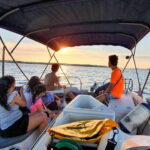
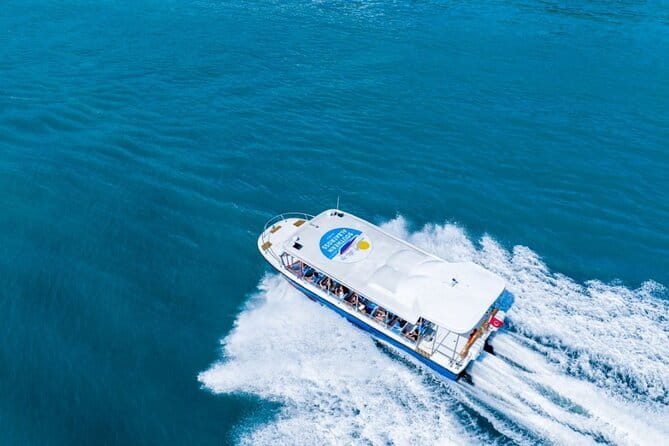
One hour feels like a lot in Singapore heat. This Albatross speedboat loops past the southern islands with sea-spray speed and skyline views.
I also love the mix of fun and information: you’re not just riding waves, you’re hearing the backstories behind the coast.
The staff are another big win. You get help getting settled, and the team will even take your picture for you, plus a small onboard bag that includes bottled water, a raincoat, and wipes.
The only drawback is time: it’s about 60 minutes on the water, so this is sightseeing by boat more than island-hopping.
In This Review
- Key Things You’ll Notice on This Sentosa Speedboat Ride
- Why This 60-Minute Speedboat Works So Well in Singapore
- S.E.A. Aquarium Start: Easy On, Easy Off
- The Big Views: Southern Islands and the Sentosa Coastline
- Long Ya Men (Dragon’s Tooth Gate): Where Travel Accounts Meet Modern Coastlines
- Lazarus Island: Prison-Era Shadows and a C-Shaped Beach
- Kusu Island: Temples, Shrines, and Why Pilgrimage Seasons Matter
- Saint John’s Island: The Penal Settlement That Helped Shape Singapore’s Maritime Role
- Sisters Islands and Tekukor: Legends and a Rare Permission Story
- Safety, Seating, and Who This Cruise Fits
- Price and Value: What $35.85 Gets You
- Practical Tips to Enjoy It Without Stress
- Should You Book This Sentosa Speedboat Cruise?
- FAQ
- How long is the Albatross Speedboat cruise?
- What is the price per person?
- Where do I meet and where do I get my ticket?
- What is included in the ticket price?
- What is not included?
- Are there age or seating requirements for children?
- Who is the cruise not recommended for?
- Is there a group size limit?
Key Things You’ll Notice on This Sentosa Speedboat Ride
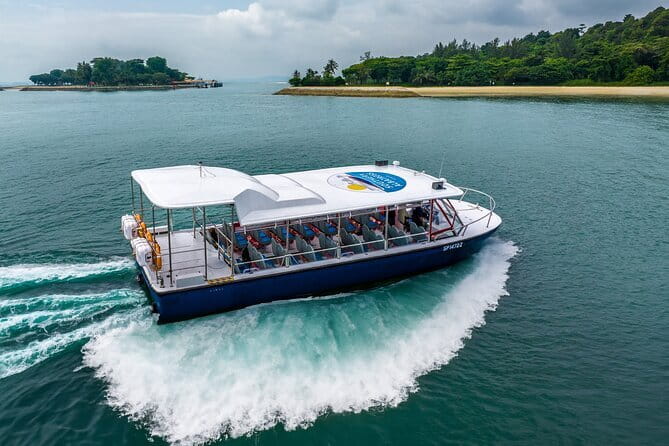
- A fast, one-hour loop around Singapore’s southern island area, starting and ending at S.E.A. Aquarium
- City skyline views from the port waters, with lots of open-air time to see what’s where
- Friendly, helpful crew who will get you set quickly and assist with photos
- History commentary as you pass key sites, including Dragon’s Tooth Gate and the penal era islands
- Light “survive the ride” support, with bottled water plus a raincoat and wipes
- Clear safety rules for kids and a weight limit, with extra considerations for pregnant guests and some adults
Why This 60-Minute Speedboat Works So Well in Singapore
Singapore is fun, but it can also be sweaty. This trip gives you a quick break from the “stand in the sun” style of sightseeing. In about an hour, you get speedboat thrills and big views without needing a half day.
The value here is that you’re seeing a lot of coastline while staying in a simple format. A max group size of 50 travelers also helps keep it from feeling like a cattle run. You’re on a modern, purpose-built speedboat ride for one concentrated window of time, which makes it easier to fit into a busy itinerary.
And yes, the ride is meant to feel exciting. The description is all about high speed over waves, wind in your hair, and the adrenaline of being out at sea. If you’re the type who likes your tourism moving (not museum-paced), this fits.
The other reason it works: the route includes island points with serious stories behind them. You see Sentosa’s famous area from a different angle, then you shift toward quieter islands with religious sites, penal settlement history, and legends tied to the water. It turns a simple boat ride into a guided “how this coast became what it is today” experience.
You can also read our reviews of more tours and experiences in Singapore.
S.E.A. Aquarium Start: Easy On, Easy Off
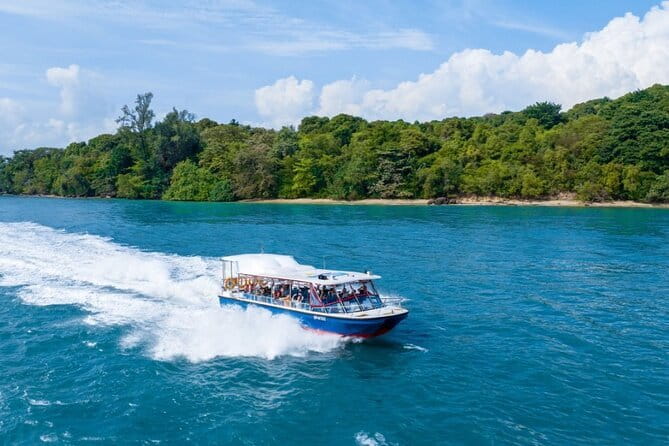
The cruise starts at S.E.A. Aquarium, 8 Sentosa Gateway, Sentosa Island, Singapore 098269. Ticket redemption is at the same place, and the activity ends back at the meeting point.
I like this setup for one main reason: it reduces decision fatigue. You’re not piecing together multiple transit steps or guessing where the boat departs from. You show up at the aquarium area, redeem your ticket, and get moving.
It’s also described as being near public transportation, which matters if you’re bouncing between Sentosa and the rest of the city. If you’re planning around Singapore’s heat, being able to reach your departure point with less hassle is a real plus.
One practical note: you’ll want to be ready to board with the right attitude for a speedboat. You’re not going to linger; this is a timed ride. Treat it like an attraction with a start time, not like a casual stroll.
The Big Views: Southern Islands and the Sentosa Coastline
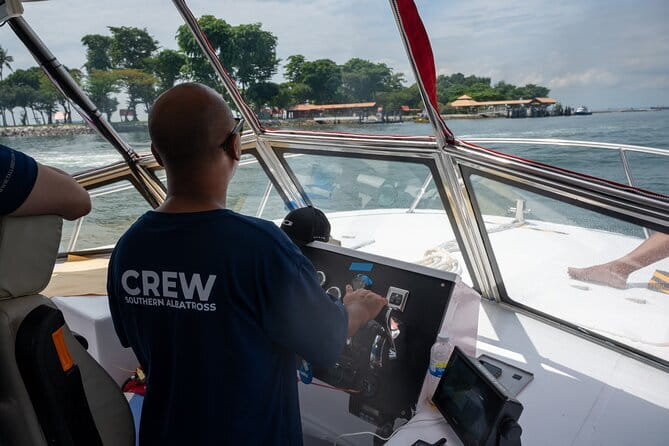
From the start, you’re in the Sentosa / southern islands zone. Sentosa itself is the busy hub on the south side, with beaches, attractions, and that famous mix of resort life and things to do. From the water, you get a wider sense of how that area sits along the coastline.
Then the scenery changes as you head farther into the southern islands group. The southern islands are eight isles south of the main island, and the vibe shifts toward tranquility and biodiversity. Even if you never set foot on those beaches, you can feel the difference from the way the coast opens up and the shoreline looks less built-up.
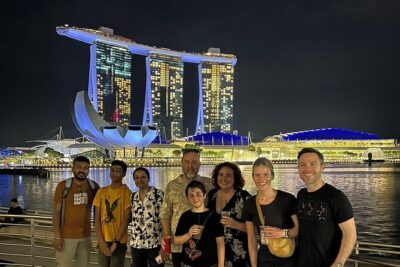
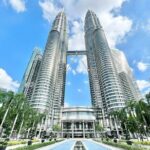
One of the best parts is the Singapore City skyline view from the port waters. When you’re used to seeing the skyline from land, seeing it with the water framing it changes the perspective fast. It also helps you connect what you’ve been seeing around Marina Bay with the “working coastline” around Sentosa.
A speedboat isn’t quiet. You’ll hear the engine and feel the wind, so this is not the type of trip where you’ll focus on reading every detail like a walking tour. Instead, think of it like fast, cinematic sightseeing with guided explanation layered in.
Long Ya Men (Dragon’s Tooth Gate): Where Travel Accounts Meet Modern Coastlines
One of the most interesting “wait, what is that?” moments comes from the Long Ya Men, known in Chinese as Dragon’s Tooth Gate.
You’ll hear how travel writer Wang Dayuan described journeys around the region, and historians link his account to Singapore and nearby waters, including the old Singapore Strait and Blakang Mati. The Dragon’s Teeth reference points to specific rock formations tied to navigation and shoreline geography.
Here’s the practical takeaway for you: the coastline you’re seeing today is not just scenery. It’s the result of changes made for shipping and safety. The Dragon’s teeth are described as likely referring to Batu Belayar sail rock in Malay. That rock has a connection to what’s now replicated at Labrador Park, plus a promontory near what is now Fort Siloso.
Then you get the “why it looks different” story. High ground was removed during construction of the fort by the British in the 19th century, and Batu Belayar was demolished to help navigation around Keppel Harbor.
Even if you’re not a history nerd, that kind of context makes the ride feel smarter. You start looking at points of land and rock formations with purpose, not just as shapes in the sea.
Lazarus Island: Prison-Era Shadows and a C-Shaped Beach
Lazarus Island is one of those places where the name alone doesn’t give away its past. It was once known as Pulau Sakijang Pelepah, which is described as meaning island of a deer and palms in Malay. Later, in the late 19th century, it held prison confinement sheds.
Then came a dramatic turning point: after a prisoner’s daring escape, those prison sheds were abandoned.
Today, what you want to know is what you’ll see from the boat area: Lazarus Island is known for a clean white sandy beach on a C-shaped lagoon. That “best kept secret” framing is basically telling you it’s calmer and less overdeveloped than the big-name parts of Sentosa.
There’s also a practical marine detail included in the story: it’s one of the few spots in the southern islands where private yachts and boats can anchor. That matters because it suggests the water conditions there are suited to relaxing time afloat, even though this specific activity is strictly a cruise.
The only consideration here is simple: you’re not landing. You’re experiencing Lazarus as a view, not as an on-foot beach day. If your dream is lying on that sand for hours, this isn’t that trip.

Kusu Island: Temples, Shrines, and Why Pilgrimage Seasons Matter
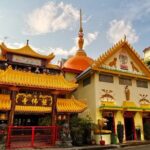
Kusu Island brings a different tone to the cruise. It’s home to a Chinese temple and three Malay keramat shrines, drawing thousands of pilgrims each year, especially during the ninth lunar month between September and October.
You’ll also hear that Kusu means tortoise or turtle in the Hokkien dialect, which gives you a sense that place names carry local meaning, not just map labels.
Another detail I found useful for understanding why Kusu feels distinct is its shape-changing past. The island’s size is described as having grown through landfill and reclamation. It was originally about 1.2 hectares, then expanded to about 8.5 hectares by joining with a coral outcrop during the colonial era.
There’s also a quarantine and burial connection. During colonial times, it served as a burial site for immigrants who died while in quarantine on St John’s and Lazarus islands.
Even from the water, this kind of story changes how you interpret the coast. You stop thinking of islands as just pretty shapes and start thinking of them as places with specific roles: worship, pilgrimage, quarantine, and survival.
Just remember: you’ll be passing by, not participating in a festival here unless you happen to match the pilgrimage season on your own.
Saint John’s Island: The Penal Settlement That Helped Shape Singapore’s Maritime Role
Saint John’s Island is where the cruise’s history content gets heavy, but in a meaningful way.
It was once a penal settlement and is strongly tied to Singapore’s early modern era. You’ll hear that Stamford Raffles anchored off the island on 28 January 1819 before heading to mainland Singapore. That’s a striking origin point, because it ties the story of a famous figure directly to the waters you’re riding over.
Then the account shifts to public health and maritime administration. During a period of immigrant influx, the island served as the report boat station for the Marine Department until a cholera epidemic in 1873. That outbreak is linked to 448 deaths.
After that, the island’s role expanded again: it hosted a floating police station, a hospital, and a quarantine burial ground at Peak Island. The scale here is intense, with over 1300 cholera-infected Chinese coolies handled during that time.
Later chapters in the story include political detainees and secret society ringleaders, then conversion into a drug rehabilitation center. By 1975, it became a holiday camp site for schools and students.
Why this matters for you on a speedboat cruise is that it gives the ride weight. You’re moving quickly, but the coastline is not “background.” It’s tied to how Singapore dealt with shipping, immigration, illness, and control.
The drawback for anyone who wants only light entertainment is that you’ll hear about cholera, quarantine, and prison life. If that kind of topic is hard for you, it’s worth knowing up front so you can decide how much you want that tone.
Sisters Islands and Tekukor: Legends and a Rare Permission Story
After Saint John’s, you’ll pass the Sisters Islands, made up of Pulau Subar Darat (Little Sister’s Island) and Pulau Subar Laut (Big Sister’s Island). They’re small, but they come with a legend that sounds like something from the region’s oral storytelling.
The story is about two sisters, Minah and Linah, who vowed to marry two brothers so they could always live together. When news spread, many suitors appeared, but none were brothers. A pirate chief attempted to force Linah into marriage. In an attempt to escape, the sisters drowned in a storm, and the islands that appeared where they perished became known as the Sisters Islands.
You won’t walk on these islands, but hearing the legend while moving past them is a great example of why this cruise isn’t just picture-taking. It gives meaning to what might otherwise look like anonymous shoreline.
Then comes Tekukor Island (Pulau Tekukor), and it has one of the most “only here” stories on the route. Tekukor is rarely visited because special permission is needed. Recently, special authorization was secured to search for giant clams, which is the kind of detail that makes the whole day feel connected to real ongoing island activity.
Historically, Tekukor served as an ammunition dump until the 1980s. The island is described as having rocky cliffs, a lengthy intertidal zone on one side, and reefs encircling its perimeter.
If you like your sightseeing with a little mystery and a little science, this stop is likely the one that stays in your head.
Safety, Seating, and Who This Cruise Fits
A speedboat ride is fun, but it’s still a boat ride with real constraints.
First, this cruise is described as not recommended if you’re over 130 kilograms (286 pounds), if you’re under 8, if you’re elderly, or if you’re an expectant mother.
If you’re bringing young kids, the safety rules are specific:
- Children under 8 must sit in the middle row between adults, wear the provided life jacket, and their parents must sign a waiver.
- Children 8 to 12 are also recommended to sit in the middle row between adults and must be supervised by a responsible adult, with at least a 1 adult to 2 children ratio.
On top of that, service animals are allowed, and most travelers can participate.
From my practical point of view, the most important thing is matching the ride to your comfort level. If you’re sensitive to wind, spray, or motion, this is the kind of activity where you should think twice before assuming you’ll “get used to it.” The whole point is high speed across waves.
Price and Value: What $35.85 Gets You
At $35.85 per person, this isn’t priced like a full-day island excursion. It’s closer to a short attraction that gives you a lot of visual coverage in a small time block.
Here’s what’s included:
- All fees and taxes
- Bottled water
- Royal Albatross Dockside admission (with terms and conditions)
What isn’t included:
- Lunch
- Alcoholic beverages
That means if you’re combining this with other sightseeing, you should plan to eat separately. The upside is that since the ride is about 1 hour, you don’t need to pack a whole day’s logistics around it.
I also think the inclusion value is about more than the water. The small onboard bag mentioned in real-world experience includes a raincoat and wipes. That makes the trip feel more “weather ready,” especially if a sudden shower hits or the sea spray gets annoying.
Finally, the max group size of 50 keeps it from feeling too crowded. For $35.85, that kind of practical organization matters.
Practical Tips to Enjoy It Without Stress
Here are the things that will help you get the most from the ride, based on what the cruise setup emphasizes:
- Arrive with enough time to redeem and get settled at S.E.A. Aquarium at the Sentosa Gateway address. This is a timed experience, not open-ended browsing.
- Dress for wind. The experience is designed around fast movement out at sea, so you’ll feel that breeze even if it’s hot on land.
- For kids, plan for the life jacket and seating rules early. Middle-row seating between adults is required for under-8 children.
- If rain is in the forecast, use the provided raincoat and the wipes from the bag. They’re there for a reason.
- Bring your camera mindset for quick photo chances. With staff support for taking pictures, it helps to be ready when you want your shots of the skyline and coastline.
If you’re doing Singapore with a family, treat this as a “one-hour highlight” activity rather than a long island day.
Should You Book This Sentosa Speedboat Cruise?
Book it if you want speed, sea views, and island stories packed into one hour. It’s especially worth it if you like your tours to move and you don’t want to spend a half day on logistics. The friendly crew, the quick picture help, and the included water plus raincoat and wipes make it feel like a well-thought-out outing.
Skip it if you’re looking for time on land at each island or if you fall into the groups the cruise notes as not recommended (including the over 130 kg limit, under-8 rules, elderly, and expectant mothers). Also skip it if the subject matter around quarantine and penal history would put you off.
If you’re on a first trip to Singapore and want a different angle on Sentosa plus a skyline view, this is one of the simplest ways to get it without over-planning.
FAQ
How long is the Albatross Speedboat cruise?
The cruise lasts about 1 hour.
What is the price per person?
The price is $35.85 per person.
Where do I meet and where do I get my ticket?
You meet at S.E.A. Aquarium, 8 Sentosa Gateway, Sentosa Island, Singapore 098269. Ticket redemption is at the same location.
What is included in the ticket price?
The ticket includes all fees and taxes, bottled water, and Royal Albatross Dockside admission (T&C applies).
What is not included?
Lunch and alcoholic beverages are not included.
Are there age or seating requirements for children?
Yes. Children under 8 must sit in the middle row between adults, wear the provided life jacket, and their parents must sign a waiver. Children 8 to 12 are recommended to sit in the middle row between adults and must be supervised by a responsible adult at a ratio of at least 1 adult to 2 children.
Who is the cruise not recommended for?
It is not recommended for people over 130 kilograms (286 pounds), children under 8, elderly individuals, and expectant mothers.
Is there a group size limit?
Yes. The cruise has a maximum of 50 travelers.