Singapore clicks better one block at a time. This private walk strings together Chinatown, the Civic District, Marina Bay, and Little India, with stories that connect 19th-century roots to how Singapore runs today. I love the temples and their human stories, and I love the pacing—the guide keeps things moving without turning it into a race. One consideration: you’ll walk a lot (and there are steps), so plan for real comfort, not just cute shoes.
I also like how the day is built for orientation. You start in central Singapore, then hit landmarks like Merlion Park and the Marina Bay waterfront, and finish with National Gallery sky-deck views before sliding into Little India’s religious sites and street art. Admissions at the stops listed are free, and that makes the price feel more sensible—your money goes to the guide time and the route, not entry fees.
In This Review
- Key highlights worth your attention
- Why this walking route helps you understand Singapore fast
- Getting oriented: where the tour starts and how the timing works
- The Chinatown-to-Marina Bay arc: what you’ll see and why it matters
- Stop-by-stop: Thian Hock Keng Temple and the origin stories behind early communities
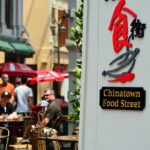
- Maxwell Food Centre: the perfect break (and a taste you’ll remember)
- Pagoda Street and South Bridge Road: learning the city through the people who built it
- Merlion Park and the Singapore River: postcard views with a real meaning
- National Gallery Singapore sky deck: why this stop feels like the modern Singapore lesson
- Marina Bay waterfront: seeing the skyline without losing the plot
- Little India: Sri Veeramakaliamman Temple, street art, and lanes worth slowing down for
- Your guide experience: what makes it feel private (and why people book it again)
- Price and value: what $109 gets you, and when it’s a smart buy
- What to watch for before you book
- Should you book this private Singapore walking tour?
- FAQ
- How long is the walking tour?
- Where does the tour meet?
- Do you get hotel pickup?
- Is the tour private?
- What is included in the price?
- Are meals included?
- Does the tour require admissions or tickets for stops?
- Is it good for people who can’t do lots of stairs?
- Can I cancel for a full refund?
Key highlights worth your attention
- A local guide with street-level context: a third-generation Singaporean guide (often Rachel Chen) ties neighborhood details to wider history.
- Free-entry stops: temples, major landmarks, and the planned walking segments are listed as admission-free.
- Route that works for first-timers and return visits: you cover Chinatown → Civic District/Marina Bay → Little India in one day.
- Food and culture in the middle of the walk: Maxwell Food Centre is a quick reset point with sugarcane juice plus local coffee or tea.
- Pace that accounts for heat: breaks are built in, and the group pace can be adjusted.
Why this walking route helps you understand Singapore fast
Singapore can feel like two different cities. There’s the glossy postcard skyline, and then there’s the older patchwork of communities—Chinese, Indian, and others—forming the place long before the modern waterfront projects.
This tour helps you hold both in your head at once. You’re not just checking boxes. You’re walking through the parts of town where people used to live, work, worship, and trade. And you’re seeing how those patterns shaped the city you recognize now.
I especially liked the way the guide explains the logic of city change. You’ll hear about how Singapore grew from earlier humble beginnings, then how planning and governance shaped the modern city-state. It’s the kind of context that makes later self-guided wandering much easier.
You can also read our reviews of more walking tours in Singapore

Getting oriented: where the tour starts and how the timing works
The most common meeting point is City Hall MRT Station (NS25/EW13) at 150 N Bridge Rd. For shorter formats, it can vary: a 2-hour option meets at Chinatown MRT or Telok Ayer MRT, and that one is without hotel pickup.
Pickup depends on the tour length. For 3, 4, and 6 hours, pickup is offered in central areas and ports, and the tour uses public transport to reach the start point. That matters because you’ll spend more time walking through neighborhoods you can actually explore later, rather than riding around in a private van the whole time.
Your endpoint also depends on duration. For the shorter options (2, 3, and 4 hours), the tour ends near City Hall MRT. The 6-hour option ends somewhere convenient for transport in central Singapore, so you can branch off to dinner, museums, or a nighttime stroll.
The Chinatown-to-Marina Bay arc: what you’ll see and why it matters
This route is basically built around contrasts.
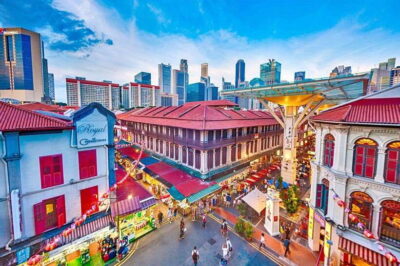
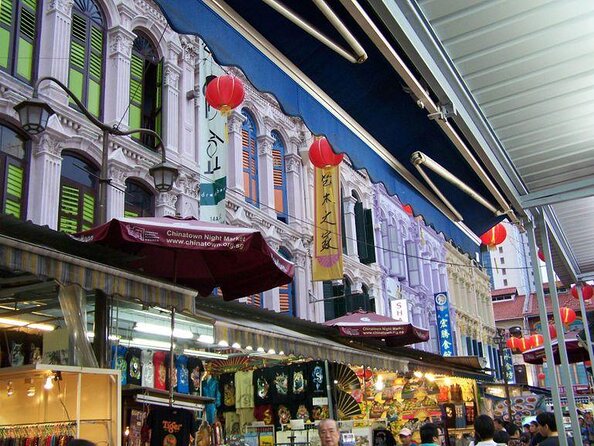
You start with Chinatown’s older street fabric—narrow lanes, places of worship, and the kinds of side streets where you’d normally only stumble in by accident. Then you transition into the Civic District and the polished modern core, where big public buildings and skyline landmarks show Singapore’s newer identity.
After that, you swing toward the waterfront—Merlion Park, the Singapore River area, and Marina Bay viewpoints—where the city’s evolution becomes instantly visible. Then you finish in Little India, which adds another layer: different traditions, different architecture, and different street energy.
If you’re coming for one day and want your bearings, this plan works because it gives you a map in your legs: you physically learn where neighborhoods sit relative to each other.
Stop-by-stop: Thian Hock Keng Temple and the origin stories behind early communities
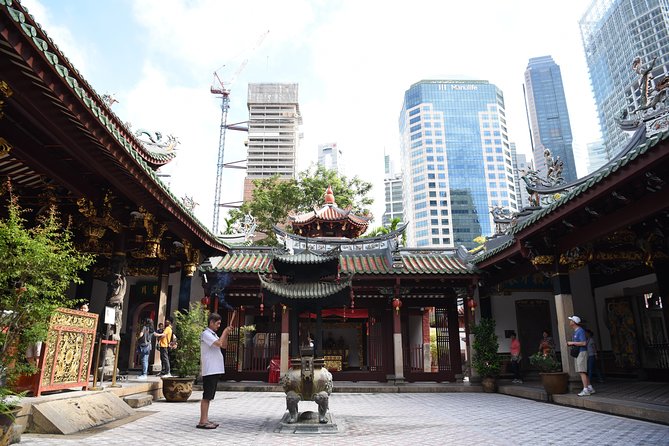
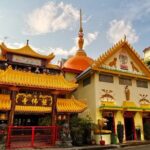
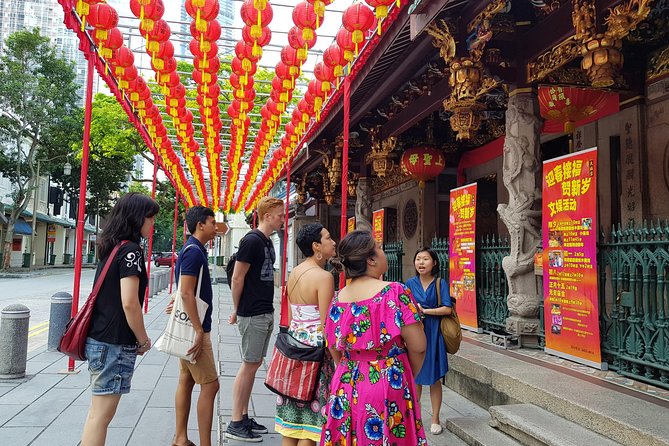
One of the strongest stops on the day is Thian Hock Keng Temple, Singapore’s oldest Hokkien temple. Even if you’re not a temple person, it’s worth your time because you’re watching architecture and immigrant history meet in one place.
The guide frames it as part of how early Chinese communities built social life: worship wasn’t only spiritual. It was also community structure. That context changes how you read the temple—details become meaningful instead of just decorative.
Practical tip: temples are active places of worship, so dress and behavior should be respectful. Go in expecting quiet moments, not a quick photo-and-run.
Maxwell Food Centre: the perfect break (and a taste you’ll remember)
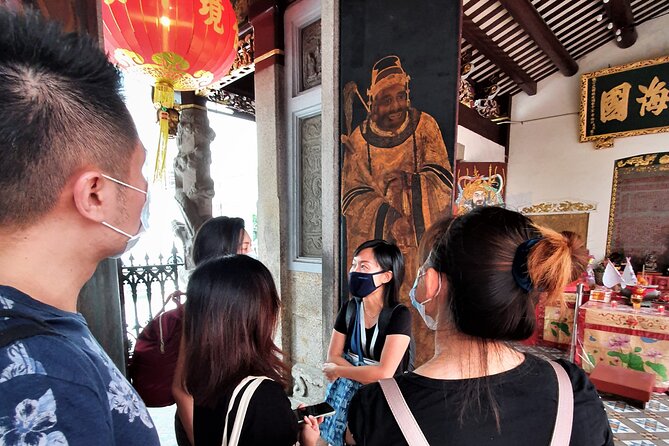
Next up is Maxwell Food Centre, and this is more than a rest stop. It’s a taste of Singapore’s street-food culture at a famous, central location.
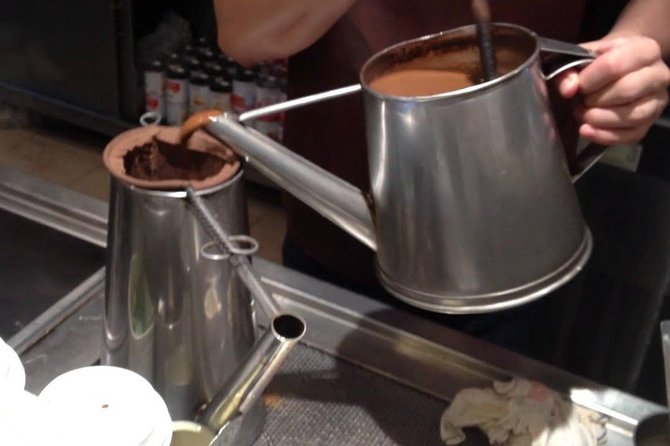
You can grab something fast and refresh your energy: sugarcane juice, or traditional coffee and tea are specifically mentioned. It’s a smart timing choice too—food pauses help you keep walking without turning the rest of the route into a slog.
If you’re the type who usually skips food halls because you don’t know what to order, don’t worry. A guided meal break like this gives you a simple, low-pressure option and keeps the momentum going.
You can also read our reviews of more city tours in Singapore

Pagoda Street and South Bridge Road: learning the city through the people who built it
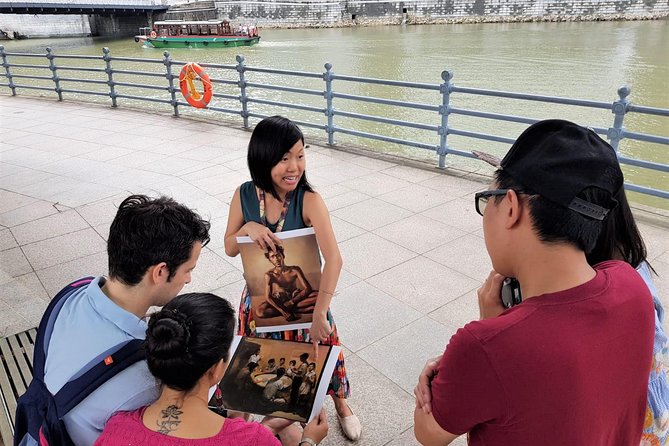
From Maxwell Food Centre, you move into Pagoda Street, which the tour connects to Chinatown’s early immigrant allocation under British settlement. Here the stories shift from big landmarks to everyday life—trades, streets, and the kinds of work people did.
Then you continue along South Bridge Road. This is where the tour adds a layer of visual payoff. You’re walking a major Chinatown thoroughfare while getting views of major temples in the same general area—like Sri Mariamman Temple and Buddha Tooth Relic Temple—plus Pinnacle @ Duxton in the mix.
That blend is the point. Singapore’s neighborhoods aren’t single-theme museums. Different communities live side-by-side, and the city’s layout reflects that history.
Merlion Park and the Singapore River: postcard views with a real meaning
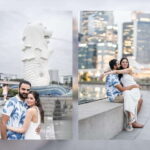
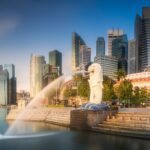
Merlion Park is the classic view for a reason. You’ll see Merlion with sightlines toward Marina Bay, the Civic District, and Raffles Place.
But the tour doesn’t treat it like a selfie wall. It frames the nickname little red dot and connects it to why Singapore stayed a vibrant hub for locals and visitors.
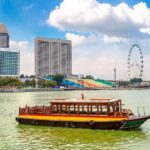
Then you walk to Singapore River, also described as the Belly of the Carp, tied to prosperity. The guide connects the river to its historical role as a thoroughfare for ships docking and trading.
This is where you start noticing something useful: Singapore’s biggest “modern” moments often sit on top of older routes. The river is a great example—waterways shaped the city long before the skyline did.
National Gallery Singapore sky deck: why this stop feels like the modern Singapore lesson
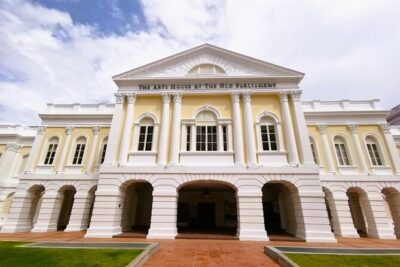
National Gallery Singapore is presented here as an end-stage highlight with a payoff view. The building is described as integrating the former Supreme Court and City Hall buildings, which gives you an instant “then-and-now” contrast in one spot.
Then you get the sky deck overlooking the Civic District and Marina Bay. From up there, the walking logic of earlier stops starts to click: you can see how far you’ve gone, and how the city’s layers line up.
If you like architecture, this stop will land well. Even if you don’t, it’s a clean, easy place to pause and reset before continuing toward Marina Bay.
Marina Bay waterfront: seeing the skyline without losing the plot
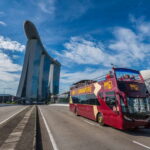
The Marina Bay portion is short but focused: you’re shown Singapore’s iconic waterfront and viewpoints toward Marina Bay Sands, the ArtScience Museum, and the promenade area.
This is where you get the payoff for earlier discussions about planning and transformation. You’re literally standing at the edge of the city’s modern identity, after walking through older districts first.
If you’re traveling in the evening, this is also the area where it tends to feel easiest to extend your day afterward—grab dinner nearby or continue along the promenade at your own pace.
Little India: Sri Veeramakaliamman Temple, street art, and lanes worth slowing down for
The day’s final neighborhood shift is Little India, and it’s one of the best ways to avoid the “only downtown” Singapore experience.
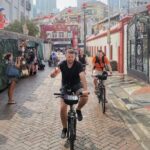
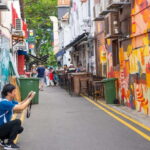
You’ll visit Sri Veeramakaliamman Temple, described as the oldest and biggest Hindu temple in Singapore, and the guide connects it to local culture and traditions. Then you’ll walk through smaller lanes with details like Campbell Lane’s mini gallery and street art.
Even though the stop time is limited, the structure is smart. Temple first gives you a cultural anchor. Then street art and side streets let you see daily life and creative expression in the area.
Your guide experience: what makes it feel private (and why people book it again)
This is a private tour, meaning it’s only your group. That alone can change the whole experience in a city where the walking pace is often dictated by strangers on a schedule.
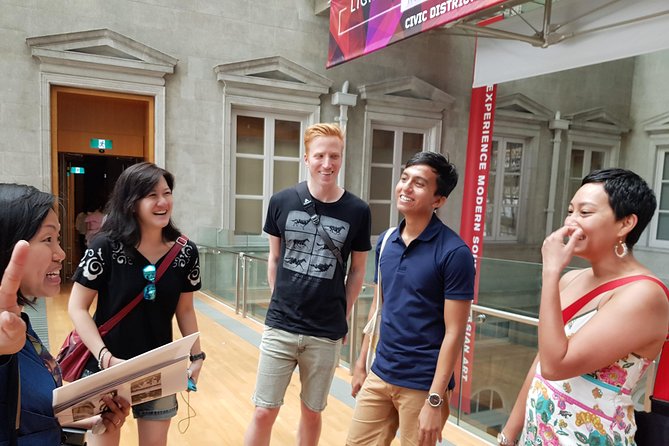
The guide described here is a licensed English-speaking expert guide, and the reviews repeatedly highlight the same pattern: the day feels organized, friendly, and built around real conversation. Many guests specifically mention Rachel Chen by name, and note that she packs a lot in without rushing, while adjusting the plan based on interests and energy.
A couple practical things to expect based on past feedback:
- Q&A on demand: you’ll get answers tied to history, culture, and how Singapore plans for the future.
- Photo help: at least one guest shared that the guide took photos and later sent them along with written explanations of what you saw.
- Pace tuning for weather: one review specifically called out heat/humidity and the timing of cooling stops.
- Route adjustment when needed: one guest mentioned the guide plotted a wheelchair-friendly path by avoiding steps. That’s not a universal guarantee, but it signals flexibility.
One honest drawback: if you’re expecting a very low-effort tour where you barely walk, this isn’t that. Multiple reviews mention a lot of walking and lots of steps. It’s a proper “see the city on foot” day.
Price and value: what $109 gets you, and when it’s a smart buy
At $109.01 per person, you’re paying for a private route with a licensed guide and a tight itinerary across major districts. The value angle here is that the scheduled stops are listed as admission-free, and the tour uses your time efficiently.
So where does the money go?
- Guide time and storytelling (not just pointing)
- Private group attention
- A route that links neighborhoods into one coherent picture
- Included items like guidance and the service/tax noted in the package
When it feels worth it:
- You only have a short window in Singapore and want the big-picture orientation fast
- You want temples and cultural history, not just skyline photos
- You like having someone handle logistics while you focus on walking, asking questions, and taking breaks
When you might question the value:
- If you’re the kind of traveler who already knows the neighborhoods well and doesn’t need an organized narrative
- If your schedule is so tight you can’t handle 2–6 hours of walking comfortably
What to watch for before you book
Here’s the practical side that will help you enjoy the tour more.
Expect walking time to add up. One review mentioned around 18,000 steps during a day, and other feedback praises how much ground is covered. Translation: bring water, wear shoes you trust, and don’t plan to do intense sightseeing right after unless you build in recovery.
Also plan for food to be on you. Meals are not included, and the tour mentions quick food options at Maxwell Food Centre, but you’ll still want to decide what you eat.
And remember: this is religion-and-history in real places. Temples are active, so dress modestly and follow any on-site guidance from staff.
Should you book this private Singapore walking tour?
Book it if you want a clear Singapore story in one day, with Chinatown, Civic District/Marina Bay, and Little India all tied together. It’s also a great fit for first-timers who don’t want to spend days piecing together the city layout, and for repeat visitors who still want the older context behind the modern skyline.
Skip it if you want a mostly scenic, low-walking experience or if you’re only interested in one neighborhood. The route is designed to cover multiple districts, so your day will be active.
If you do book, do yourself a favor: arrive with comfortable shoes and a couple questions ready. Ask about how Singapore grew, how planning shows up in real street life, and why certain places became community anchors. That’s where the tour’s energy really pays off.
FAQ
How long is the walking tour?
The tour runs from 2 to 6 hours depending on the option you choose.
Where does the tour meet?
The common meeting point is City Hall MRT Station (NS25/EW13), 150 N Bridge Rd. For the 2-hour tour, it meets directly at Chinatown MRT or Telok Ayer MRT.
Do you get hotel pickup?
Pickup is offered for 3, 4, and 6-hour tours in central areas & ports. The 2-hour tour has no hotel pickup.
Is the tour private?
Yes. It’s a private tour/activity, so only your group participates.
What is included in the price?
Included: a licensed English-speaking expert guide, guidance for reaching the start point as noted for pickup options, and service and tax. The planned admissions listed at stops are free.
Are meals included?
No. Meals are not included, though there is a stop at Maxwell Food Centre for food and drinks on your own.
Does the tour require admissions or tickets for stops?
The listed stops show admission ticket free in the schedule provided, so you should not expect ticket costs for those sights as planned.
Is it good for people who can’t do lots of stairs?
The tour notes that most travelers can participate, and it’s near public transportation. In one instance, the guide planned a route to avoid steps for a wheelchair, but you should still plan on walking and mention any mobility needs when booking.
Can I cancel for a full refund?
Yes, you can cancel for a full refund if you cancel up to 24 hours in advance of the experience’s start time.