REVIEW · CHINATOWN, LITTLE INDIA & KAMPONG GLAM WALKING TOURS
Streets Alive Singapore Walking Tour (Chinatown Edition)
Book on Viator →Operated by Streets Alive Singapore · Bookable on Viator
Chinatown gets a sci-fi makeover. The Streets Alive Singapore Walking Tour (Chinatown Edition) uses Live Performers plus a Virtual Reality segment to turn everyday streets into a story you can watch and listen to, not just read about. You’ll move through landmark sights in Chinatown while guides connect details to modern Singapore life.
I especially like how the stops are built around big, specific places: Thian Hock Keng Temple, the Singapore City Gallery, and the Buddha Tooth Relic Temple and Museum area. Even better, the major admissions are listed as free, so you’re not constantly breaking the rhythm to pay extra at each site.
One watch-out: this tour is non-refundable and can’t be changed, so if your schedule is shaky, think twice. Also, since the experience relies on a clear meeting point and mobile ticket check-in, I’d make sure you know exactly where to start at Telok Ayer before heading out.
In This Review
- Key Highlights at a Glance
- Chinatown, Plus VR: What Makes This Tour Feel Different
- The 2.5-Hour Route: Temple to City Planning to Relic Temple
- Stop 1: Thian Hock Keng Temple and Its VR Moment
- Stop 2: Singapore City Gallery and the Story of Singapore’s Change
- Stop 3: Sago Lane and Buddha Tooth Relic Temple
- Price and Value: Is $129 Worth It?
- Meeting at Telok Ayer and Finishing at Nanyang Old Coffee
- Who This Tour Is Best For (and Who Should Skip It)
- Quick Practical Tips Before You Go
- Should You Book Streets Alive Chinatown Edition?
- FAQ
- How long is the Streets Alive Singapore Walking Tour (Chinatown Edition)?
- Where does the tour start and where does it end?
- How much does the tour cost?
- Is admission included for the main stops?
- What ticket do I need?
- Is the tour refundable?
Key Highlights at a Glance
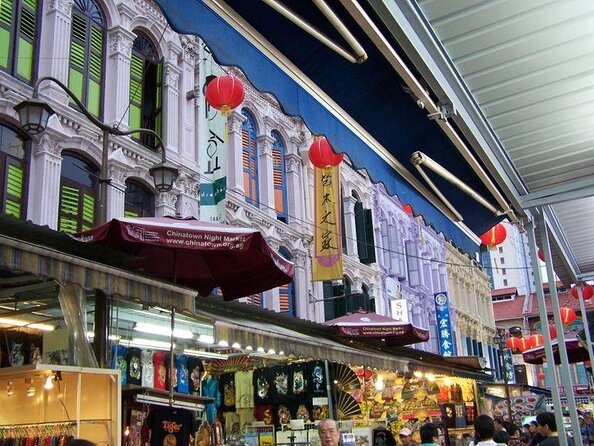
- Live characters you interact with to bring Chinatown stories to life as you walk
- VR at the temple stop to add sound and visuals to what you’re seeing in real time
- Three focused heritage stops with set time slots, so you get an overview without feeling lost
- Admission tickets listed as free at each main stop
- Small group size (max 15) keeps the pace manageable
- Ends at Nanyang Old Coffee so you can keep the Chinatown momentum after the tour
Chinatown, Plus VR: What Makes This Tour Feel Different
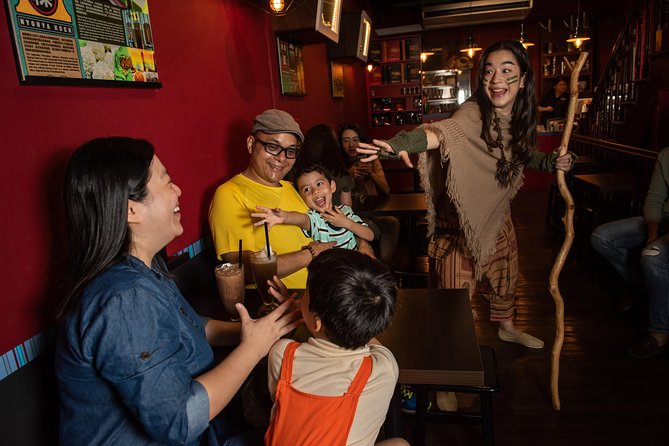
This is not a straight museum walk. The whole concept is to use modern tech and theatrical characters to shape how you experience Chinatown’s landmarks—so the “why” behind the places shows up while you’re standing right there.
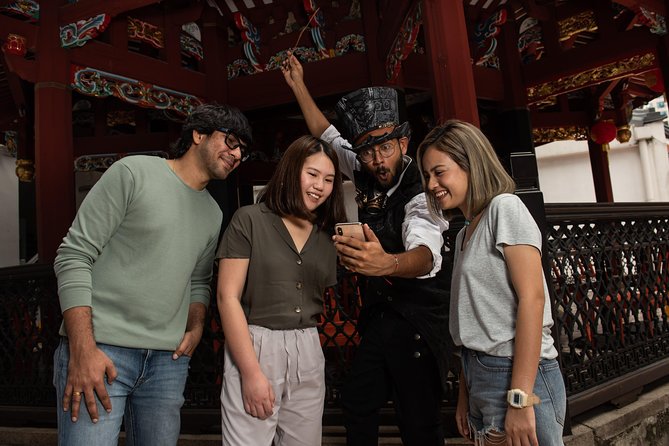
The format works best if you like stories that mix place, symbolism, and everyday life. At the Thian Hock Keng Temple, for example, your guide highlights history, architecture, and symbolic meaning, and then the tour adds a VR moment where you can see and hear more through the headset. That pairing is the magic trick: you’re not asked to memorize facts in the abstract. You’re given context, then your senses do the rest.
The other big draw is the human layer. The tour description calls out whimsical characters that come alive to interact with you. In practical terms, that means more than passive sightseeing—you’ll be part of the show. If you prefer quiet walking and photos only, this may feel a bit too theatrical. If you like energy, it’s a fun change from the usual “guide talk, then walk on” rhythm.
You can also read our reviews of more walking tours in Singapore


The 2.5-Hour Route: Temple to City Planning to Relic Temple
The tour runs about 2 hours 30 minutes, and the stops are time-boxed. That’s important because it tells you what kind of experience you’re buying: a smart highlights tour with tech add-ons, not a slow, deep-dive museum day.
The flow goes like this:
- Stop 1 (about 20 minutes): Thian Hock Keng Temple
- Stop 2 (about 15 minutes): Singapore City Gallery
- Stop 3 (about 10 minutes): Sago Lane area leading to the Buddha Tooth Relic Temple and Museum
You’ll spend most of your time on walking between points plus short structured visits where the guide can point, explain, and connect the dots fast. The upside is momentum. The downside is that you won’t linger long enough for a full museum-style browse.
Stop 1: Thian Hock Keng Temple and Its VR Moment

Thian Hock Keng Temple is the anchor stop, and it has the kind of credibility that makes guides sound confident. The tour frames it as Singapore’s oldest Hokkien Temple, then focuses on what you can actually see: architecture details and their symbolic meaning to modern society.
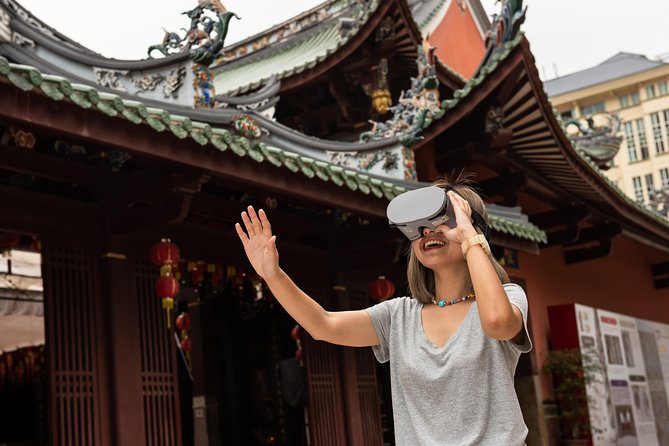
What makes this stop stand out is the VR add-on during the visit. You’re not just looking at a historic building and guessing how life might have been in the past. The tour notes that, through VR technology, you’ll be able to see and hear a related experience. Even if you’re not a tech person, the point here is simple: it helps explain the temple’s role beyond postcards.
Practical note: with around 20 minutes for this stop, you’ll want to plan your energy. Get your photos early, listen closely during the guide’s explanation, and don’t wait until the end to take in the architecture—because once VR kicks in, you’ll want your attention fully with the headset moment.
Stop 2: Singapore City Gallery and the Story of Singapore’s Change
Between temple heritage and religious landmarks, the Singapore City Gallery gives you a reality check: Chinatown didn’t form in isolation. The tour describes this stop as showcasing Singapore’s physical transformation across the last 50 years, with insight into planning and future developments.
This stop is valuable if you want the city’s growth explained in plain language. It’s one thing to see buildings and streets; it’s another to understand how planning choices shape what you experience today. The City Gallery is the “systems” stop—the place where Singapore becomes more than scenery.
With about 15 minutes here, you’ll likely catch the key themes and get a feel for how the city is managed and where it’s headed. If you’re the kind of person who could easily spend an hour-plus in a gallery, you might wish for more time. But as part of a 2.5-hour walking tour, it works as a fast, useful context-setting bridge.
Stop 3: Sago Lane and Buddha Tooth Relic Temple

The final stop brings you to a famous junction of history and legend: Sago Lane. The tour notes that Sago Lane became more famous—sometimes infamous—because of death houses, before you reach the Buddha Tooth Relic Temple.
That route matters. It turns what can be a quick street crossing into a guided “read” of the area. You’re not just collecting images; you’re learning why the street is remembered, and then you connect that memory to the present-day religious landmark at the end.
Then comes the Buddha Tooth Relic Temple and Museum. The tour time for this segment is about 10 minutes, which tells you how to approach it. Think highlights: a quick look at the most recognizable features, a short guide-led orientation, and enough time to understand the broader meaning without expecting a full museum circuit.
If you want deeper museum time, you can treat this stop as your starting point: leave with the story and return later on your own if something catches your curiosity.






Price and Value: Is $129 Worth It?
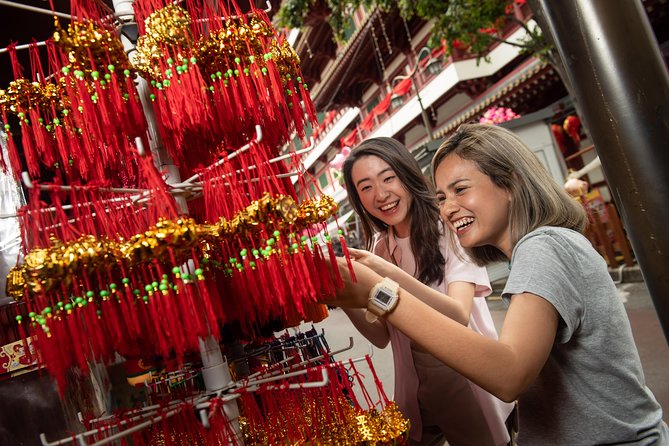
At $129 for roughly 2 hours 30 minutes, you’re paying for more than a guide and walking route. You’re paying for a production-style experience—live performers plus VR technology plus access to stops where listed admissions are free.
So the real question is: does the format match your travel style?
This pricing is likely to feel fair if you:
- like interactive storytelling rather than lecture-only guiding
- enjoy tech experiences like VR when they’re tied to a real place
- want a structured Chinatown overview without building your own itinerary
It may feel steep if you:
- prefer quiet sightseeing and don’t care about VR or theater
- want long time inside museums or temples for reading at your own pace
Another value factor: the tour lists admission tickets as free at the major stops. That helps offset the overall cost, because you’re not stacking entry fees on top of the tour price.
Finally, consider how “non-refundable” affects value. Even if the content sounds perfect, the price point only really makes sense when you’re confident you can go on your scheduled day. If your plans are uncertain, this is one of those purchases where flexibility is limited.
Meeting at Telok Ayer and Finishing at Nanyang Old Coffee
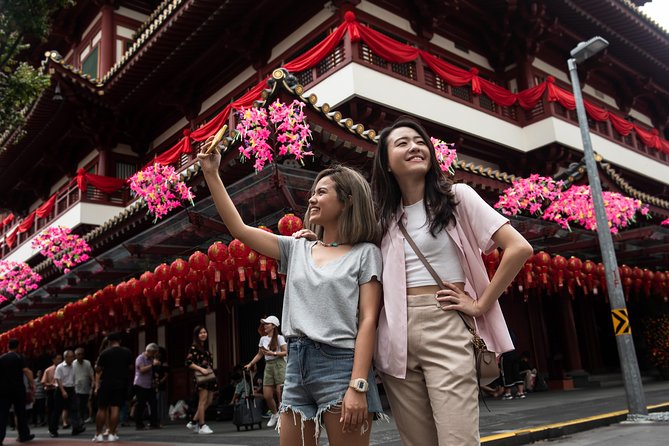
You start at Telok Ayer and finish at Smith Street, specifically at the heart of Chinatown by Nanyang Old Coffee.
That start-and-end setup is practical. Telok Ayer is a good launch point for moving into Chinatown, and ending near a known coffee spot gives you an easy “last stop” plan—grab a drink or snack after the tour without needing to figure out where to go next.
Because the tour uses a mobile ticket and relies on the meeting point, I’d take meeting instructions seriously. A tour can only be smooth if everyone arrives in the same place at the same time, and VR add-ons mean you don’t want to scramble at the beginning. If you’re the type who hates being rushed, give yourself a little buffer before the scheduled start time.
Who This Tour Is Best For (and Who Should Skip It)
This tour is a good fit if you want Chinatown to feel like a story you can participate in. The combination of live characters, guided explanations, and VR creates a “you’re here now” effect—where meaning is tied to what you see, not just what you hear.
It’s also a decent choice for people who want a short, structured itinerary. With fixed time slots at each stop, you won’t burn the whole day wandering or trying to figure out what’s next.
If you’re sensitive to VR headsets or simply dislike tech experiences, you might find the program less satisfying. Also, if you prefer deep museum time, the stop durations (about 20 minutes, 15 minutes, and 10 minutes) suggest you’ll get orientation and highlights rather than a full, leisurely experience.
The good news is the tour states that most travelers can participate, and the group size maxes at 15, which usually means a more manageable pace than large coach-style tours.
Quick Practical Tips Before You Go
- Wear shoes you’re comfortable walking in. Chinatown walking adds up fast, especially when you’re moving between three sites.
- Have your phone ready for the mobile ticket.
- Bring a little patience for a staged experience: VR and live characters mean the tour has moments where attention shifts away from taking photos.
- If you’re a detail person, use the temple and City Gallery stops to listen for what makes each place different, not just what it looks like.
Should You Book Streets Alive Chinatown Edition?
Book it if you want a Chinatown walk that feels like a show with real-world anchors. The strongest part of the experience is the pairing of heritage landmarks with VR and live characters, plus short, guided stop times that keep you moving and learning without draining your day.
Skip it (or at least think hard) if you hate VR, want hours inside museums, or your schedule might change. With the tour being non-refundable and designed around a specific window, it’s best when you’re sure you can commit.
FAQ
How long is the Streets Alive Singapore Walking Tour (Chinatown Edition)?
The tour runs for about 2 hours 30 minutes.
Where does the tour start and where does it end?
It starts at Telok Ayer and ends at Smith Street, at the heart of Chinatown near Nanyang Old Coffee.
How much does the tour cost?
The price is $129.
Is admission included for the main stops?
Admission tickets are listed as free for the main stops, including Thian Hock Keng Temple, the Singapore City Gallery, and the Buddha Tooth Relic Temple and Museum.
What ticket do I need?
You get a mobile ticket.
Is the tour refundable?
No. The experience is non-refundable and cannot be changed for any reason.