REVIEW · CHINATOWN, LITTLE INDIA & KAMPONG GLAM WALKING TOURS
Tasting Trails: Chinatown, Little India & Kampong Glam, Haji Lane
Book on Viator →Operated by OMNICITY TOURS · Bookable on Viator
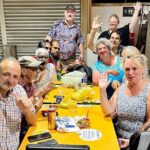
A food tour that teaches Singapore fast. You get a well-paced loop through four neighborhoods, with 8–10 tastings and real street-level storytelling. Instead of sprinting from stall to stall, the route keeps you moving, stops often, and lets the culture show up in the details.
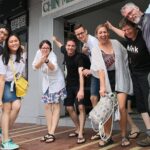
What I like most is the local-guided feel and the thoughtful amount of food (not a nonstop buffet). I also like that the tour is built for your group, so it doesn’t turn into one big crowd shuffle.
One thing to plan for: you will do a fair amount of walking in older streets and shophouse lanes, and it isn’t recommended if your walking is challenging.
In This Review
- Key highlights to know before you go
- A four-neighborhood loop built for a real snack pace
- Little India: shophouses, markets, and street names with backstories
- House of Tan Teng Niah: a Chinese villa with a 1900 origin
- Little India Arcade and the restored 1913 shophouses
- Buffalo Road: a street name tied to Kampong Kerbau
- Tekka Place: market energy and hawker-style food culture
- Kampong Glam and Haji Lane: mosques, textiles, and street-level style
- Sultan Mosque: the golden dome and Islamic heritage since 1824
- Kampong Glam district: shophouses, cafes, and heritage sites
- Arab Street: textiles and Middle Eastern cafés
- Haji Lane: street art, boutiques, and small surprises
- Chinatown: murals, heritage buildings, and an old coffee counter
- Chinatown Heritage Centre: 1950s-style homes and the immigrant experience
- Smith Street murals by Yip Yew Chong
- Pagoda Street: immigration, work, and the harder side of the past
- Nanyang Old Coffee: a mini museum vibe on the second floor
- Buddha Tooth Relic Temple and Museum: Tang Dynasty-inspired design details
- Chinatown Complex: wet market energy and local stall food
- The tastings: 8–10 bites with story, not chaos
- Private-group value and how the price makes sense
- Getting there: start in Little India, end at Maxwell
- Walking reality: what to expect and how to prepare
- Who should book Tasting Trails: Chinatown, Little India, Kampong Glam & Haji Lane
- Should you book this tour
- FAQ
- How long is the Tasting Trails tour?
- Where do you meet, and where does the tour end?
- Is this a private tour?
- What food is included?
- Are admission tickets included for every stop?
- Do I need to bring my own transportation?
- Is there a limit on who can join?
- Can I cancel for a refund?
Key highlights to know before you go
- Private-group pace: only your group, no mixing with strangers.
- 8–10 tastings built into a 4-hour flow, not an all-day food marathon.
- Local guide storytelling (examples include guides named Dawn and Kelvin) that links food to the people and streets.
- Four neighborhoods, one route: Little India, Kampong Glam (including Haji Lane), then Chinatown.
- Iconic stops plus practical views: mosques, heritage lanes, murals, and an old-school coffee spot.
A four-neighborhood loop built for a real snack pace
This tour is designed for people who don’t want the food dash. The total time is about 4 hours, and the itinerary is structured as short stops that keep momentum without turning every minute into queue time.
You’ll start in Little India and finish at Maxwell MRT Station (TE18). That end point matters: Maxwell is a central hub, so you can connect easily to the rest of your day. The experience also uses a mobile ticket and includes 1 complementary water bottle, which is a small thing that helps you stay comfortable.
The biggest value here is how the guide connects what you’re eating with what you’re seeing. The stops are mostly cultural and neighborhood landmarks, then the food supports the story instead of fighting for attention.
You can also read our reviews of more food & drink experiences in Singapore
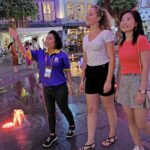
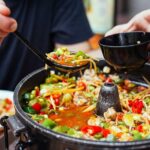
Little India: shophouses, markets, and street names with backstories
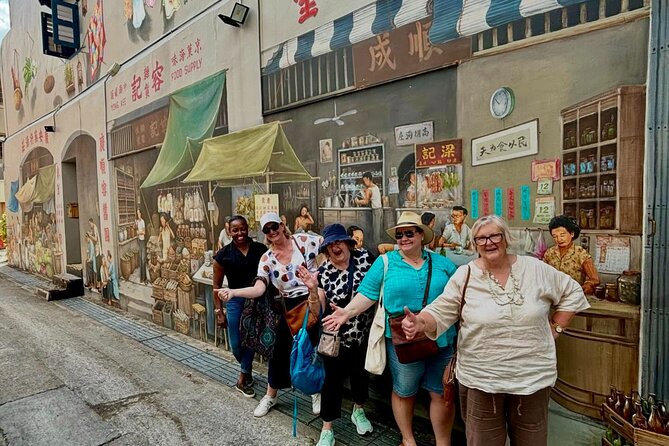
Little India is where the tour starts to explain Singapore as a set of communities, not just attractions. You’ll spend time around old buildings and market streets that still shape daily life.
House of Tan Teng Niah: a Chinese villa with a 1900 origin
The Former House of Tan Teng Niah is a historic Chinese villa built in 1900. The key draw is its colorful façade and its place as one of the last surviving Chinese villas in the area.
Why it’s worth your time: it helps you understand how immigrant businesses and families shaped the neighborhood before the modern city grid fully took over.
Practical note: the admission is listed as free for this stop.
Little India Arcade and the restored 1913 shophouses
Next comes Little India Arcade, set in restored 1913 shophouses. It’s a shopping complex, but it also works as a quick lesson in how trade and everyday life lived under the same roof.
What to expect: you’ll get a sense of what kinds of goods people still come for in this area—especially textiles and Indian goods.
Buffalo Road: a street name tied to Kampong Kerbau
Then you walk Buffalo Road, named after the area’s past as a buffalo-rearing village known as Kampong Kerbau. It’s the kind of detail that’s easy to miss if you’re just passing through.
This is one of those stops where the guide’s stories can change how you look at a street sign. You start seeing the neighborhood as a record of work, farming, and change.
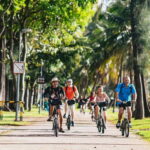
Tekka Place: market energy and hawker-style food culture
At Tekka Place / Tekka Market area, you’re in the heart of a busy market setting—fresh produce, meat, seafood, and the kind of multicultural hawker food Singapore is famous for.
This is also where you’ll likely feel why the tour is paced in short bursts. Markets can pull you in, and the guide keeps you focused on both food and context.
Admission for this stop is listed as free.
Kampong Glam and Haji Lane: mosques, textiles, and street-level style
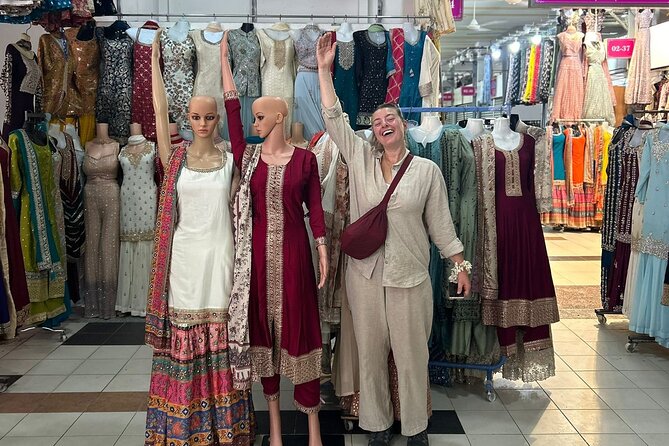
Kampong Glam is where the tour slows just enough to feel like a neighborhood walk. You’re moving between religious landmarks, heritage areas, and fashion-heavy lanes.
Sultan Mosque: the golden dome and Islamic heritage since 1824
The Sultan Mosque is a major anchor point. It’s known for its golden dome and Islamic heritage, and it dates to 1824.
Important detail: admission is marked as not included. So if you plan to go inside or need tickets for a specific part of the visit, you’ll want to budget for it separately.
Kampong Glam district: shophouses, cafes, and heritage sites
After the mosque, you explore Kampong Glam as a whole—Malay-Muslim heritage, shophouses, cultural landmarks (like the Malay Heritage Centre), and a mix of trendy cafés.
This section works best if you enjoy people-watching and browsing. Even without shopping, you’ll pick up the vibe of the district from signage, storefront layout, and street activity.
Arab Street: textiles and Middle Eastern cafés
Arab Street is famous for textile shops and Middle Eastern cafés. For many people, this is the segment that turns the tour from “history walk” into “now-I-get-it” street style.
Again, the admission is free for the stop itself, so you’re paying for your guide’s guidance and tastings, not entrances.
Haji Lane: street art, boutiques, and small surprises
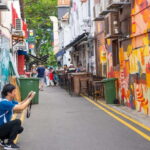
Finally, you reach Haji Lane, a narrow street known for its eclectic boutiques, street art, and cafés.
This is a great counterpoint to the heavier historical stops. It gives you a break where the neighborhood feels creative and personal, not ceremonial.
Admission is free here too.
Chinatown: murals, heritage buildings, and an old coffee counter
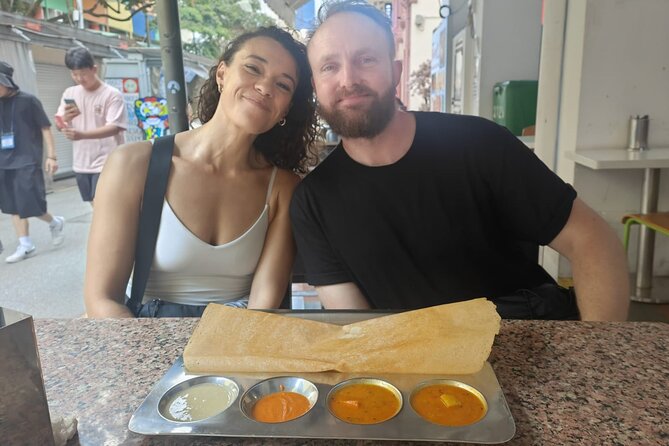
The tour shifts from Indian and Malay-Muslim neighborhoods to Chinatown, and it doesn’t just “move you on.” It changes the story.
You’ll see places that represent early immigrant life, then places that show how Chinatown still runs on food and trade.
Chinatown Heritage Centre: 1950s-style homes and the immigrant experience
At the Chinatown Heritage Centre, you uncover stories of early Chinese immigrants—the struggles, hopes, and resilience. You also get to see faithfully recreated 1950s-style homes, which makes the history easier to picture than a timeline on a wall.
Admission is listed as not included, so plan for that if you want to go in. (This is one of the few stops where the tour may require extra spending beyond the base price.)
Smith Street murals by Yip Yew Chong
Next is Smith Street, where murals by Yip Yew Chong bring the area’s past to life. The route highlights specific mural themes, including My Chinatown Home and The Letter Writer.
This is a smart stop for first-timers because you get a quick “visual summary” of family life and work culture. It also helps you connect Chinatown buildings to the people who lived in them.
Admission for this stop is free.
Pagoda Street: immigration, work, and the harder side of the past
On Pagoda Street, the story turns more serious. In the 19th century, it was a hub for Chinese immigrants, including coolie lodgings and opium dens, plus firms like Kwong Hup Yuen, a notable coolie firm.
You don’t get this kind of context just by taking photos. With a guide, you’ll understand why some streets feel like they should be only “shops,” while actually carrying difficult layers underneath.
Admission is free here.
Nanyang Old Coffee: a mini museum vibe on the second floor
Then you reach Nanyang Old Coffee, described as nostalgic with red walls and vintage signage. The second floor includes a mini-museum with antique coffee-making equipment.
This stop matters because it’s a food-tour moment that also teaches you about how coffee culture became part of daily Singapore life. It’s not just where you eat; it’s where the guide explains why people drink what they drink.
Admission is listed as free.
Buddha Tooth Relic Temple and Museum: Tang Dynasty-inspired design details
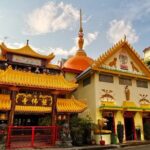
The route finishes with the Buddha Tooth Relic Temple and Museum. Expect Tang Dynasty-inspired architecture, multi-tiered roofs, and symbolic elements like dragons, phoenixes, and lotus flowers.
Admission is listed as free for this stop, which makes it easier to fit into your tour without extra budgeting.
Chinatown Complex: wet market energy and local stall food
At Chinatown Complex, you get a modern version of market life: a busy wet market plus a wide variety of local food stalls. It’s a practical place to see how “food culture” isn’t a concept here—it’s a workflow.
Admission is free. This is also where the tour’s food portion tends to feel most alive because you’re surrounded by ingredients and daily commerce.
The tastings: 8–10 bites with story, not chaos
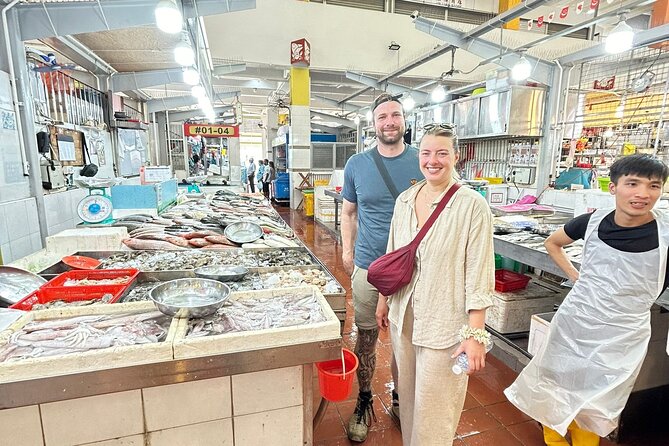
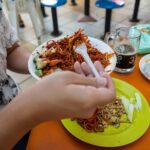
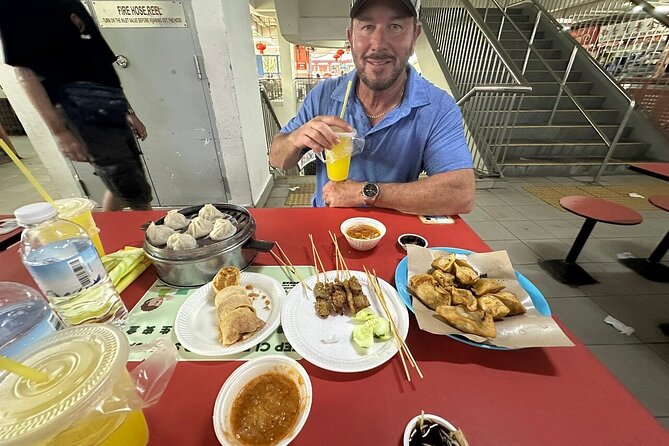
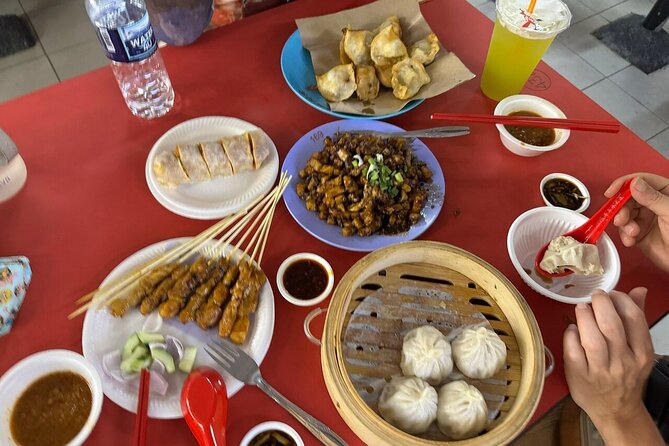
The tour includes 8–10 food tastings, and that number is a big part of the value. It’s enough variety that you’ll taste across neighborhoods and cultures, but it isn’t so much that you feel stuffed after every stop.
The description says the guide offers hand-picked local dishes and includes many Michelin-recommended delights. I treat that as a “directional safety net”: it doesn’t mean everything is fancy, but it usually means you’re not stuck with the most touristy version of a dish.
The guides also seem to do more than point. In one review, a guide named Dawn tied the history of Singapore, culture, and food together. Another review praised Kelvin for being full of interesting information and for responding to people’s interests. That matters because it turns tastings into understanding.
One practical tip: come hungry, but don’t expect everything to be served like a sit-down meal. The tour format is likely bite-sized samples across several stops, so you’ll want comfortable eating time between buildings.
Private-group value and how the price makes sense
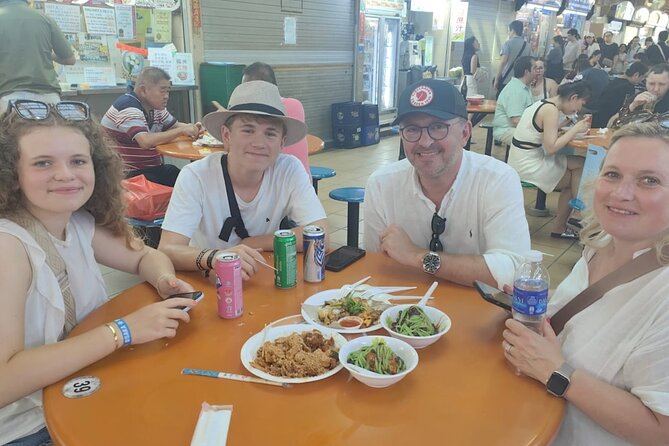
At $100.89 per person, this isn’t a bargain street-food crawl. But it also isn’t a luxury production.
Here’s what you’re paying for:
- Private tour setup: only your group participates.
- English-speaking guide
- 8–10 tastings
- A route designed to be efficient across Little India → Kampong Glam (Haji Lane) → Chinatown.
- Mobile ticket and 1 included water bottle
- Group discounts are mentioned, which can lower the per-person cost if you travel with friends or family.
If you’re used to paying for separate entrances, tastings, and guided walks, this bundled approach can feel fair—especially because most stops are free admission and the paid admission pieces are limited to two marked sites.
Getting there: start in Little India, end at Maxwell
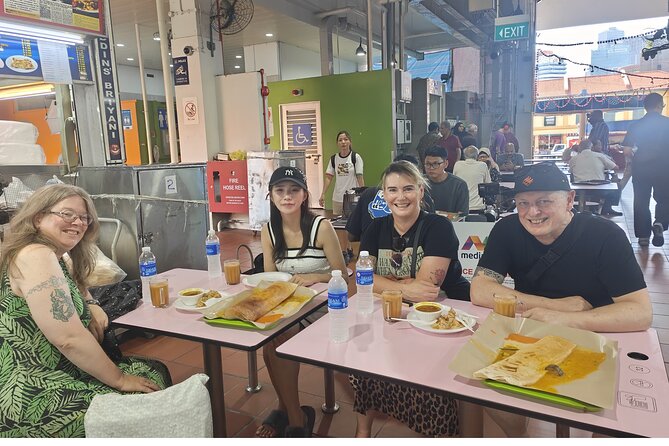
The meeting point is at Little India, Singapore. The tour ends at Maxwell MRT Station (TE18) at 321 S Bridge Rd, Singapore 058841.
Why you should care: the route ends where food and transit are easy to combine. Maxwell is a good “launch pad” back into the city, so you don’t waste your last hour trapped far from trains.
Public transport isn’t included, but one review notes that there was also bus and train time. So even if you’re doing plenty of walking, you likely won’t be doing every single step on foot.
Walking reality: what to expect and how to prepare
The tour is listed as near public transportation, but it still includes many neighborhood lanes and street-level walking. One note says it’s not recommended if you have challenging walking.
From the experience feedback, there is “quite a bit” of walking with some help by bus and train. So I’d plan like this:
- Wear comfortable shoes you can walk on for a few hours.
- Bring water (you get one bottle, but you may want more).
- If you tire quickly, use the breaks at each stop to sit, catch your breath, and reset.
This is also why the private-group setup can help. If your group moves at a slightly slower pace, the guide can usually steer the rhythm.
Who should book Tasting Trails: Chinatown, Little India, Kampong Glam & Haji Lane
This tour fits best if you want:
- A culture-and-food walk, not only a meal plan
- A guide who connects food to neighborhood life
- A format that works even if you’ve visited Singapore before, since it covers multiple districts in one go
It’s less ideal if:
- You want minimal walking
- You dislike market environments or prefer attractions that are mostly indoor
Should you book this tour
If you want a Singapore day that feels like a guided neighborhood circuit with real tastings and street-level stories, this is a solid pick. The price looks reasonable for what’s included, especially since many stops are marked free and the tour is structured for efficiency without rushing you.
Book it if your priority is learning through food across four iconic districts. Skip it if walking is a major issue, or if you prefer fully ticketed attractions over a mix of streets, heritage buildings, and market scenes.
FAQ
How long is the Tasting Trails tour?
It lasts about 4 hours.
Where do you meet, and where does the tour end?
It starts in Little India, Singapore and ends at Maxwell MRT Station (TE18) at 321 S Bridge Rd, Singapore 058841.
Is this a private tour?
Yes. It’s listed as a private tour/activity, so only your group participates.
What food is included?
The tour includes 8–10 food tastings, plus an English-speaking guide and 1 complementary water bottle.
Are admission tickets included for every stop?
Not all of them. Sultan Mosque and Chinatown Heritage Centre are listed as not included. Other stops are marked free.
Do I need to bring my own transportation?
Public transport (bus/MRT/taxi) is not included, though the route may use transit to cover distance between areas.
Is there a limit on who can join?
Most people can participate, but it’s not recommended for travelers with challenging walking.
Can I cancel for a refund?
Yes. You can cancel for a full refund up to 24 hours before the experience starts.