REVIEW · ESCAPE GAMES & PUZZLE HUNTS
The Piece-ful General – Ransack Puzzle Hunt
Book on Viator →Operated by Ransack Puzzle Hunt (Gamification Consultants) · Bookable on Viator
A bunker hunt beats your usual Singapore photos. This puzzle adventure turns Fort Canning Park into a real-life game board, with clue-finding, problem-solving, and a story that keeps you moving. I like the escape-room vibe outdoors more than a typical walking tour, because you’re not just looking at sights, you’re actively figuring things out as you go.
The second thing I really like is how the experience is designed for teams and families: you’ll work through multiple puzzle types, then finish with a small payoff for completing the challenges. The one drawback to keep in mind: if you go solo, you may find the route and some hints harder to decode, especially in Singapore heat, so plan to go with patience (and water).
In This Review
- Key things to know before you start
- Fort Canning Park: the real setting, not just a backdrop
- Pepper the dinosaur and the WWII-style storyline you can solve
- How the hunt plays: clues, puzzles, and the team rhythm
- The 2-hour route: how to pace it without feeling rushed
- Difficulty and puzzle style: creative, sometimes tricky
- Price and value: what $36.37 really covers
- Who this puzzle hunt suits best (and who should reconsider)
- Quick logistics you’ll care about
- Should you book The Piece-ful General in Singapore?
- FAQ
- How long is the Ransack Puzzle Hunt at Fort Canning Park?
- What’s the price per person?
- Do I need a paper ticket?
- Where does the activity start and end?
- Is it self-guided or fully guided?
- What group size should I expect?
- What is the cancellation policy?
Key things to know before you start
- Fort Canning Park is the whole “level”: you’ll move through the park’s spots while solving puzzles tied to the place.
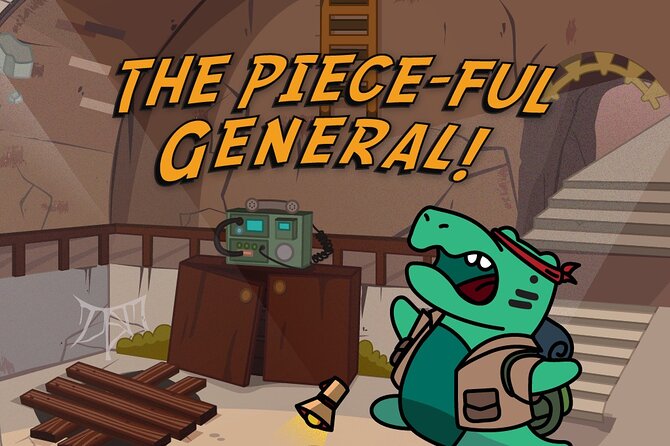
- Story-driven scavenger hunt: Pepper the dinosaur guides the action, with a clumsy-history premise that turns into quests.
- WWII-themed flavor: you’ll get into Singapore and Fort Canning’s wartime context while you play.
- Team-friendly format: it’s set up so groups can split tasks and compare answers.
- About 2 hours: it’s long enough to feel like an adventure, but short enough for a single afternoon plan.
- Small group size: the activity caps at 20 travelers, which helps keep things smoother.
Fort Canning Park: the real setting, not just a backdrop
Fort Canning Park is one of those places where you can walk and still feel like you’re discovering something new. Here, it’s not a venue you pass through. It’s the game board. You’ll be outdoors the whole time, moving between points in the park while chasing clues and solving mini-challenges. That makes the experience feel more active than standard sightseeing, and it also helps you remember what you learned because you associate it with walking routes and physical locations.
The park’s layout matters. If you like self-directed exploring, you’ll probably enjoy having a map and working your way point-to-point. If you prefer a fully guided, step-by-step tour, you might feel a little more responsibility on your own. Still, the overall flow is designed to keep you moving without needing constant instruction.
Also, consider the weather. One of the practical lessons from doing an outdoor hunt in Singapore is that you should plan for warmth. Even if you’re not rushing, you’re still walking, stopping, reading clues, and concentrating. Build in time to hydrate, take quick shade breaks, and avoid overheating your brain.
You can also read our reviews of more tours and experiences in Singapore.



Pepper the dinosaur and the WWII-style storyline you can solve
The experience gives you a character-based mission: you’re helping Pepper the dinosaur, a clumsy history buff, deal with an ancient bunker scene that goes wrong. The premise is silly in the best way—one misstep triggers a bigger problem—then the game turns that chaos into quests you solve as a team.
What’s useful here is that the story isn’t just decoration. It’s tied to the themes of Singapore and Fort Canning Park’s past, including a wartime angle. In practice, that means you’ll be reading clues and answering puzzle questions that connect back to Fort Canning’s structures and exhibits, with a Battle Box-type context showing up in the mix. If you enjoy history but get bored with long lectures, this method tends to work because you’re learning through actions: find, interpret, solve, and move on.
And yes, you’ll eventually get to a finale. The hunt is structured so you don’t just wander for clues—you reach a point where Pepper rewards the group for finishing. That end moment matters for motivation. It’s one reason the 2-hour runtime feels like a complete activity rather than a half-formed detour.
How the hunt plays: clues, puzzles, and the team rhythm
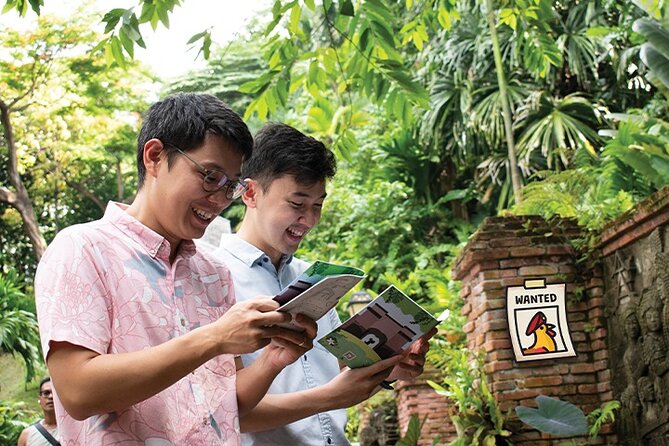
This is a hybrid treasure hunt / escape-room style challenge. That means you’ll typically do two things repeatedly: (1) search for information in the park, and (2) solve puzzles that turn that information into progress. The puzzles aren’t one single type; you can expect different formats, which keeps the hunt from turning into a single-note scavenger slog.
Your best strategy is to treat it like a group workflow, not a quiz. Split tasks. One person can focus on reading the next clue area carefully. Another can test possible answers or look for patterns. If you’re with kids, this works even better—one adult often solves the logic part, while the kids scan, spot, and point out details.
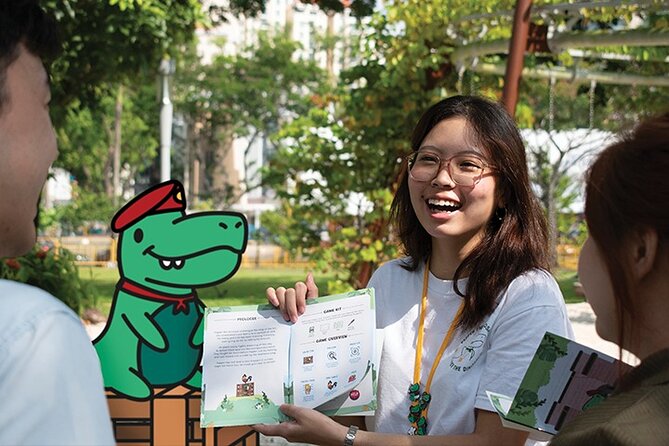
I also like that the puzzles are designed for a wide range of abilities. You’re not expected to be a math genius or a puzzle monk. You’re expected to try, test, and collaborate. That said, the hunt can feel cryptic at times, especially if the map doesn’t click instantly for you. If you want to stay sane, keep your group’s energy high: take notes on what you’ve already tried, and don’t burn 20 minutes stuck on one step.
If you get help, use it wisely. People running the experience can guide and nudge when you’re clearly lost or missing an obvious step. Hosts such as Michelle have been described as supportive and engaged, and Jay has been mentioned as a gamemaster who keeps the experience flowing. Even if you’re self-guiding most of the time, that human support is there for the moments when the puzzle logic stalls.
The 2-hour route: how to pace it without feeling rushed

The advertised time is about 2 hours, and that’s a sweet spot. It’s long enough to feel like you did something meaningful, but short enough to fit into a normal Singapore day. In Fort Canning Park, you’ll naturally add time for reading clues and walking between stops, so your pacing matters.
Here’s how to keep it from dragging:
- Start with a quick team huddle at the beginning so you agree on how you’ll handle the map and clue scanning.
- Don’t sprint. The hunt works better when you actually look at what the clue is pointing to.
- Plan for one or two slower moments. Outdoor puzzle hunts tend to have at least one step that takes longer than you want.
If you’re traveling as a couple, this format can be a great “team of two” activity, but you’ll want to communicate clearly. One person can hunt for clue locations while the other solves. That’s often where the fun comes from: matching observation with reasoning.
If you’re solo, go in with the right mindset. One of the practical considerations is that a solo try can feel harder if you’re also interpreting a route that may not be obvious at first. You might need extra time to confirm you’re at the right clue points, and you’ll be carrying the mental load yourself. The puzzles may still be solvable, just expect it to take more concentration than when you have a second brain beside you.
Difficulty and puzzle style: creative, sometimes tricky
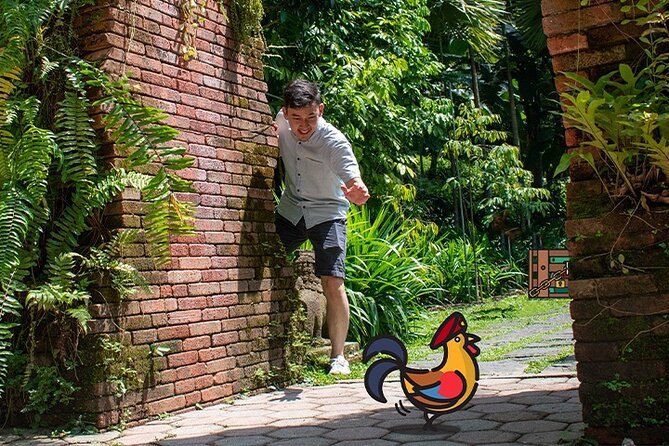
The puzzle hunt has a “find clues in the structures and exhibits” vibe. That makes it feel creative because you’re not just answering generic trivia. You’re interpreting what’s in front of you. Multiple participants have highlighted how the puzzles are ingenious and connected to the existing history features—so you’re basically turning Fort Canning’s physical spaces into puzzle mechanisms.
For difficulty: expect puzzles that are approachable, but not always immediately obvious. Some clues can be straightforward once you’re looking at the right place. Others can feel more cryptic until the logic clicks. That matches the typical treasure hunt rhythm: you’ll have moments of quick wins, then one or two “wait, what?” steps.
If you get stuck, switch modes. Step away for 60 seconds. Re-read the clue carefully, then check the surrounding area rather than immediately trying random answer combinations. In outdoor hunts, the missing detail is often something small: the location angle, a nearby marker, or a piece of wording that you skim too fast.
The other part of difficulty is environmental. Singapore weather can turn an easy walking route into a concentration test. If you keep forgetting the clue text because you’re too warm, you’ll slow down. So bring water, take shade breaks when you need them, and avoid doing the hunt at the peak of the day if your body hates heat.






Price and value: what $36.37 really covers
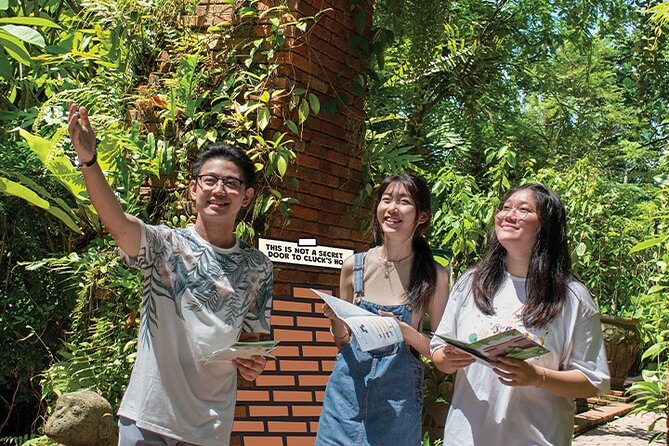
At $36.37 per person, this isn’t a bargain museum ticket. It’s a paid activity, and you should judge it like one: you’re paying for time, a puzzle design, and a themed learning experience that gets you moving.
Here’s where the value tends to come from:
- You get 2 hours of structured entertainment rather than open-ended wandering.
- You’re learning while playing, because clues and questions connect to Fort Canning Park’s past.
- You have a mobile ticket (so you’re not fumbling with paper while walking).
- The group cap of 20 travelers suggests the experience is kept manageable, which usually helps with flow.
If you’re the type of traveler who gets restless on normal tours, the cost can feel justified. You’re buying a “do” experience, not a “listen and look” experience. If you’re more into slow, scenic sightseeing, you might decide you’d rather spend that time exploring on your own. But if you want something different from the usual Singapore loop, this price buys a complete, self-contained adventure.
Who this puzzle hunt suits best (and who should reconsider)
This hunt is ideal for:
- Adventurous travelers who like problem-solving on foot.
- Families looking for a shared activity that keeps kids engaged.
- Small groups or couples who want something interactive instead of just sightseeing.
- People who enjoy WWII context but prefer learning through gameplay.
It may be less ideal if:
- You hate puzzles or get frustrated when clues feel unclear.
- You want a fully guided experience where you don’t have to interpret a map.
- You plan to do it in extreme heat without planning breaks. Singapore can be hot, and outdoor puzzles require steady focus.
If you’re deciding between “typical attractions” and an interactive activity, think about your travel style. Do you like photos and facts, or do you like solving and doing? This experience leans hard toward doing.
Quick logistics you’ll care about
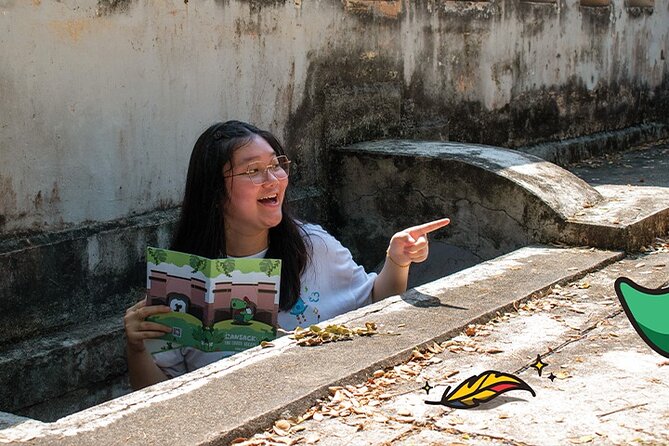
You’ll start at Singapore History Consultants, at 179622 Cox Terrace (the listing shows 2号), and the activity ends back at the same meeting point. It’s near public transportation, which helps if you’re fitting it into a day with other plans. You’ll receive confirmation at booking, and your ticket is delivered in a mobile format.
On size: up to 20 travelers is a comfortable cap. It usually means you won’t feel swallowed by a huge crowd while doing an outdoor scavenger route.
Should you book The Piece-ful General in Singapore?
Book it if you want a fun break from standard Singapore touring and you like activities where your brain stays busy. The best reason to choose it is simple: Fort Canning Park becomes a story you can actively solve, with a mission built around Pepper the dinosaur and a wartime-themed learning angle. At $36.37 for roughly 2 hours, it’s a solid value if you’ll actually engage with the clues and enjoy team problem-solving.
Skip it (or at least reconsider the timing) if you’re not in the mood for puzzles, you’re traveling solo and want zero friction, or you’d rather do a calm, unguided park stroll with no mental work. If you do decide to go, bring water, stick together, and give the cryptic steps a chance. When the puzzle clicks, that’s when the whole hunt starts to feel like real Singapore adventure—one clue at a time.
FAQ
How long is the Ransack Puzzle Hunt at Fort Canning Park?
It takes about 2 hours (approx.).
What’s the price per person?
The price is $36.37 per person.
Do I need a paper ticket?
No. It uses a mobile ticket.
Where does the activity start and end?
It starts at Singapore History Consultants, 179622 Cox Terrace (2号) in Singapore, and it ends back at the same meeting point.
Is it self-guided or fully guided?
It is described as a self-guided puzzle hunt, where you follow the hunt and solve puzzles around Fort Canning Park.
What group size should I expect?
The experience has a maximum of 20 travelers.
What is the cancellation policy?
It is non-refundable and cannot be changed for any reason, and the amount you paid will not be refunded if you cancel or ask for an amendment.