REVIEW · CHINATOWN, LITTLE INDIA & KAMPONG GLAM WALKING TOURS
4-hour Chinatown, Little India, and Arab Street Walking Tour
Book on Viator →Operated by Roberto · Bookable on Viator
Three cultures, one well-paced route.
What I like most is the small-group cap of 10 and the way the guide turns landmarks into real stories, like the strong rapport you see with guides such as Jolynn or KK. You also get free admission tickets at every temple and museum stop listed, so you spend more time looking and less time figuring it out. The only catch: it’s not built for mobility limits, and you’ll still do plenty of walking plus a small added cost for public transport.
This is a smart pick if you’re short on time but want more than photos. You choose either a morning or afternoon tour, and the route is designed to cover the big cultural zones of Singapore in about 4 hours.
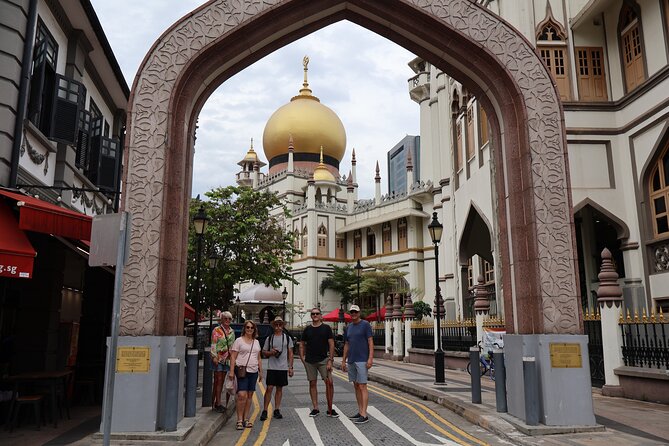
You’ll start at Starbucks on New Bridge Road and finish near Sultan Mosque on Arab Street. Expect a guided walk that mixes neighborhoods, stop-and-listen moments, and short transfers using public transit (with a small fare not included).
In This Review
- Key things to know before you go
- Why this Chinatown–Little India–Arab Street walk fits real Singapore time
- Thian Hock Keng Temple: Singapore’s oldest Chinese temple stop
- Buddha Tooth Relic Temple and Museum: Tang-style grandeur in four floors
- Chinatown at street level: shophouses, murals, and market energy
- Sri Mariamman Temple and the move toward Little India
- Little India: flower garlands, spice shops, and Kali’s temple stop
- Arab Street: Sultan Mosque, textiles, and street-market rhythms
- Haji Lane and Parkview Square: street art and Art Deco photo moments
- Price and logistics: does $76.57 deliver value?
- What guides like Jolynn, KK, Jeremy, and Joylin seem to get right
- Best fit: who should book this tour?
- Should you book this 4-hour walking tour?
- FAQ
- How long is the 4-hour Chinatown, Little India, and Arab Street walking tour?
- What does the tour cost, and is admission included?
- Do I need to pay for public transportation during the tour?
- Is there a morning or afternoon option?
- Is this tour recommended for people with mobility issues?
- Is free cancellation available?
Key things to know before you go
- Small-group size (max 10): easier questions, tighter pacing, and a guide who can slow down when a stop matters.
- Free temple/museum admissions: listed stops are covered, so your budget stays simpler.
- Two quick MRT-style neighborhood moves: you connect Chinatown to Little India and then continue toward Arab Street.
- Licensed local guide: the tour is built around a real storyteller, not just a map.
- Stops that cover three faiths and two shopping styles: Chinese temples, Hindu temples, and Islamic landmarks, plus street-level market browsing.
Why this Chinatown–Little India–Arab Street walk fits real Singapore time
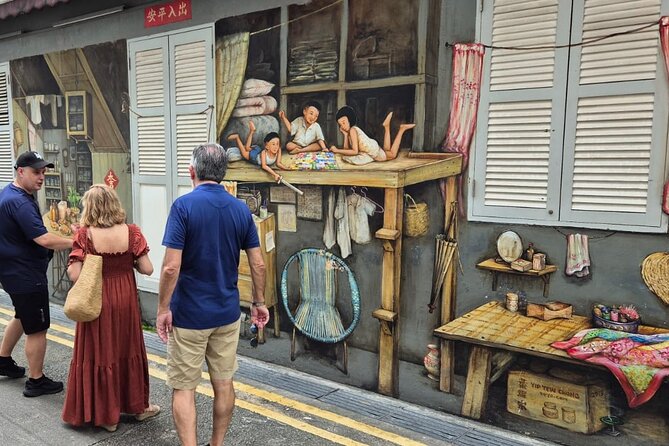
Singapore can feel like a blur when you land and start jumping between districts. This tour helps you slow down just enough to notice what makes each area distinct, without spending half a day on planning.
At $76.57 per person for about 4 hours, you’re paying for two things that matter: guidance and time efficiency. With a licensed local guide, you don’t need to research each stop’s meaning, dress expectations, or the stories behind the carvings and wall art. And with the 10-person max, it stays personal instead of turning into a herd.
If your goal is first-time orientation, this works. You get a clean route through Chinatown, Little India, and Arab Street, plus a few extra stops that add texture (like murals and street art). The pace is still active—this is a walking tour—but it’s organized in “you arrive, you see, you listen, you move on” chunks.
You can also read our reviews of more walking tours in Singapore


Thian Hock Keng Temple: Singapore’s oldest Chinese temple stop
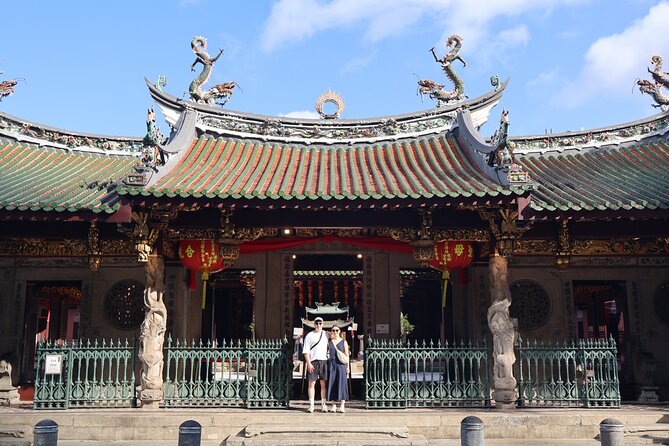
The first stop is Thian Hock Keng Temple. It’s the oldest Chinese temple in Singapore, and the tour frames it around the human reason people built places of worship: thanks, safety, and community for early immigrants.
You’ll have about 30 minutes here, with no admission ticket cost listed. The temple is known for its vibrant carving work and historic feel, so this isn’t just a quick glance. The guide’s job is to help you see what you’re looking at—details you might otherwise skip.
Practical note: because temples often have rules about behavior, this is where the guided part really helps. You’re not left guessing what’s respectful or where to stand for photos.
Buddha Tooth Relic Temple and Museum: Tang-style grandeur in four floors
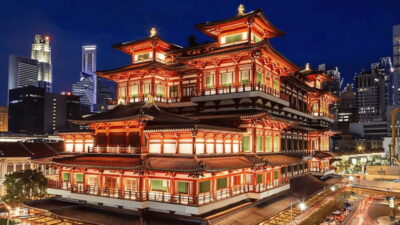
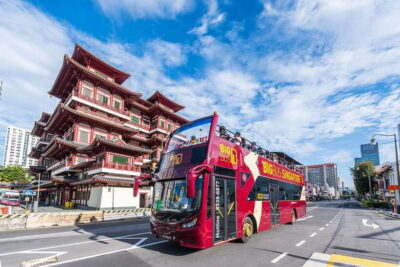
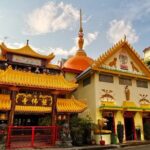
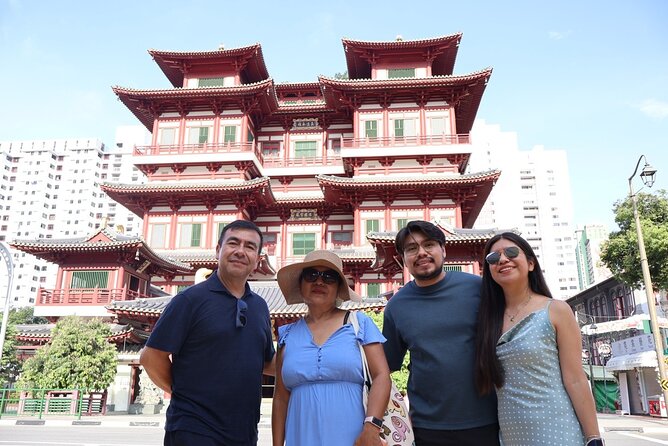
Next comes the Buddha Tooth Relic Temple and Museum, a striking landmark inspired by Tang dynasty architecture. You get about 30 minutes, and admission is listed as free.
This stop gives you a different flavor of Chinese Buddhist architecture than what you see at Thian Hock Keng. The four-story structure and the richly decorated halls put the focus on symbolism and craftsmanship, while the museum element helps connect the site to broader cultural context.
If you like big visual landmarks that also have a story behind them, this is where the tour delivers. You’re not just walking past buildings—you’re stepping inside, which is usually where Singapore’s neighborhoods start to make emotional sense.
Chinatown at street level: shophouses, murals, and market energy
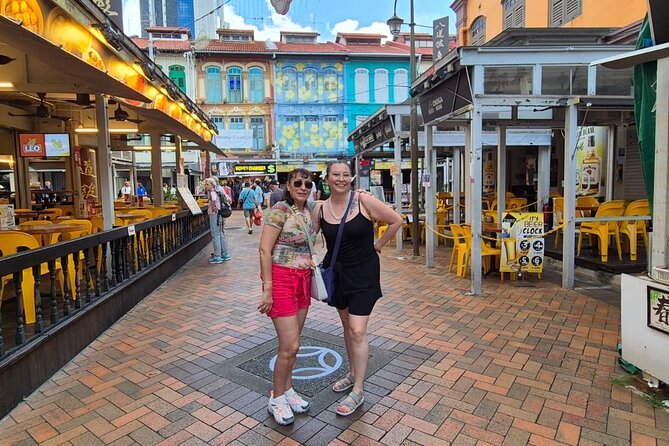
After the two temple anchors, the route shifts into Chinatown itself. You’ll spend around 30 minutes strolling through the area with your guide, focusing on heritage shophouses and the large, colorful murals that bring immigrant stories to life.
This is the part I recommend most to first-timers. Chinatown can look like a photo theme at a distance—temples, streets, signs. The murals and shophouse details make it more specific. You start noticing how the area’s visuals communicate the past in a way that still feels readable today.
Also, this stop is a good time to ask questions. If you’re wondering why certain streets look the way they do or what a particular detail might mean, your guide can answer on the move—before the day turns into a blur.
Sri Mariamman Temple and the move toward Little India
The tour then takes you to Sri Mariamman Temple, listed as Singapore’s oldest Hindu temple. You’ll have about 10 minutes here.
The signature feature at Sri Mariamman is its colorful gopuram tower, covered in intricate statues of deities and mythological figures. Even if you don’t think of yourself as a temple person, the scale and detail are hard to ignore.
Then comes the key switch: you take public transit (MRT) to Little India. This part matters because it turns the tour from three separate walks into one connected route. Instead of hopping across town on your own, you keep the flow of the story.




Little India: flower garlands, spice shops, and Kali’s temple stop
In Little India, you’ll spend about 20 minutes wandering the streets with your guide. The focus is on the area’s look and smell: colorful shophouses, flower garlands, and spice shops. Even without shopping, this is one of the best neighborhoods to experience everyday culture through your senses.
Next is Sri Veeramakaliamman Temple, dedicated to Goddess Kali. This is a shorter stop—about 10 minutes—and the guide will point out the vivid gopuram decorated with colorful statues of gods and demons. If you’re into architecture and symbolism, the short visit still works because the guide helps you notice what matters.
A quick reality check: because the time in each temple is limited, you’ll get meaning rather than deep study. That’s not a bad thing. It’s the tradeoff for covering more ground in a half-day.
Arab Street: Sultan Mosque, textiles, and street-market rhythms
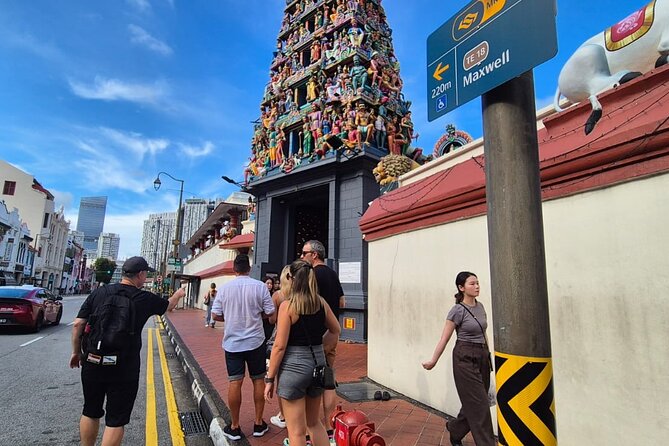
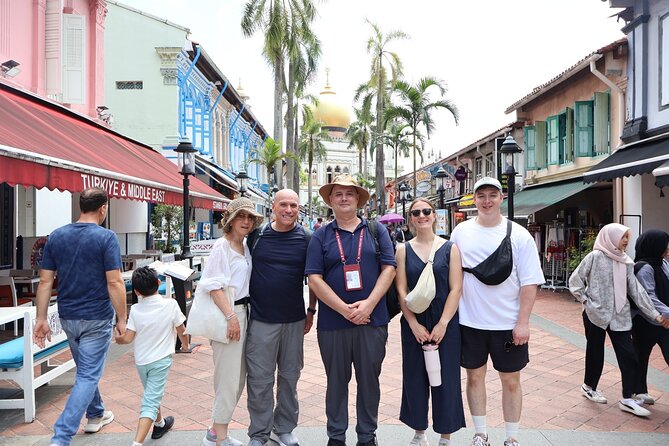
Arab Street is where the tour shifts again—from Hindu and Buddhist sites to Islamic architecture and Middle Eastern-inspired street life. You’ll have about 20 minutes here.
The big anchor is Sultan Mosque. The tour also highlights Arab Street as a cultural hub with textile shops, colorful fabrics, and busy bazaars. This is a great contrast to Chinatown and Little India: the streets feel different, the language of design changes, and the shopping culture becomes more fabric-focused.
If you like practical souvenir hunting, this is where you’ll have the best chance to browse without feeling like you’re browsing blindly. And because you’re in a walking group with a guide, you’re more likely to spot details you’d miss on your own.
Haji Lane and Parkview Square: street art and Art Deco photo moments
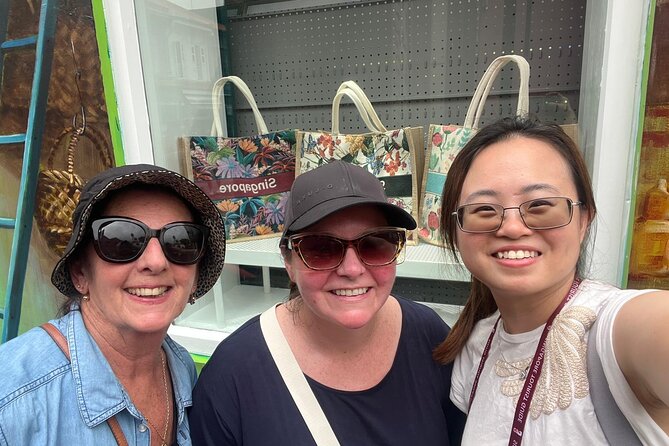
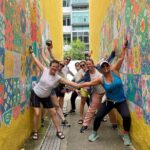
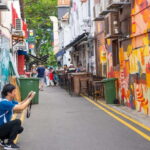
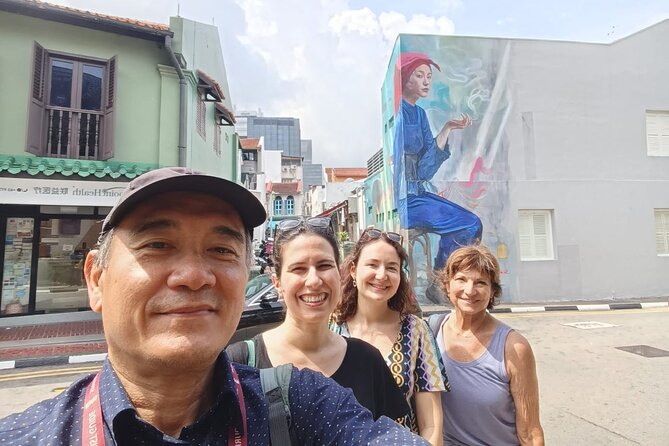
After Arab Street, the route includes Haji Lane, about 10 minutes. This is known as Singapore’s narrowest street and it’s famous for colorful street art, quirky boutiques, and small cafés. Here, the guide’s role is less about explaining every mural detail and more about helping you read the style and meaning behind the street’s creative look.
Then you finish at Parkview Square for about 10 minutes. It’s often nicknamed Singapore’s Gotham Building because of its Art Deco style, dark colors, and dramatic presence. You’ll see bronze statues and interiors that feel like a movie set—again, a stop that’s short, but memorable.
Together, these two final moments do something useful: they show Singapore as it is now, not only as it was. You leave with both the story side and the modern design side of the city.
Price and logistics: does $76.57 deliver value?
For $76.57 per person, you’re essentially paying for a guided route that covers multiple neighborhoods plus multiple temple entries. The good news is that the listed admissions are free, including the Buddha Tooth Relic Temple and Museum and the temples throughout the day.
The only extra cost mentioned is public transportation at SGD 2.00 per person. That matters because it tells you the tour uses transit to connect districts. You’re not paying for expensive rides, but you should plan to budget that small add-on.
Where the value really shows is in the structure:
- You get three major cultural areas in about 4 hours.
- The group is capped at 10, which makes questions possible.
- You spend time inside key sights rather than just walking past them.
If you were doing this on your own, you’d spend time researching routes and figuring out what’s worth your attention. Here, you get someone to point you at the best parts and keep the pacing realistic.
What guides like Jolynn, KK, Jeremy, and Joylin seem to get right
The strongest pattern in the guide feedback is how well they connect place to meaning. Names that come up include Jolynn, KK, Jeremy, and Joylin, and the common thread is clear: guides who can keep the walk moving while still sharing enough detail to make the neighborhoods feel personal.
Another theme is coverage. Guides are praised for hitting major points in the walk and for making Singapore’s diversity feel understandable, not random. That’s exactly what you want from a half-day tour: the day should feel like a coherent story when you’re done.
You may also notice the tour includes transit moments beyond walking. One guide’s group notes mention train and bus riding as part of the experience. Even if you mostly expect MRT, it’s fair to say you’ll have some short public-transport segments that break up the streets.
Best fit: who should book this tour?
Book it if:
- you’re seeing Singapore for the first time and want fast orientation
- you like religion and architecture as windows into culture
- you want a guided route across Chinatown, Little India, and Arab Street without doing research
Consider skipping or pairing with something else if you need long sit-down museum time or want deep, slow exploration. This is built for a half-day sweep. It’s excellent at breadth and good at context, but it’s not designed to replace a full day in one neighborhood.
Should you book this 4-hour walking tour?
I’d book this if your priority is getting your bearings and understanding the city’s cultural layers in one efficient block. The free admission stops, the small-group size, and the chance to see both classic temples and modern street design make it a strong value for $76.57.
I would only hesitate if mobility is a challenge or if you hate walking. The tour is structured around walking between stops and using public transit between districts, so you’ll want to be comfortable staying on your feet for the full duration.
FAQ
How long is the 4-hour Chinatown, Little India, and Arab Street walking tour?
The tour lasts about 4 hours.
What does the tour cost, and is admission included?
The price is $76.57 per person. The listed temple and museum admissions are shown as free.
Do I need to pay for public transportation during the tour?
Public transportation is not included, and it’s listed as SGD 2.00 per person.
Is there a morning or afternoon option?
Yes. The tour offers a choice of morning or afternoon departures.
Is this tour recommended for people with mobility issues?
It is not recommended for travelers with mobility issues.
Is free cancellation available?
Yes. You can cancel for a full refund up to 24 hours in advance of the experience start time.