REVIEW · CHINATOWN, LITTLE INDIA & KAMPONG GLAM WALKING TOURS
Singapore’s Historic Chinatown Walking Tour with Lunch
Book on Viator →Operated by On-A-Roll-Tours · Bookable on Viator
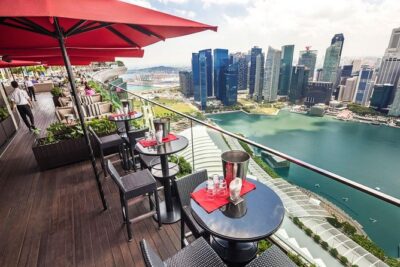
Chinatown can feel like a maze. This tour turns it into a clear, story-led walk with a skyline warm-up and a real Chinatown lunch. I especially like the mix of big views and tight alley details, starting high at CapitaSpring before dropping into temple courtyards and schoolyard corners.
The second thing I like: the meal is not an afterthought. You get soya sauce chicken noodles or rice at Chiew Kee Noodle House, plus snacks to keep you going between stops. One possible drawback is pacing: you’ll cover a lot in about 3.5 hours, so if you want long photo pauses, you’ll have to pick moments.
In This Review
- Key Things To Know Before You Go
- A Chinatown Walk That Actually Has a Plan
- Meeting at The Whisky Distillery and What to Expect
- CapitaSpring’s Sky Garden: Get Your Bearings Fast
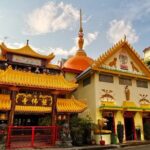
- Yueh Hai Ching Temple: Quiet Faith and Early Roots
- Pekin Street School Courtyard: History Beyond the Main Streets
- Fuk Tak Chi Museum: When Temples Become Museums
- Thian Hock Keng Temple: Old Architecture With a Built-In Story
- Ann Siang Hill and the Last Water Well Clue
- Club Street Stories: Chinese Weekly Entertainment Club and Goh Loo Club
- Mohamed Ali Lane Murals: Yip Yew Chong in Motion
- Lunch at Chiew Kee Noodle House: Simple and Proper
- Yue Hwa Chinese Products: The Raffles Hotel of Chinatown Angle
- The Majestic Theatre: A Merchant-Made Landmark
- Lim Chee Guan, Pek Sin Choon, Tai Thong: Three Food and Flavor Detours
- Lau Choy Seng and Smith Street: Kitchenware and Murals
- Sago Street: The Street of the Dead Explanation
- Fong Moon Kee: Ointment Shop Finale for Aches and Pains
- Price and Logistics: Is $55.51 Actually Good Value?
- Pacing and Walking Comfort: The Only Real Trade-Off
- Who This Tour Suits Best
- Should You Book This Singapore Chinatown Walking Tour?
- FAQ
- How long is the Singapore Chinatown walking tour?
- What is the price per person?
- What time does the tour start, and where is the meeting point?
- Where does the tour end?
- What’s included for lunch and snacks?
- Is it an easy walk for most people?
- Do I need to pay admission fees for the stops?
- What if it rains?
- FAQ
- Can I cancel for free?
Key Things To Know Before You Go
- Sky Garden first, old Chinatown next: you start with a panoramic view of the Historic District from CapitaSpring.
- Temples you’d miss on your own: Yueh Hai Ching Temple and Thian Hock Keng Temple are central to the story.
- School, museum, and prosperity faith: stops like Pekin Street (a boys’ school courtyard) and Fuk Tak Chi Museum add texture.
- Street-name detective work: you’ll connect places to names like Club Street and the Street of the Dead.
- Local art along the route: Yip Yew Chong murals appear at Mohamed Ali Lane and Smith Street.
- Lunch is built into the timing: you eat at Chiew Kee Noodle House (a 1949 classic) before the final shop stops.
A Chinatown Walk That Actually Has a Plan
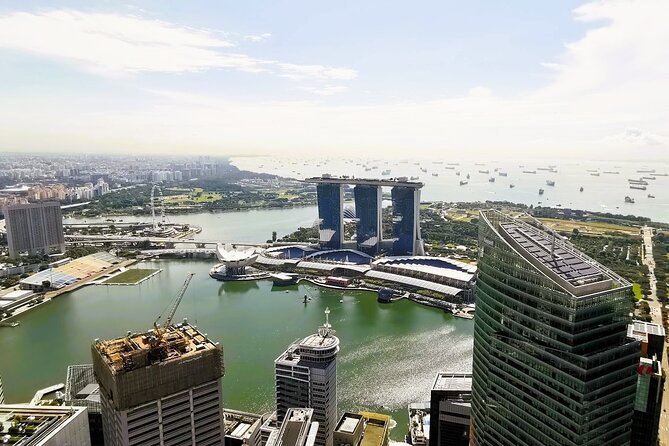
Singapore’s Chinatown is best when you go beyond the obvious streets. This tour does that by building a route that feels logical: sky view, temples, schools and museums, club-era streets, then murals and old shops. You end with a final stop that fits the theme: a shop known for traditional ointments.
The itinerary also helps you read the area. You’re not just looking at sights. You’re learning why buildings are where they are, why street names stuck, and what everyday life looked like across decades.
And yes, the lunch matters here. A good walk tour can turn your afternoon into “just hurry up and snack.” This one gives you a proper break at a well-established Chinatown noodle house.
You can also read our reviews of more walking tours in Singapore


Meeting at The Whisky Distillery and What to Expect
You start at The Whisky Distillery, 1 Raffles Place (#01-07/08). The start time is 10:00 am, and the tour ends at Fong Moon Kee at 16 Sago Street. That end point is a nice way to finish, because Sago Street is one of the more story-heavy parts of Chinatown.
You’ll be walking with a licensed tourist guide and moving through a route designed for about 3 hours 30 minutes total. The group size is capped at 15, which usually keeps the pace from turning into a stampede.
Good small comfort: a disposable poncho is included if it rains. There’s also a mobile ticket, so you’re not hunting paper vouchers in your bag.
CapitaSpring’s Sky Garden: Get Your Bearings Fast
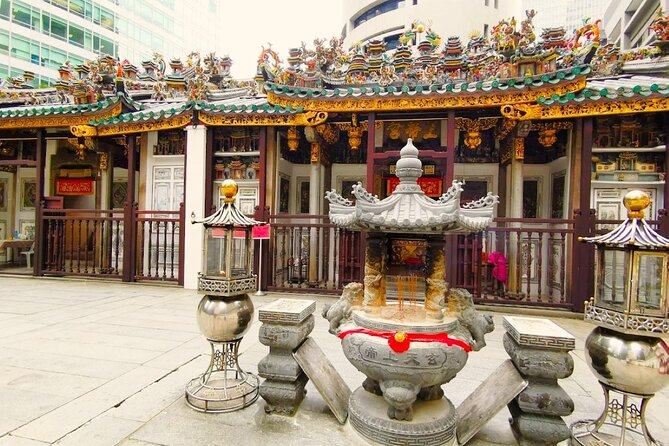
The tour kicks off at Sky Garden at CapitaSpring, where the key value is orientation. From a high point, you can understand how Chinatown connects to the wider city grid. It’s the kind of start that makes the streets below feel less random.
This first stop is brief, about 20 minutes, and admission is listed as free. Still, don’t treat it like a quick photo stop. Look for the shape of the district. Then, as you walk later, you’ll better understand why people talk about “historic district” boundaries so often.
Yueh Hai Ching Temple: Quiet Faith and Early Roots
Next comes Yueh Hai Ching Temple, a site often overlooked by casual visitors. The timing is important to the story: it’s described as possibly established as early as 1819, which would make it older than Thian Hock Keng Temple.
You’ll spend about 15 minutes here, and admission is listed as free. What makes this stop special is atmosphere. The temple is described as serene, and that matters on a walking tour because it slows you down just enough to notice architectural details and how the space feels.
If you like learning how communities organized around faith, this is a strong early anchor.
Pekin Street School Courtyard: History Beyond the Main Streets
From there, you step into Pekin Street, centered on a Chinese boys’ school from 1854. This is one of those stops that adds a human scale. Instead of only focusing on temples and merchants, you get a glimpse into education and daily routines: writing, reading, and even traditional games like chapteh.
You’ll only have about 10 minutes here, but it’s a useful reset. You’ll start to notice that Chinatown’s historic fabric includes institutions, not only religious buildings.
You can also read our reviews of more historical tours in Singapore


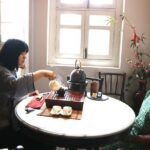
Fuk Tak Chi Museum: When Temples Become Museums

Then you visit Fuk Tak Chi Museum. The building’s origin is tied to worship: it was once a temple built by Cantonese and Hakka worshippers connected to Tua Pek Kong, described as the God of Prosperity in the tour notes.
You’ll get around 10 minutes at this stop, with admission listed as free. The draw is the change of function. When a temple becomes a museum, you often see artifacts and explanations that help you connect what you saw earlier in the day with real objects and local life.
If you prefer context over quick sightseeing, this stop usually clicks.
Thian Hock Keng Temple: Old Architecture With a Built-In Story
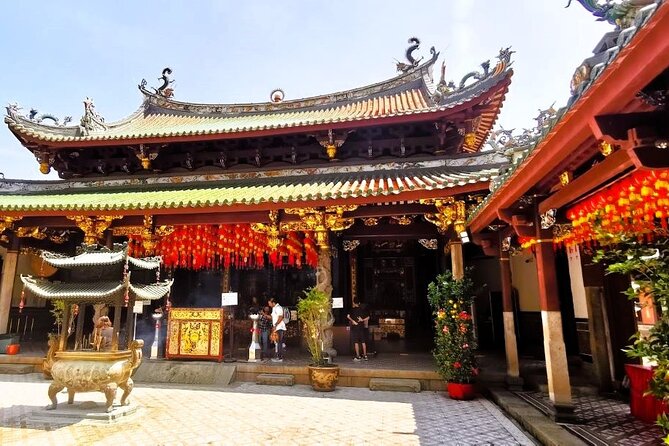
The highlight for many people on this route is Thian Hock Keng Temple, established in 1821. It’s described as the oldest Hokkien temple and likely one of the oldest Chinese temples in Singapore.
You’ll spend about 25 minutes here, and it’s listed as free to enter. The itinerary also points out a detail worth paying attention to: the temple is said to be built without a nail being used. Even if you only catch the idea of craftsmanship, it’s a reminder that these are not decorative backdrops. They’re structural pieces of living heritage.
This stop is also where the tour’s social-history angle gets real. You start to understand Chinatown as a network of communities supporting trade, travel, and daily survival.
Ann Siang Hill and the Last Water Well Clue
After the temples, you go to Ann Siang Hill. This is a short stop, around 10 minutes, but it carries useful clues: the tour points out the last water well in Chinatown, plus how hills and plantations once existed in this area.
The tour also explains how Ann Siang Hill got its name. That kind of naming logic is a quick way to make a walking tour feel like more than sightseeing. You leave with a mental map of how the area’s physical shape shaped daily life.
Club Street Stories: Chinese Weekly Entertainment Club and Goh Loo Club
Now the tour shifts to wealth, status, and the era of Chinese millionaire clubs.
First is the Chinese Weekly Entertainment Club, where you’ll learn the truth behind the name Club Street and hear about the high-society parties that took place at this millionaire’s club. This is a 5-minute stop.
Then you move to Goh Loo Club, another millionaire’s club, with a quick explanation of its interesting window grills. You’re only there for about 2 minutes, so come ready to look. The tour’s value here is interpretation: you’re not just seeing a facade. You’re understanding what kind of social world happened behind it.
Mohamed Ali Lane Murals: Yip Yew Chong in Motion
If you want a modern layer in a historic neighborhood, this is where it happens.
At Mohamed Ali Lane, you’ll see local artist Yip Yew Chong’s second mural on the tour route. The notes describe his street art as brightly colored and often interactive, and that fits perfectly with the walk’s theme shift from old institutions to present-day storytelling in public space.
This stop is brief, about 2 minutes, but it’s a visual marker. You’ll likely keep spotting his work later as the route progresses.
Lunch at Chiew Kee Noodle House: Simple and Proper
At Chiew Kee Noodle House, you finally get your lunch: traditional soya sauce chicken noodles or rice, served as part of a meal that dates back to 1949. You’ll have about 30 minutes, and this is one of the easiest “yes, this is worth it” parts of the day.
Why I think this is smart: you’re not eating a tourist plate at the end of the tour. You eat mid-route, when your walking appetite is real and you still have energy for the final stretch of temples-to-shops.
Also, the tour includes snacks before and/or alongside lunch. That helps a lot on a route with many short stops.
Yue Hwa Chinese Products: The Raffles Hotel of Chinatown Angle
After lunch, you move through more “merchant Chinatown” stops.
Next is Yue Hwa Chinese Products, a building from 1927 described as once the Raffles Hotel of Chinatown. Even if you don’t know the Raffles Hotel story in detail, the point lands: this used to be a high-status place for goods and attention.
It’s only about 2 minutes, so think of it as a quick historical signpost more than a deep museum moment.
The Majestic Theatre: A Merchant-Made Landmark
Then you stop at The Majestic, where the tour explains how the theatre came into being, and credits a wealthy Chinese merchant connected to making it possible.
This is also short, around 2 minutes. The value is tying entertainment spaces to the business networks that funded them. Chinatown wasn’t only about necessity. It was about culture, too.
Lim Chee Guan, Pek Sin Choon, Tai Thong: Three Food and Flavor Detours
These stops keep the walk grounded in everyday Chinatown shopping.
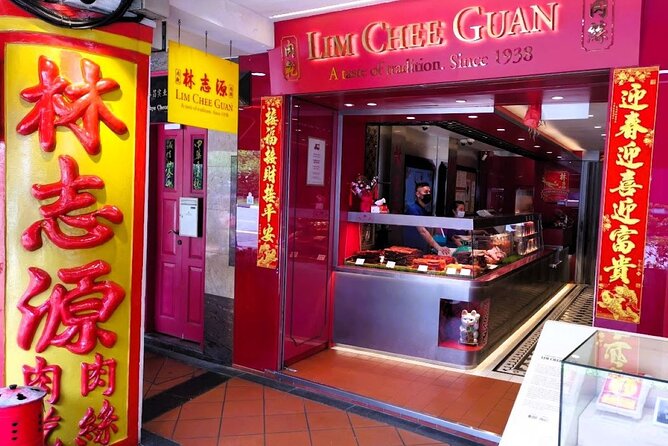
- Lim Chee Guan New Bridge Road Store: established 1938, surviving the Second World War, and still loved after 85 years. You spend about 10 minutes.
- Pek Sin Choon Pte Ltd: a tea shop established in 1925, known for Nanyang blends. Another 10-minute stop.
- Tai Thong Cake Shop: an old bakery from 1950, selling Cantonese-style mooncakes and sweets year-round. You’ll stop for a taste during 10 minutes.
The nice part is that these aren’t just name drops. Each one gives you a reason to care about Chinatown’s food culture: long-running shops, local blends, and treats that locals actually keep buying.
If you have a sweet tooth, Tai Thong is usually the kind of stop you’ll remember.
Lau Choy Seng and Smith Street: Kitchenware and Murals
Next, you go to Lau Choy Seng Pte Ltd, described as kitchenware along Temple Street. It’s dated to 1948 and is presented as a “treasure trove” that could inspire your own cooking display.
Then you move to Smith Street, where you see another Yip Yew Chong mural. The notes connect it to his own home in Sago Lane decades ago, more than five decades past. You’ll also have time to look at the Lai Chun Yuen Opera House along Smith Street.
These stops are short but meaningful, roughly 15 minutes at Smith Street and 15 minutes at Lau Choy Seng. If you’re the kind of person who likes matching old maps to current streets, this is a satisfying pair.
Sago Street: The Street of the Dead Explanation
At Sago Street, also called the Street of the Dead, the tour explains how Sago Lane earned that name and what it is today.
You’ll get about 5 minutes here. Short, yes, but it’s the kind of detail that makes your walk feel lived-in. You’re not just seeing old signage. You’re learning how the area’s role changed over time.
Fong Moon Kee: Ointment Shop Finale for Aches and Pains
The tour ends at Fong Moon Kee (冯满记), an ointment shop established in 1908. The notes frame it as possibly helpful for aches and pains, tied to stories of laborers like coolies and rickshaw pullers.
You’ll spend about 10 minutes at the final stop. It’s a fitting closer because it connects to the everyday reality behind the historic buildings. When a neighborhood survives, it does so because of constant small needs: food, tools, remedies, and community.
Price and Logistics: Is $55.51 Actually Good Value?
At $55.51 per person, this tour isn’t trying to be a budget steal. But it also isn’t a luxury splurge.
Here’s what you’re paying for, practically:
- A licensed guide for about 3.5 hours
- A route packed with multiple major sights across faith, education, and commerce
- Lunch plus snacks, including soya sauce chicken noodles or rice
- A small group size (max 15)
- A poncho if it rains
What you’re not paying for: gratuities. That’s normal, but it’s worth factoring into your total budget.
Compared to doing Chinatown on your own, the value is in the order and interpretation. Chinatown is easy to wander. It’s harder to understand. This tour gives you structure fast.
Pacing and Walking Comfort: The Only Real Trade-Off
This is a “see a lot” style of tour. The pace will feel quick at times, especially because there are many short stops and a lot of route content packed into the day.
If you want unhurried photo sessions at every stop, build in the reality that you’ll likely have to choose. If you prefer learning first and photographing second, you’ll do fine.
I’d also treat this as a smart choice for people who like questions. The guide’s style is described as cheerful and open to questions, and that can turn quick stops into genuinely useful moments.
Who This Tour Suits Best
This is a great fit if you:
- Want an efficient Chinatown introduction with real context
- Like temples, older institutions, and street-name stories
- Enjoy local food that’s part of the neighborhood routine
- Prefer small-group touring over large bus crowds
It may be less ideal if you:
- Need lots of time at each site for photos or lingering
- Get tired easily on walks that cover many stops in half a day
Should You Book This Singapore Chinatown Walking Tour?
Yes, I think you should book this if you want Chinatown to make sense quickly and you’re hungry for more than a quick photo loop. The temple-and-street storytelling, the Yip Yew Chong mural stops, and the lunch at Chiew Kee Noodle House are a strong combo for the price.
If you hate rushing, choose your priorities. Hit the big photos at the temple courtyards and the skyline start, and let the short shop and street-name stops do what they’re best at: giving you clues that stay with you after the tour ends.
FAQ
How long is the Singapore Chinatown walking tour?
It runs for about 3 hours 30 minutes.
What is the price per person?
The price is $55.51 per person.
What time does the tour start, and where is the meeting point?
It starts at 10:00 am. The meeting point is The Whisky Distillery, 1 Raffles Pl, #01-07/08, Singapore 048616.
Where does the tour end?
The tour ends at Fong Moon Kee (冯满记), 16 Sago St, Singapore 059016.
What’s included for lunch and snacks?
Lunch is a traditional soya sauce chicken noodle or rice meal, and snacks are also provided.
Is it an easy walk for most people?
The tour notes that most travelers can participate, and it also keeps the group size to a maximum of 15.
Do I need to pay admission fees for the stops?
The itinerary lists admission as free for each stop shown in the route.
What if it rains?
A disposable poncho is included.
FAQ
Can I cancel for free?
Yes. Free cancellation is available up to 24 hours in advance for a full refund.