REVIEW · CHINATOWN, LITTLE INDIA & KAMPONG GLAM WALKING TOURS
Singapore: Chinatown Historic Walking Tour with Lunch
Book on GetYourGuide →Operated by On-A-Roll-Tours · Bookable on GetYourGuide
Chinatown gets personal on foot. This Singapore Chinatown Historic Walking Tour turns temple streets and old shophouses into a guided story you can actually walk through. You get temples, lanes, and a proper local lunch—then finish with tea and traditional remedies.
I especially like two things. First, Ping’s storytelling makes the religious sites and old buildings feel practical, not like museum facts. Second, lunch at Chiew Kee Noodle House is built around Singapore’s famed soy sauce chicken, which is the kind of meal that resets your legs fast.
One possible drawback: it’s rain or shine and you’re on your feet for 210 minutes, so plan for steady walking and bring comfortable shoes.
In This Review
- Key things to know before you go
- Meeting at The Whisky Distillery in One Raffles Place, then walking for real
- Yueh Hai Ching Temple: starting with Raffles Place and early Chinese immigrant hopes
- Fuk Tak Chi Museum: a Taoist shrine turned into a place you can step inside
- Nagore Dargah and the street-level mix of Chinatown faiths
- Thian Hock Keng Temple (1821): Mazu worship and the architecture you’ll remember
- Ann Siang Hill, Chinese Weekly Entertainment Club, and Goh Loo Club shophouse views
- Mohamed Ali Lane stories: where the guide turns sidewalks into scenes
- Chiew Kee Noodle House lunch: soy sauce chicken and a real break (35 minutes)
- Yue Hwa Building, The Majestic, and New Bridge Road shopping street references
- Pagoda Street and Sri Mariamman Temple: two faith landmarks in one flowing walk
- Smith Street to Sago Lane: trading history you can almost feel underfoot
- Buddha Tooth Relic Temple, Maxwell Food Centre, and Singapore City Gallery: modern Singapore’s mirror
- Pek Sin Choon for tea and Cantonese pastries: the food culture piece you shouldn’t skip
- Fong Moon Kee: wrapping up with traditional remedies from the early 1900s
- Is $54 good value for this 210-minute Chinatown with lunch?
- Who should book this Chinatown Historic Walking Tour with lunch
- My bottom line: should you book
- FAQ
- Where is the meeting point?
- What time does the tour start?
- How long is the tour?
- Is lunch included, and where do we eat?
- What language is the guide?
- Will the tour run in the rain?
- What should I bring?
- How does cancellation work?
Key things to know before you go
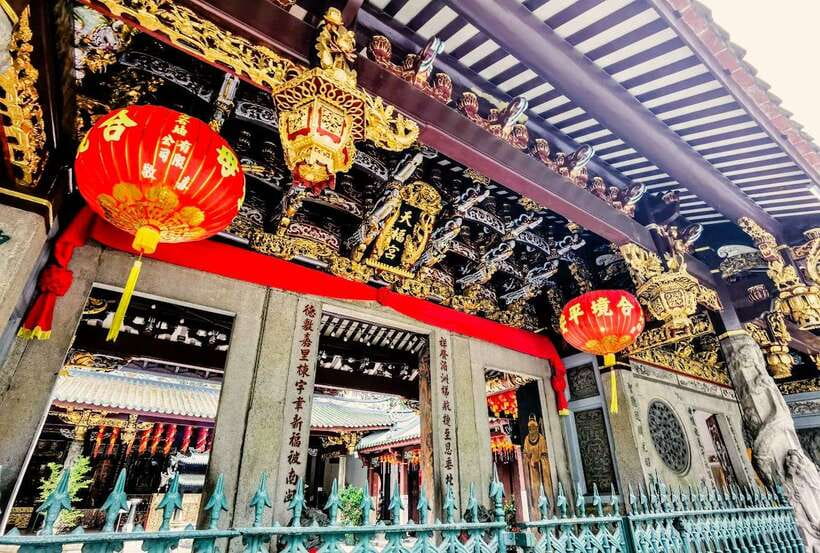
- Temple timeline you can see in person, including Thian Hock Keng Temple built in 1821
- Lunch with a local reputation at Chiew Kee Noodle House, known for soy sauce chicken
- Tea-shop stop with over a century of history, plus time to browse Cantonese pastries
- Multiple faiths in one district, with quick guided visits at sites like Sri Mariamman Temple and Buddha Tooth Relic Temple
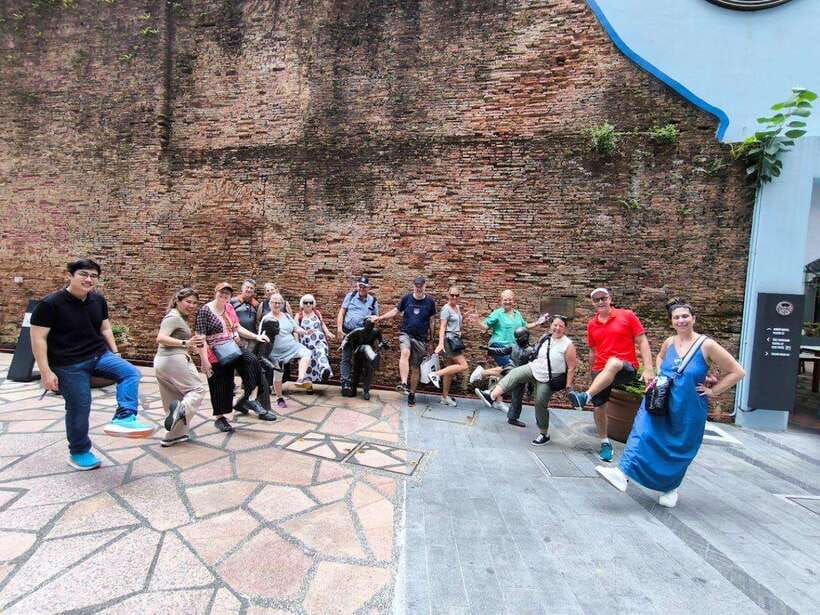
- A photo-friendly guide, with Ping taking pictures during the walk and sharing them afterward
Meeting at The Whisky Distillery in One Raffles Place, then walking for real
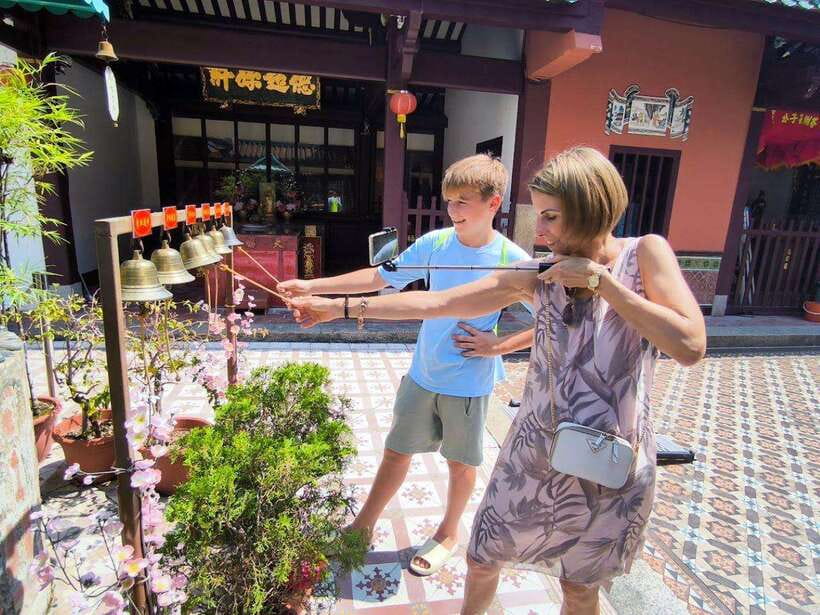
You meet at The Whisky Distillery at One Raffles Place, across from Raffles Place MRT Exit A, at 9:55 AM for a 10:00 AM start. This is a handy launch point because you’re starting in the more central end of the area, then moving deeper into Chinatown’s streets and lanes.
You should be ready for a full morning, not a short stroll. The tour is 210 minutes total, rain or shine, with a guide who keeps the pace moving but focused on explanations—not just marching from stop to stop.
If you want this to feel easy, your best move is simple: wear comfortable shoes and drink water before you’re thirsty.
You can also read our reviews of more walking tours in Singapore

Yueh Hai Ching Temple: starting with Raffles Place and early Chinese immigrant hopes
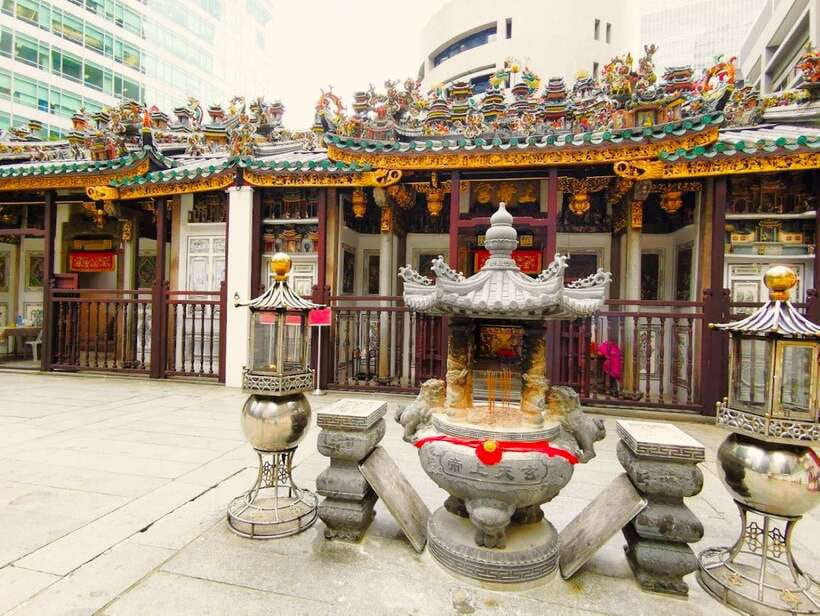
The walk begins with Yueh Hai Ching Temple in Raffles Place (about 20 minutes guided). This is not just a pretty starting point. It’s described as a national monument, tied to the hopes of early Chinese immigrants.
What I like about starting here is the context. You quickly understand why Chinatown looks the way it does: faith, community, and trade all shaped the district long before today’s streets existed in their current form.
Take a moment to notice how the area around Raffles Place connects to Chinatown. The tour uses this early site to set up what you’ll see later—temples, shrines, and meeting places that weren’t just religious buildings.
Fuk Tak Chi Museum: a Taoist shrine turned into a place you can step inside
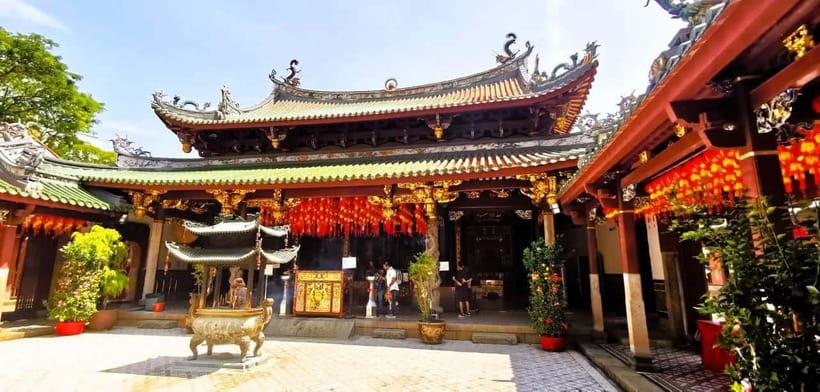
Next up is Fuk Tak Chi Museum (about 20 minutes). The key detail here: it was once a Taoist shrine and has been restored, with the museum setting housed inside a boutique hotel.
This stop works well because you’re not just viewing architecture from the sidewalk. You get a guided look at how old religious spaces can be preserved and repurposed while still keeping their meaning. It also gives you a breather in the day’s schedule without making the tour feel slow.
If you like history with a physical sense of place, this is one of the stronger “pause and look closely” moments.
Nagore Dargah and the street-level mix of Chinatown faiths
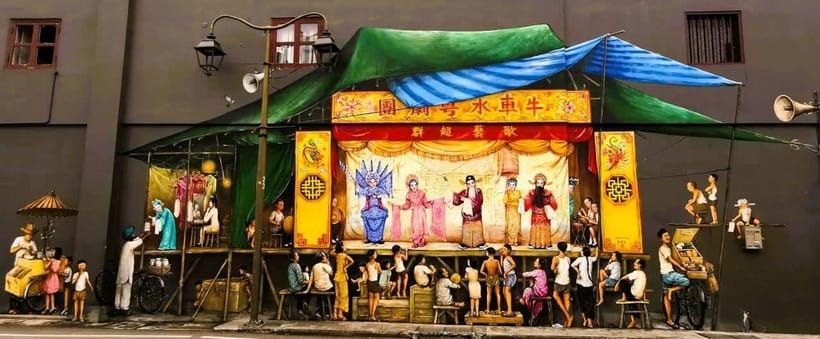
You’ll make a quick guided stop at Nagore Dargah (about 5 minutes). It’s short by design, but it supports the broader point of the tour: Chinatown is not one single storyline. It’s a district shaped by different communities living close together.
That matters because it changes how you interpret what you see next. When you notice other temples and shrines later, they won’t feel random. They’ll feel connected to the same urban reality—people building community where they live and work.
Think of this as a “connector stop” that helps your guide connect the dots.
Thian Hock Keng Temple (1821): Mazu worship and the architecture you’ll remember
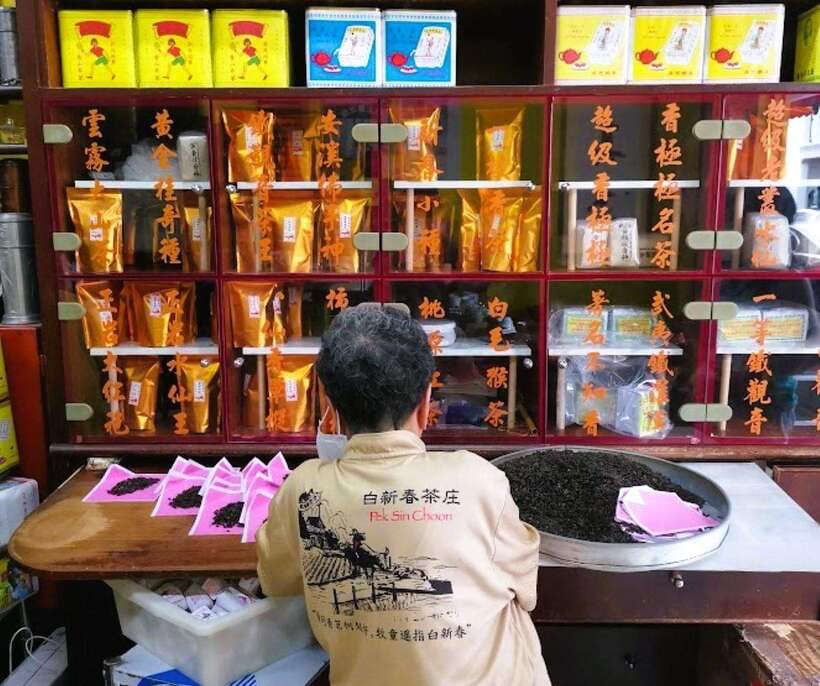
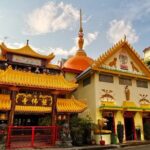
Then comes the star temple on the route: Thian Hock Keng Temple (about 25 minutes guided). This temple was built in 1821 to honor the sea goddess Mazu.
I like that your guide frames it as more than a date on a sign. Mazu worship ties to maritime life and the needs of people who depended on sea routes. If you’ve never traveled with that mindset, this stop gives you the missing piece.
Look up and around. The tour is focused on telling you what you’re seeing and why it matters, not just pointing out “old buildings.” If you take photos, you’ll have plenty of chances here because the structure is visually busy in a good way.
You can also read our reviews of more historical tours in Singapore
Ann Siang Hill, Chinese Weekly Entertainment Club, and Goh Loo Club shophouse views
After the main temple, you’ll walk up Ann Siang Hill (about 10 minutes). Your guide also builds in short photo moments at key heritage structures, including the Chinese Weekly Entertainment Club and the Goh Loo Club shophouse (with Goh Loo Club getting about 20 minutes guided).
These stops are a big deal if you care about how Chinatown felt in everyday life. Temples tell you about belief. Shophouses and club buildings show you how people gathered for culture, conversation, and community.
If you’re traveling with someone who worries about walking tours being too temple-heavy, this part often wins them over. It adds street-level texture and makes the district feel lived-in.
Mohamed Ali Lane stories: where the guide turns sidewalks into scenes
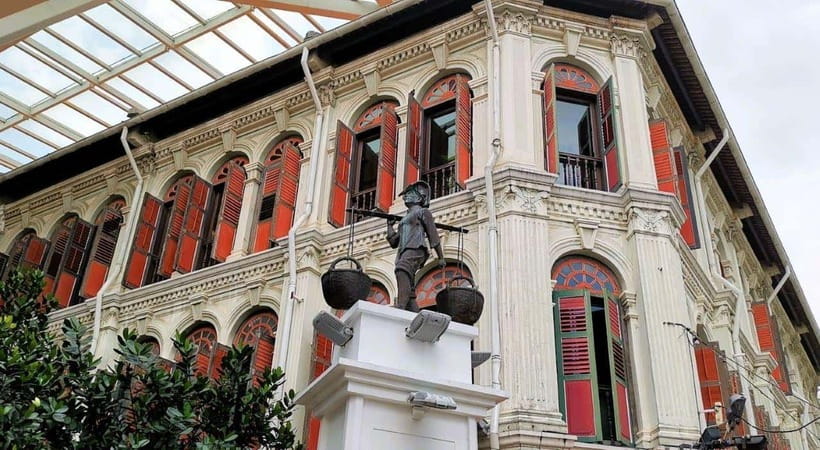
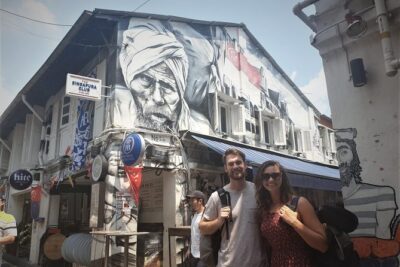
You also pass Mohamed Ali Lane (about 5 minutes guided). The tour’s strength here is the way your guide uses this lane to explain Chinatown’s colorful past.
This is where a great guide earns their fee. Ping’s approach—energetic, clear, and ready for questions—makes small stretches feel meaningful. You’re not only seeing another street; you’re hearing why that street mattered.
If you like walking with explanations that help you notice details yourself, this is one of the sections where you’ll feel it most.
Chiew Kee Noodle House lunch: soy sauce chicken and a real break (35 minutes)
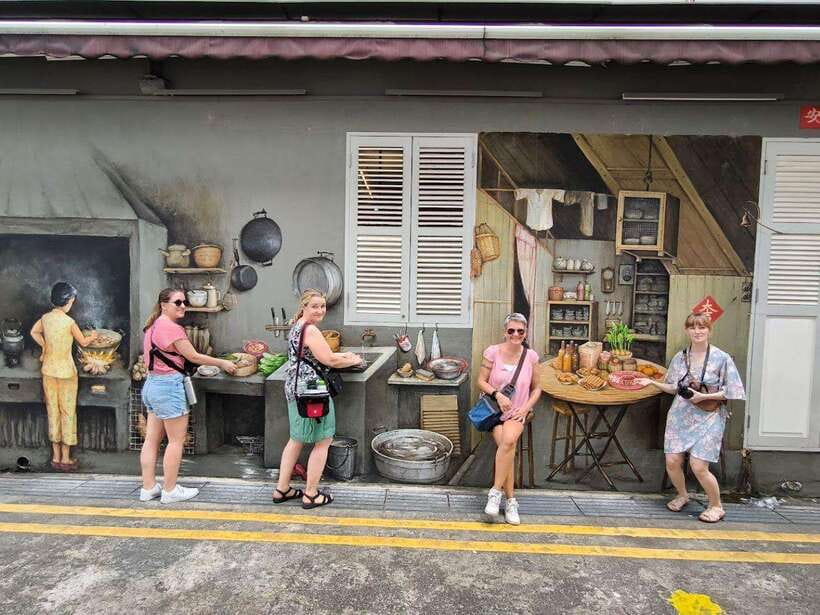
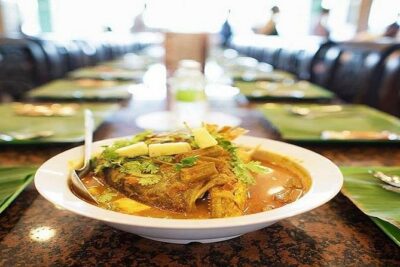
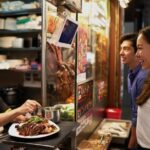
Lunch is at Chiew Kee Noodle House (about 35 minutes). This is one of the best-known stops on the route, famed for soy sauce chicken. The tour also frames it as one of Singapore’s oldest and most beloved restaurants.
I love meal timing on long walks like this. You’re eating around mid-route, so you don’t just “fit lunch in.” You actually reset before the tour keeps moving into the shopping and tea-and-medicine portion.
Practical tip: go hungry, but not frantic. You’ve been walking and listening, so your appetite will likely kick in right on schedule. Also, take your time ordering and tasting. This is your one real sit-down block during the full 210 minutes.
Yue Hwa Building, The Majestic, and New Bridge Road shopping street references
After lunch, the tour shifts into heritage commerce. You get a look at places like Yue Hwa Chinese Products and the Yue Hwa Building (about 3 minutes guided), plus a quick stop/photo moment at The Majestic (about 2 minutes guided).
You’ll also hear about Lim Chee Guan’s famous New Bridge Road store. The tour doesn’t linger forever here, but it gives you a map of what to notice even after the walk ends.
Why this part is valuable: Chinatown is not just temples. It’s trade. And when your guide connects names, streets, and shops back to community life, you start seeing the district like an ecosystem, not a list of attractions.
Pagoda Street and Sri Mariamman Temple: two faith landmarks in one flowing walk
You’ll visit Pagoda Street (about 10 minutes guided) and then Sri Mariamman Temple (about 10 minutes guided). With multiple religious sites across the district, the tour helps you compare how different communities express belief in the built environment.
If you’ve only seen Chinatown from one angle before, this makes the area feel more complete. You stop seeing it as a single-photo backdrop and start seeing a neighborhood shaped by different traditions sharing the same streets.
Keep your camera handy, but also keep your attention on your guide’s explanations. The “why” makes the visual details click.
Smith Street to Sago Lane: trading history you can almost feel underfoot
Next comes Smith Street (about 10 minutes guided). Your route also references Sago Lane, once home to the city’s sago factories.
This part is a good reminder that Chinatown’s older industries still echo in the street layout. Even if you don’t find “factories” running today, the district’s identity comes from what it used to process and sell.
When you walk Smith Street during the tour, you’re basically taking a short historical shortcut: seeing the present while your guide points out the old commercial logic beneath it.
Buddha Tooth Relic Temple, Maxwell Food Centre, and Singapore City Gallery: modern Singapore’s mirror
The tour includes several later stops that broaden the story beyond just early Chinatown.
- Buddha Tooth Relic Temple (about 5 minutes guided)
- Maxwell Food Centre (about 5 minutes guided)
- Singapore City Gallery (about 20 minutes guided)
I like this sequence because it prevents the morning from feeling stuck in the past. You see faith sites, then a food centre that reflects everyday city life, then a gallery stop that helps you connect neighborhood history to the bigger Singapore picture.
If you’re the type who wants one or two “big context” moments to go with the street walking, Singapore City Gallery is the kind of stop that helps. It’s longer than the other later sites, so it gives your brain space to sort what you learned.
Pek Sin Choon for tea and Cantonese pastries: the food culture piece you shouldn’t skip
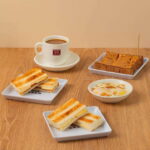
After the temple-and-street portion, the tour moves into a more sensory tradition: a tea shop called Pek Sin Choon (listed as over 100 years of history). You’ll have time to experience the tea shop and browse Cantonese pastries.
This is a smart add-on because Chinatown history isn’t only architectural. It’s also how people shop, snack, and gift. The tour uses the tea merchant as a bridge between older Chinatown and what still gets practiced today.
If you like trying sweets or learning how people shop for treats, this stop is one you’ll appreciate even if you’re not a tea person.
Fong Moon Kee: wrapping up with traditional remedies from the early 1900s
To finish, you end at Fong Moon Kee, a family-run shop specializing in traditional remedies since the early 1900s. This final stop adds a practical edge to the tour.
Instead of only ending with temples and pastries, you end with something people used for daily wellbeing. It’s a reminder that local tradition includes healthcare habits as well as celebrations and food.
This ending also works for your trip planning. When you leave with names like these fresh in your mind, you’ll feel more confident exploring Chinatown on your own after the tour.
Is $54 good value for this 210-minute Chinatown with lunch?
At $54 per person for 210 minutes, this is usually a fair deal if you want both structure and stops that are hard to piece together alone.
You’re getting:
- A live English guide throughout
- Lunch at Chiew Kee Noodle House (soy sauce chicken is the headline)
- A disposable poncho if rain shows up
The biggest value isn’t just the cost. It’s the time and the sequencing. Chinatown is easy to walk around without understanding what you’re looking at. This tour gives you a path, explanations, and a meal at a key moment.
If you’re the kind of traveler who likes to learn while moving, you’ll likely feel like the tour pays for itself in understanding.
If you’re looking for a minimalist experience with only a couple major stops, this might feel like a lot. The upside is that you’ll leave with a bigger map of Chinatown than you started with.
Who should book this Chinatown Historic Walking Tour with lunch
Book it if you:
- Want a guided Chinatown that connects temples, shophouses, and food
- Prefer an English guide who stays energetic and answers questions
- Like photo moments during walks (Ping takes pictures and shares them after)
You might want a different plan if you:
- Struggle with long outdoor walking (it’s rain or shine)
- Want long, slow museum-style stops only
This tour tends to work well for first-timers, and it also works for people who have been to Singapore before but want a deeper look at how Chinatown functions.
My bottom line: should you book
Yes, if you want a practical Chinatown orientation plus a meal that tastes like Singapore. The mix of Thian Hock Keng Temple, lunch at Chiew Kee Noodle House, tea-and-pastry time at Pek Sin Choon, and the traditional remedies stop at Fong Moon Kee makes the morning feel complete.
If you pick one “organized morning” in Chinatown, this is a strong candidate. Just come ready for walking, and let Ping’s stories do the heavy lifting.
FAQ
Where is the meeting point?
Please meet the guide in front of The Whisky Distillery at One Raffles Place (across from Raffles Place MRT Station Exit A on the street level) at 9:55 AM.
What time does the tour start?
The tour starts at 10:00 AM.
How long is the tour?
The duration is 210 minutes (about 3.5 hours).
Is lunch included, and where do we eat?
Yes. Lunch is included at Chiew Kee Noodle House, known for soy sauce chicken.
What language is the guide?
The live tour guide speaks English.
Will the tour run in the rain?
Yes. The tour takes place rain or shine.
What should I bring?
Bring comfortable shoes and water.
How does cancellation work?
Free cancellation is available up to 24 hours in advance for a full refund.