REVIEW · CHINATOWN, LITTLE INDIA & KAMPONG GLAM WALKING TOURS
Private History & Culture tour (Walking tour)
Book on Viator →Operated by The Hello Tourism Company Singapore Pte Ltd · Bookable on Viator
Big stories, short walks, great food.
This private Singapore history and culture tour is built for first-timers who want context fast, starting at City Hall and sweeping through colonial landmarks, river scenes, and modern viewpoints. I like that it’s a small-group setup with your own guide, so you get answers in plain language and can keep the pace comfortable.
I also really like that the best parts aren’t just photos. You get dinner (chicken rice) plus a traditional tea tasting that ends the night with a slower, local feel, not another rushed stop at another viewpoint.
One consideration: the tour is designed for walking, and the requirement is about 9 km. They do suggest occasional taxis if you tire out, but taxi costs would be on you.
In This Review
- Key highlights worth your attention
- A private history walk that works as your first Singapore day
- Price and value: what you’re really paying for
- Start at City Hall: the pace, the walking, and how to stay comfortable
- St Andrew’s Cathedral and City Hall: colonial-era landmarks with lived-in meaning
- National Gallery and Clarke Quay: art and the river-trade story
- Bumboat to Merlion Park and Marina Bay: seeing how Singapore reinvented itself
- Esplanade Park, Fullerton Waterboat House: the waterfront’s story in details
- Pinnacle @ Duxton sky gardens: modern Singapore on a city-scale timeline
- Maxwell Food Centre dinner: chicken rice you’ll remember later
- Tea Chapter in Chinatown: a traditional tea tasting with a take-home souvenir
- Who this tour fits best (and who might skip it)
- Should you book this private Singapore history and culture tour?
- FAQ
- Is this tour private?
- How long is the tour?
- What’s included with dinner and drinks?
- Is the river cruise included?
- What does the tea tasting include?
- Where does the tour start and end?
- Do I need to pay for admission tickets during the tour?
- How much walking is involved?
- What if I’m vegetarian?
- What happens if the tea house or rooftop visit is closed?
- What is the cancellation policy?
Key highlights worth your attention
- Small private group: only your party goes, with a maximum of 12 people
- Dinner included: chicken rice plus sugar cane juice
- Bumboat river cruise included: a relaxing Singapore River segment
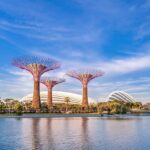
- Iconic skyline stops: Merlion Park, Marina Bay, and a sky-garden view at Pinnacle @ Duxton
- Tea ceremony ending: tea tasting with a take-home souvenir at a historic teahouse
- Plan B for closures: the tea house or rooftop visit switches if weather or hours interfere
A private history walk that works as your first Singapore day
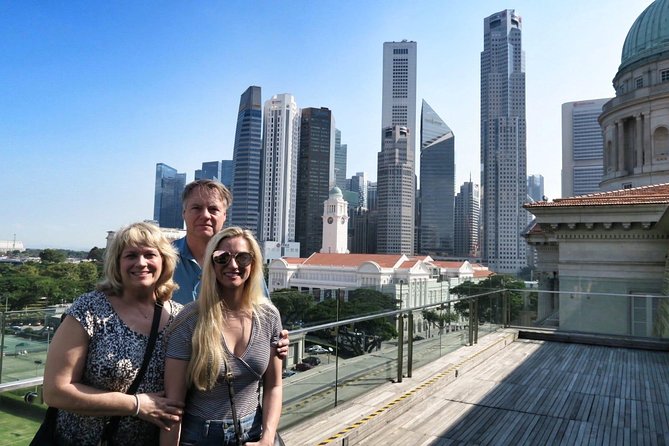
Singapore can feel like two cities at once: old streets and new towers sharing the same view. This tour makes that contrast easy to understand because it moves in a logical line—founding-era landmarks, colonial-era buildings, river trade, and then the modern city you see today. It’s a good way to get your bearings fast without spending your first day staring at a map.
What I like most for your first trip is the balance between stories and real places you can still recognize later. You’ll hear about the city’s early pioneers, the colonial period, and Singapore’s later political transformation under Lee Kuan Yew—then you’ll look up at the skyline and connect the dots.
And since it’s a private tour, your guide can slow down when a question matters. On runs led by guides such as Kavin, Pamela, Su Ling, Richard, and Mr. Young, the common theme is clear explanations and good energy—plus they’ll help with practical stuff like pacing and group photos when you want them.
You can also read our reviews of more walking tours in Singapore

Price and value: what you’re really paying for
At $225.97 per person for about 4 hours 30 minutes, this isn’t a budget stroll. But you’re not just buying admission tickets and a route—you’re paying for a guide, a private group experience, and multiple included activities plus food.
Here’s what makes the price feel more reasonable:
- You get dinner (chicken rice) and sugar cane juice
- The bumboat river cruise is included
- The tea tasting is included, with a take-home souvenir
- The package includes taxes and fees, and the tour notes admission coverage across stops
If you’re traveling as a couple or small family, private guiding can start to feel like a smart trade for time. If you’re solo and happy to wander on your own, you might not love paying for a guide. But if you want a structured overview that you can build on for the rest of your trip, this is a strong setup.
Start at City Hall: the pace, the walking, and how to stay comfortable
The meeting point is City Hall (150 N Bridge Rd), and the tour finishes in Chinatown near Tea Chapter Trading Pte Ltd (9 Neil Rd). It’s built around a slow-casual pace, but you should still plan on real walking.
The tour guidance says you must be physically fit to walk about 9 km. If you tire easily, the tour suggests an occasional taxi ride to cut the distance. Just remember: taxi costs would be payable by yourself, so it helps to keep a little cash or card ready.
Also keep weather in mind. Singapore can be hot and humid, and some stops are outdoors. In that case, the best “value” move is to let your guide know early if you need extra breaks. The best guides keep the group from overheating and adjust the tempo without making it feel like you’re inconveniencing anyone.
St Andrew’s Cathedral and City Hall: colonial-era landmarks with lived-in meaning
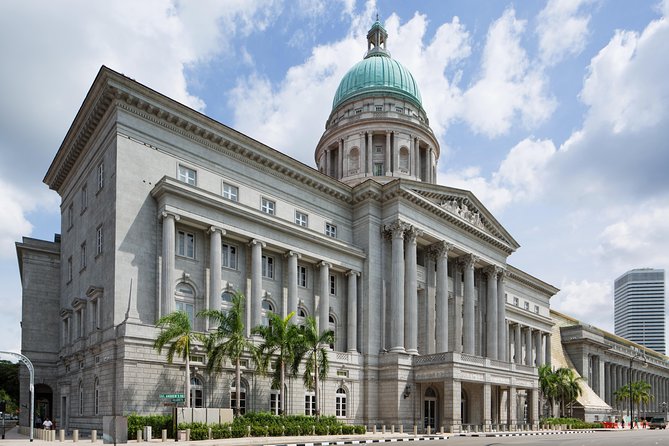
You’ll begin with a stop titled Hello Singapore, which sets the tone and helps orient you with the larger story of Singapore’s founding and development. From there, the walk leans into places that still carry the city’s layered past.
St Andrew’s Cathedral is the oldest Western religious building in Singapore, and it’s been on the site since 1836. The point isn’t just to see a pretty façade—it’s to understand how early communities built institutions they planned to last.
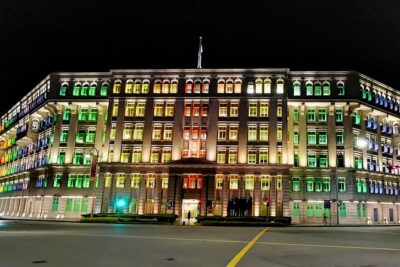
Next up is City Hall, now a national monument. Built in 1926, it’s described as evidence of Singapore’s colonial past and the Japanese occupation, leading toward independence. This is where the tour tends to feel most useful: you’re standing in front of buildings that witnessed major shifts, and your guide can connect those shifts to what you’ll see later near the river and in modern districts.
Potential drawback here: if you’re hoping for lots of inside-the-building time, the stops are relatively short. The structure is more about orientation and perspective than long museum-style visits.
National Gallery and Clarke Quay: art and the river-trade story
National Gallery Singapore is your art stop, covering one of the largest public collections of Singaporean and Southeast Asian art, with over 8,000 artworks. Even if you don’t plan to spend hours inside, this stop is a helpful anchor. Art is often the easiest way to grasp identity, not just dates and rulers.
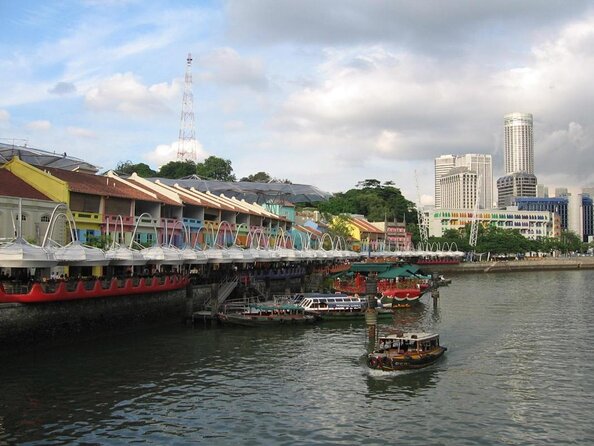
Then you’ll head to Clarke Quay, walking up toward the Singapore River. This area is tied to early traders and businesses that developed along the river. The tour’s advantage is that it connects commerce to geography. Singapore’s location wasn’t an accident—it shaped how people lived, worked, and traded.
What I like about this chapter of the tour is the variety of “types of history.” You get political and institutional history at the start, then you pivot to trade and culture. That makes it easier to remember later when you’re comparing old neighborhoods with shiny new developments.
You can also read our reviews of more private tours in Singapore



Bumboat to Merlion Park and Marina Bay: seeing how Singapore reinvented itself
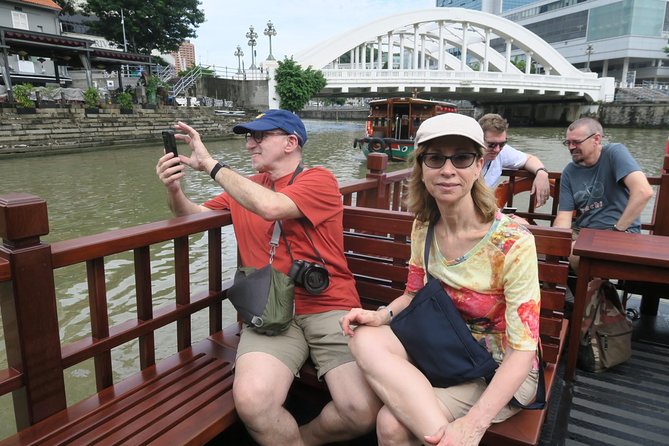
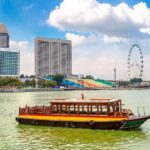
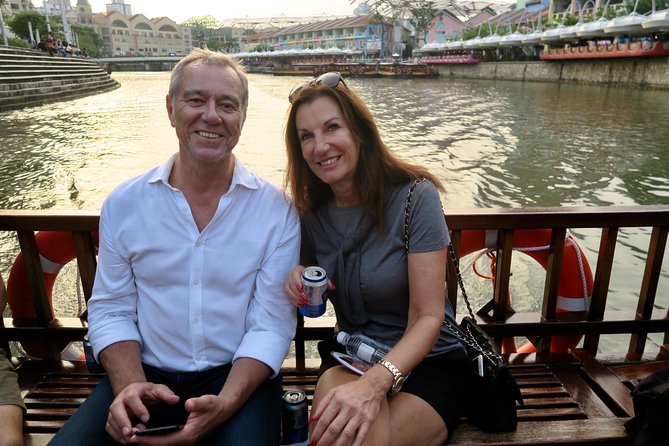
The included river cruise is one of the best segments for most people because it resets you. You board a bumboat for a relaxing ride along the river, and the cost is included (the tour describes it as the Boat Quay River Cruise). It’s a nice break halfway through, and the views you get while moving are different from the views you get standing still.
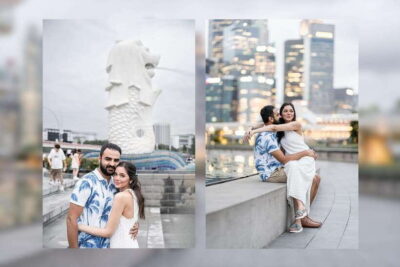
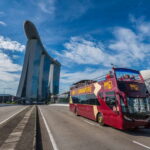
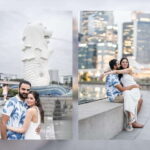
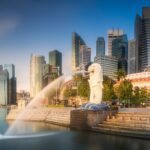
After that, you reach Merlion Park, where you can soak in Marina Bay views—especially around sunset. Merlion Park is a photo magnet, but the tour adds value by explaining the “mega construction project” behind the area. In other words: you’re not just looking at an icon; you’re learning what it took to create the modern waterfront.
Then comes Marina Bay, with waterfront walking aimed at the architectural icons around you. This section helps you understand Singapore as a place that plans, builds, and then re-plans again. The city didn’t just grow—it changed its shape.
Small caution: this is where you’ll want to be ready for open-sun conditions and crowds. If you’re heat-sensitive, tell your guide early and take short shade breaks when offered.
Esplanade Park, Fullerton Waterboat House: the waterfront’s story in details
Next you’ll visit Esplanade Park, described as one of Singapore’s oldest parks, with memorials that reflect contributions made by many great men. It’s a reminder that public spaces often carry national memory, not just benches and trees.
From there, you’ll check out The Fullerton Waterboat House, right by the mouth of the Singapore River near Merlion Park. It’s part of the Fullerton Bay Hotel complex, built in the 1940s. Even if you don’t go inside, the timing and location matter—this is the river’s “edge” where old logistics meets newer hospitality.
This portion of the walk is a good example of why a guided route helps. You’ll notice buildings and structure far more clearly when you know what role the area played—especially when you compare it to where you’re going next, toward modern housing and skyline views.
Pinnacle @ Duxton sky gardens: modern Singapore on a city-scale timeline
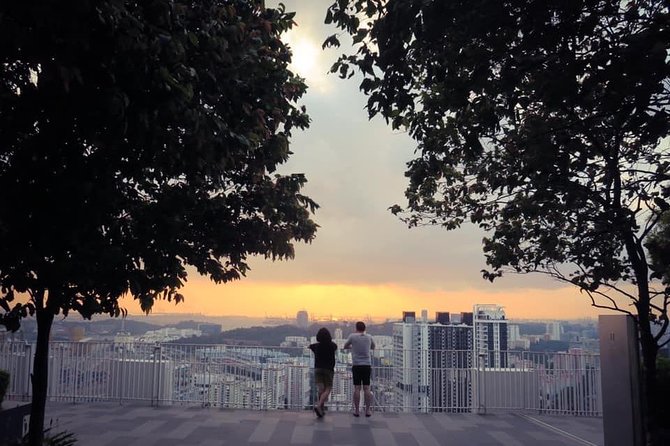
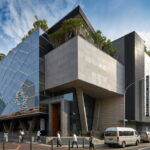
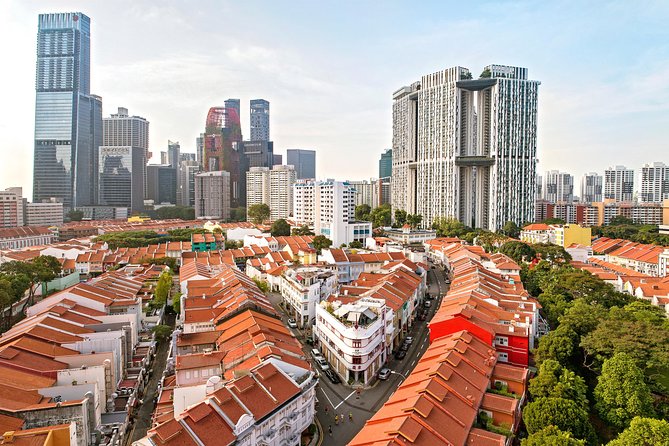
The stop at The Pinnacle @ Duxton is a modern counterpoint. It’s a 50-story residential development in the city center, and the big draw is its sky gardens—two long sky-garden stretches on the 26th and 50th floors.
The tour even includes a practical “plan B”: if the rooftop of the Pinnacle is closed due to bad weather, you’ll be taken to a different HDB building instead. That kind of contingency matters in Singapore, where weather can flip quickly.
What I like about including this stop is how it reframes what “Singapore history” can mean. History here isn’t only colonial-era architecture and monuments—it’s also the way today’s city designs living spaces, vertical neighborhoods, and public greenery.
Maxwell Food Centre dinner: chicken rice you’ll remember later
In Chinatown, you’ll head to Maxwell Food Centre. This is where the tour turns from history to taste, and it works because it’s not random street food. You’re specifically aiming for Singapore’s most iconic dish: chicken rice, and the tour includes that dinner.
The details are important: it’s not just chicken rice alone. The experience also includes sugar cane juice (the tour notes it as part of the included items). In Singapore, that combo is a classic “real meal” approach—simple, filling, and perfect after a long walk.
If you’re vegetarian, the tour notes they’ll try to get you something at the hawker centre, but they can’t guarantee what will be available and it might be fairly basic (like rice and vegetables). So if you’re strict or have strong preferences, it’s smart to communicate that clearly when you book.
Tea Chapter in Chinatown: a traditional tea tasting with a take-home souvenir
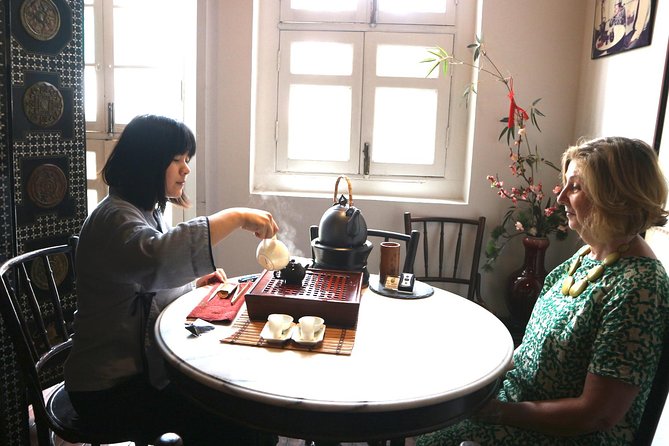
The tour ends at Tea Chapter, in Chinatown. You’ll visit the tea house and learn about the tea ceremony, then try the imperial tea served to Queen Elizabeth II in the same teahouse. That detail gives the experience a connection point that goes beyond just sipping something hot.
You also get a take-home souvenir with the tea tasting. And there’s a practical backup plan: if the tea house is closed for any reason, the tour states it will include a larger dinner section instead.
This ending matters because Singapore can be “go-go-go.” Tea is the slower finish that helps the whole day feel like a story arc rather than a checklist of landmarks.
Who this tour fits best (and who might skip it)
This is a great fit if:
- you’re a first-time visitor and want a guided overview with real context
- you like history tied to places you can later revisit on your own
- you want food included so you’re not hunting for dinner while you’re tired
- you prefer a private guide who can keep pace comfortable
You might skip it if:
- you hate walking long distances and don’t want the 9 km requirement
- you’d rather spend your time fully independent and not follow a set route
- you’re mainly interested in deep museum time rather than quick stops with explanation
The tour also supports service animals and is near public transportation, but the core experience is still built on walking. Think of it as a “city orientation with meals,” not a single-theme museum tour.
Should you book this private Singapore history and culture tour?
I’d book it if you want a high-efficiency first day that also delivers on comfort and taste. The combo of colonial landmarks, river time, skyline viewpoints, and a real meal plus tea tasting is a smart mix, especially for travelers who don’t want to spend their first hours figuring out what to prioritize.
I’d hesitate only if you’re worried about the walking distance or you’re expecting lots of inside-the-building time at each stop. If that’s you, you can still make it work by planning hydration and telling your guide early if you need taxi help.
Overall, it’s a thoughtful way to learn how Singapore became what you see today—then taste and sip the finish like the city wants you to.
FAQ
Is this tour private?
Yes. It’s a private tour, meaning only your group participates, and the group size can be up to a maximum of 12 people.
How long is the tour?
The tour runs for about 4 hours 30 minutes.
What’s included with dinner and drinks?
Dinner includes chicken rice, and you also get sugar cane juice.
Is the river cruise included?
Yes. You’ll take a bumboat cruise along the Singapore River, and the boat cruise cost is included.
What does the tea tasting include?
You’ll do a traditional tea tasting experience at a historic teahouse and you’ll receive a take-home souvenir.
Where does the tour start and end?
It starts at City Hall (150 N Bridge Rd) and ends in Chinatown at Tea Chapter Trading Pte Ltd (9 Neil Rd). Your guide will provide directions back to your hotel.
Do I need to pay for admission tickets during the tour?
The tour notes admission ticket coverage across stops and also includes all taxes, fees, and handling charges.
How much walking is involved?
The tour requires you to be physically fit and able to walk about 9 km. The pace is described as slow and casual, with an option to use taxis occasionally at your own expense if needed.
What if I’m vegetarian?
They promise to get you something to eat at the hawker centre, but they can’t guarantee what will be available. It might be quite basic, such as rice and vegetables.
What happens if the tea house or rooftop visit is closed?
If the tea house is closed, the tour includes a larger dinner section instead. If the Pinnacle rooftop is closed due to bad weather, the tour takes you to a different HDB building.
What is the cancellation policy?
If you cancel more than one week (more than 168 hours) before the experience, you get a full refund excluding the booking service fee. If you cancel between 7 days and 2 days (between 167 and 48 hours before), you get a 50% refund excluding any service charge. There’s no refund under 48 hours cancellation.