REVIEW · CHINATOWN, LITTLE INDIA & KAMPONG GLAM WALKING TOURS
Singapore: Little India Hawker Street Food Tour
Book on GetYourGuide →Operated by Let's Go Bike Singapore · Bookable on GetYourGuide
Eight bites, and suddenly Little India makes sense. This 3-hour Little India hawker street food tour is built around tasting your way through Singapore’s Indian food belt, with a licensed English guide helping you find the stalls that locals actually line up for. I especially like the food-and-culture combo: you’re not just eating, you’re also getting small street art and local history moments that explain why the neighborhood feels the way it does.
The route is also a practical win if you’re new to Indian street food. You’ll sample classics like Indian Rojak, Thosai, and Pani Puri, plus other regional picks that reflect how India’s food shows up in Singapore hawker centers. One consideration: the tour can be rescheduled if the minimum of two people isn’t met, so check your timing before you lock in other plans.
In This Review
- Key highlights worth planning for
- Why Little India hawker food beats restaurant-only Singapore
- Meeting at Little India MRT Exit C: how the 3-hour pacing feels
- The 8-dish tasting plan: what you’ll actually eat
- Indian Rojak: sweet-sour-chaos in a plate
- Thosai (South Indian): the showpiece you should slow down for
- Pani Puri: the fun, fast, and slightly addictive snack format
- The rest of the lineup: regional variety across the hawker scene
- How the guide turns hawker confusion into confidence
- The neighborhood reality: crowds, Sunday energy, and what it means for your visit
- Price and value: does $86 make sense for 3 hours?
- Who this tour fits best (and who should skip it)
- Should you book this Little India Hawker Street Food Tour?
- FAQ
- How long is the Singapore Little India hawker street food tour?
- How much does the tour cost?
- Where is the meeting point?
- What’s included in the price?
- What languages are offered?
- Can I cancel for a full refund?
- Is there a way to book without paying right away?
- What happens if the minimum number of participants is not met?
Key highlights worth planning for
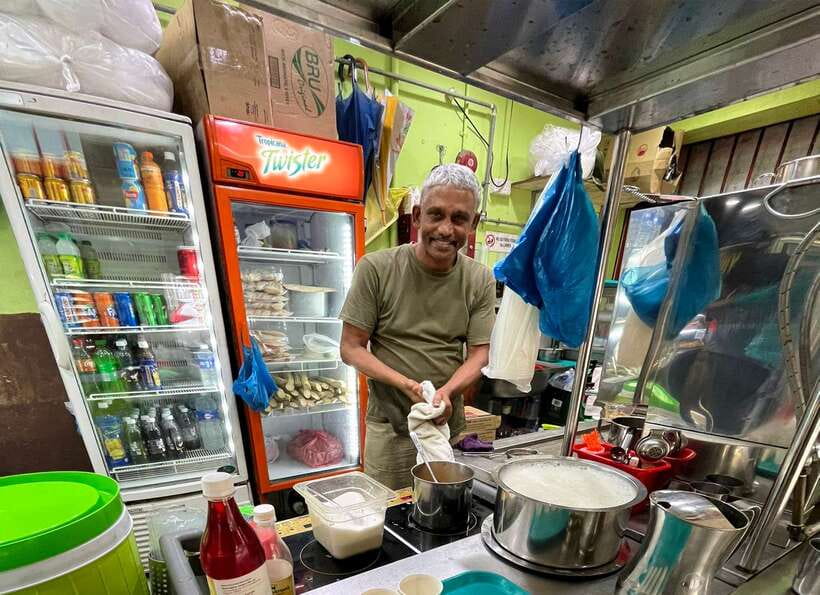
- 8 tastings on a short clock: you’ll leave with a real sense of what Little India eats, not just a single meal.
- You’ll hit Indian staples like Indian Rojak, Thosai, and Pani Puri, including the street-style versions Singapore does so well.
- A guide who manages hawker chaos so you know what you’re ordering and how to eat it.
- Culture stops beyond the food with street art and local history points.
- Famous hawker venues may appear: some departures can include hawker stalls with Michelin recognition.
- Weekend crowds can be intense: on Sundays, the streets can be packed with locals who treat the hawker scene like a day-off ritual.
Why Little India hawker food beats restaurant-only Singapore
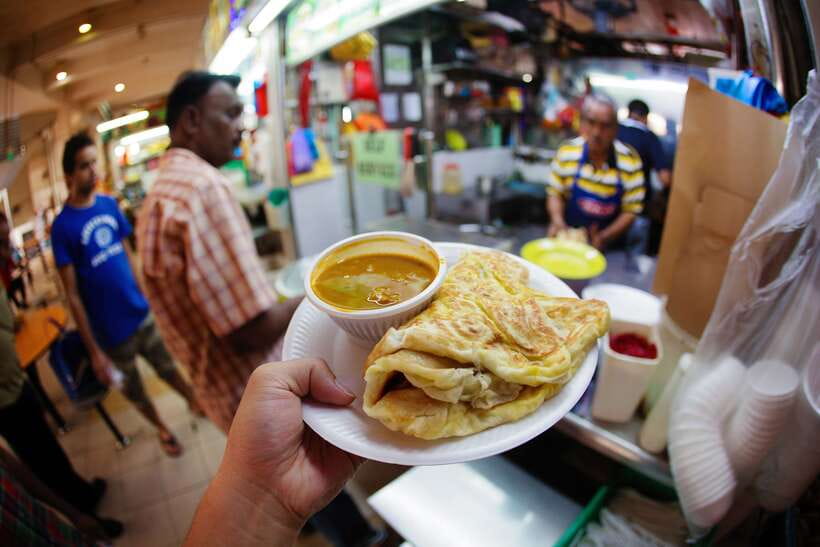
Singapore has a food reputation that can make you think you need Michelin names to get the best bites. This tour takes a different route. It leans hard into hawker culture—the places where the menu is simple, the portions are made for sharing, and the real action happens right in front of you.
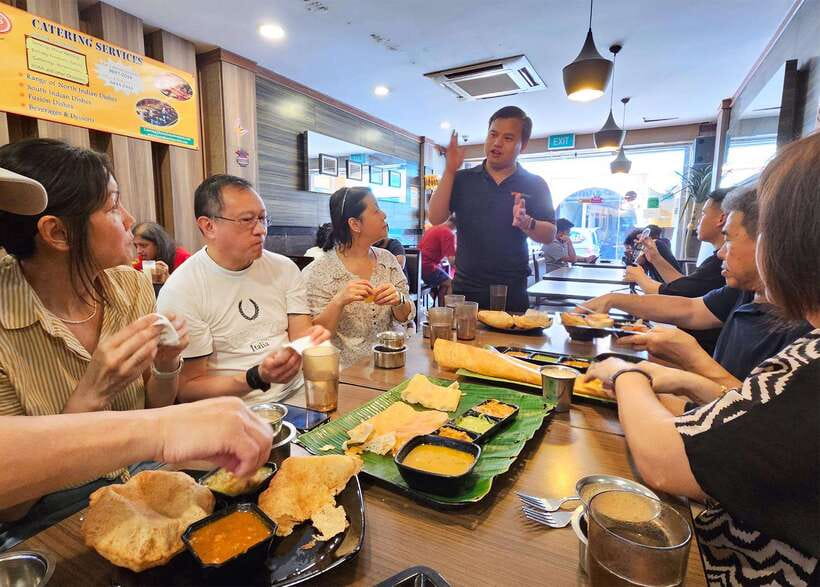
What you gain is context. Hawker stalls are tiny, fast-moving, and designed for repeat customers. When someone guides you through Little India’s food lanes and hawker centers, you learn how to read the scene: what to expect, what to order, and how to pace yourself so you don’t get overwhelmed.
I also like the “food with a reason” angle. Instead of treating the neighborhood like a theme park, you’ll get brief local history and street art stops that help the food feel connected to the people around you. It’s the difference between eating a dish and understanding why it belongs here.
You can also read our reviews of more food & drink experiences in Singapore


Meeting at Little India MRT Exit C: how the 3-hour pacing feels
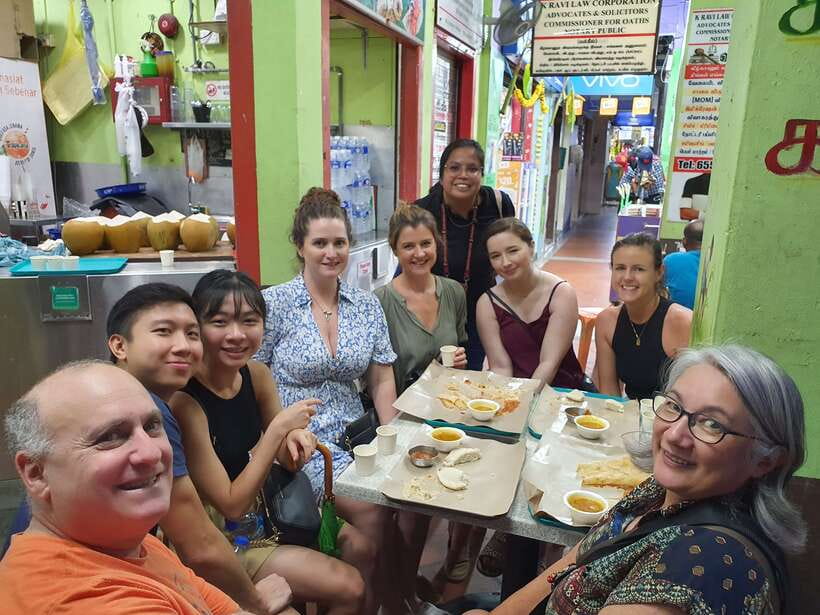
You meet at Little India MRT Exit C, then the group moves into the neighborhood on a tight 3-hour schedule. The best way to think about it: this isn’t a slow museum walk. It’s a guided sequence of short hops—hawker stalls, then a quick move, then the next tastings.
Because the tour includes 8 food/drink tastings, your timing matters. You’ll want to show up hungry and ready for repeated sampling. If you eat a big breakfast right beforehand, you’ll miss the point of the tour: the comparisons. Half the fun is noticing how textures and flavors shift from one stall to the next.
Comfort helps too. Little India streets can get busy, and hawker areas are crowded by design. Wear shoes you don’t mind getting stepped near, and plan to spend more time standing and walking than sitting.
The 8-dish tasting plan: what you’ll actually eat
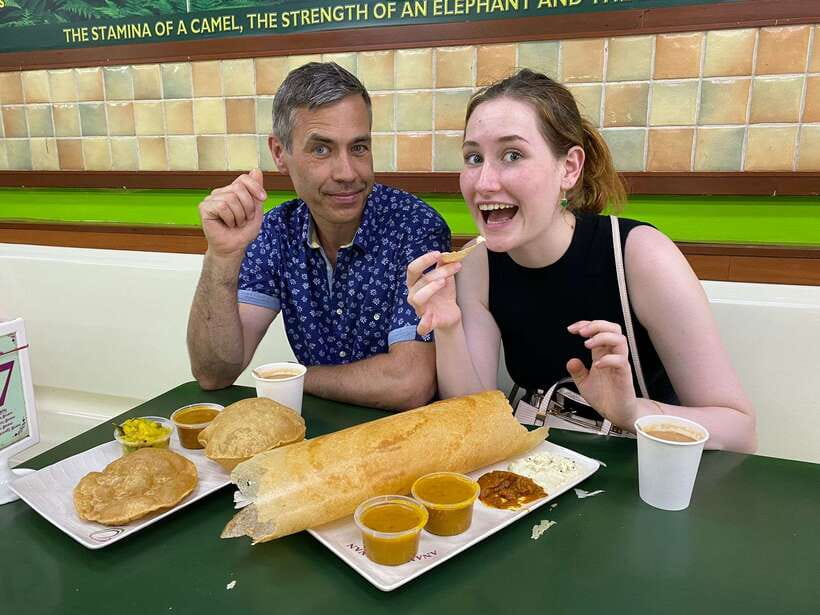
The tour’s structure is simple on paper: 8 dishes and drinks across Little India hawker stops. The value comes from variety—different regional styles, different street-snack formats, and enough flavor range to show you the breadth of Indian food in Singapore.
Indian Rojak: sweet-sour-chaos in a plate
Indian Rojak is one of the big anchors of the experience, and it’s a smart choice for a first taste. It usually sits in that in-between zone where you get crunch, tang, and a layered sauce feel, all in one bite. The street version is exactly that: quick, punchy, and meant to be eaten while you’re still walking.
With a guide, you’re not just tasting—you’re learning how to approach it. Take small bites. Let the flavors hit in order instead of trying to swallow too fast.
Thosai (South Indian): the showpiece you should slow down for
Thosai is where the culinary skill becomes visible. Even if you’ve never watched someone make dosa-style batter, you’ll see the process at the stall level—hot griddles, careful spreading, and the way the texture changes as it cooks.
This stop is also a good palate reset. After sharper street snacks, a crisp, savory thosai-style tasting helps you reset your mouth and appreciate the contrast in spice levels and seasoning.
You can also read our reviews of more tours and experiences in Singapore




Pani Puri: the fun, fast, and slightly addictive snack format
Pani Puri is the other highlight that turns the tour into a sensory event. You’re getting that classic pop-and-sip experience—crisp, then filled with spiced, tangy water. It’s designed for speed, which means you’ll want to be ready for the small size and strong flavor.
I like this stop because it teaches you something practical: Indian street snacks often come in small pieces with big intensity. If you try to treat it like a formal meal course, you’ll miss the joy.
The rest of the lineup: regional variety across the hawker scene
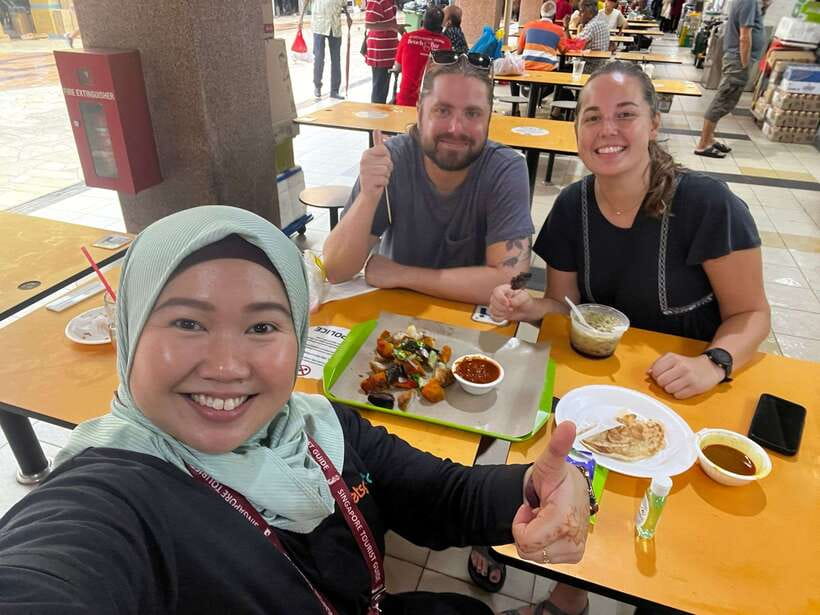
Beyond those named highlights, the tour promises additional tastings—8 total—drawn from Singapore’s Indian food lanes. You can expect more staples from both South and North Indian cuisines, served in the hawker way: portions meant for tasting, not for ordering off a big menu and committing to one dish.
A great advantage is that you’re eating versions that are adapted to Singapore tastes and hawker formats. Some departures can even include hawker stalls with Michelin recognition, which matters because it shows you how world-famous quality can still live in a casual street setting.
How the guide turns hawker confusion into confidence
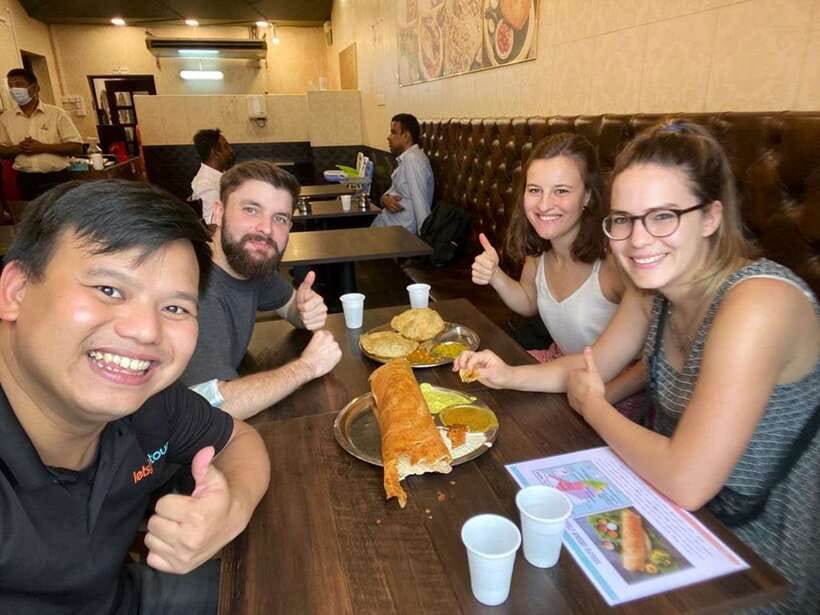
The guides are a major reason this tour works. In different departures, I’ve seen guide names like Kyanta Yap and Corliss praised for mixing information with entertainment and for answering questions in plain language. That combo matters on a hawker tour, because your biggest risk is ordering the wrong thing—or trying to figure out what everyone else is doing while hungry and distracted.
A good guide does three things well:
- Explains what you’re about to eat, so you know what to look for.
- Shows you how to eat it, especially with snacks that are best taken in a specific order.
- Keeps pace without rushing you, so you’re not stuck at one stall too long.
You’ll also get help navigating the social rhythm of hawker centers. There’s a flow—people know where to queue, how to pay, and how quickly they need to move. The guide helps you blend in instead of standing out as the nervous newbie.
The neighborhood reality: crowds, Sunday energy, and what it means for your visit
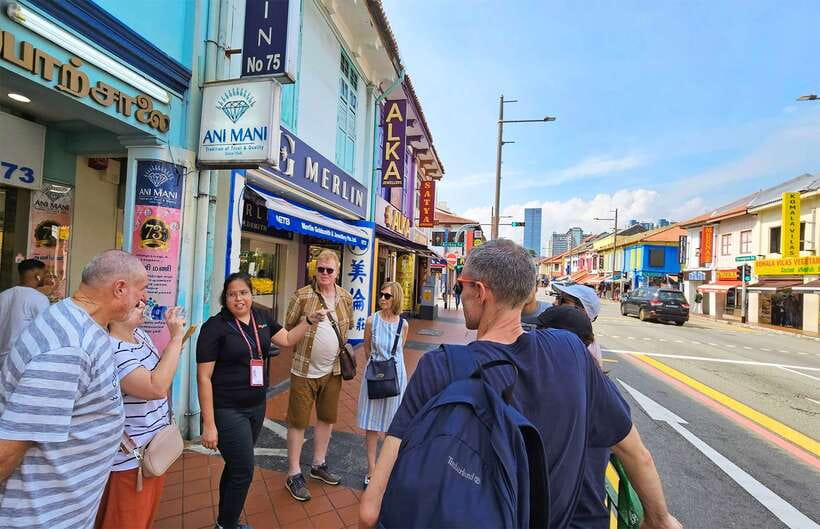
One of the best insights from this tour is that Little India can feel totally different depending on the day. On Sundays, some guests noted that local Indian and Bangladeshi laborers spend their day off in the streets, which makes the food lanes packed.
Here’s the practical takeaway: a packed street doesn’t mean it’s less authentic. It often means you’re seeing the neighborhood in its normal rhythm. You’ll get more background noise, more people weaving around, and more “this is the real routine” energy.
The trade-off is comfort and timing. If you’re sensitive to crowds, you might prefer a day that’s not peak. Either way, show up with the right mindset: this is a working food district, not a quiet tasting room.
Price and value: does $86 make sense for 3 hours?
At $86 per person for 3 hours and 8 food/drink tastings, the value comes down to two things: portions and guidance. You’re not just paying for food. You’re paying for someone to coordinate the route, manage the ordering, and keep you from guessing.
If you were to plan the same route yourself, you’d face three problems:
- You’d need to identify which stalls match your tastes.
- You’d likely miss context about dishes and local habits.
- You’d spend energy making decisions while the best moments pass.
On a hawker tour, that planning time is the hidden cost. This experience packages that work into a guided format so you get more sampling per hour. In other words, $86 feels fair when your goal is variety plus explanation, not just eating one big meal.
The main drawback on value is also straightforward: if you only want one or two specific dishes, this tour may feel like overkill. If you truly want to taste broadly and learn as you go, it’s a strong deal.
Who this tour fits best (and who should skip it)
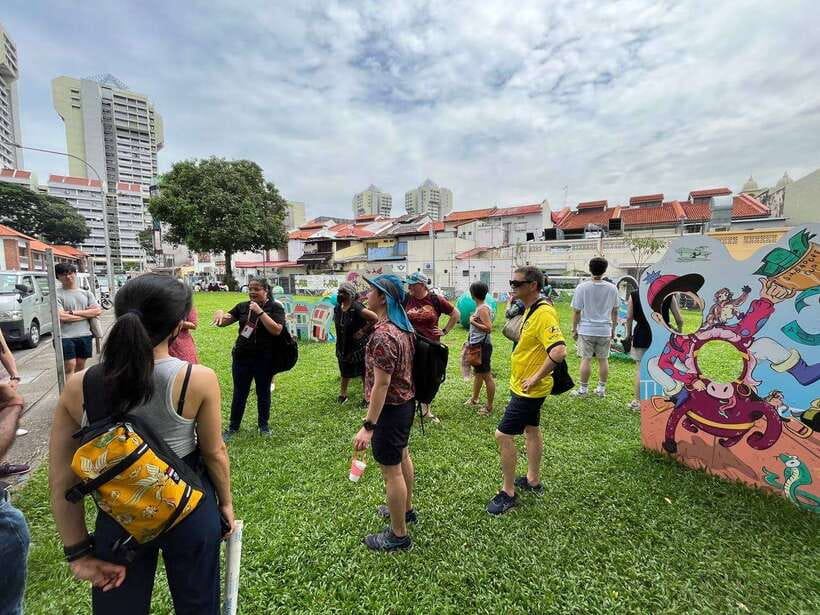
I’d point this tour at three types of travelers:
- First-timers to hawker food who want a low-stress way to order and taste
- Food lovers who like variety more than one perfect dish
- People who enjoy neighborhoods as much as menus—street art, local context, and the daily rhythm matter
You might pass if:
- You dislike spicy food or strongly prefer mild flavors (street menus often lean bold)
- You get uncomfortable in crowded public areas
- You want a sit-down, slow-paced meal structure rather than short tasting stops
Should you book this Little India Hawker Street Food Tour?
Yes, if your goal is to leave Little India with real flavor variety and a clearer picture of how hawker culture works. The 8 tastings plus the guide’s role in explaining what you’re eating make it more useful than a self-guided snack run.
Book it especially if you like guided Q-and-A and want to ask questions without feeling awkward. Guides like Kyanta Yap and Corliss are praised for being personable, and that’s the kind of atmosphere that turns a food tour from simple eating into a trip you’ll remember.
Just be smart about timing. If you’re going during a period when the streets are packed, plan for close quarters and bring the right shoes. And keep an eye on the possibility of rescheduling if the minimum group size isn’t met.
FAQ
How long is the Singapore Little India hawker street food tour?
The tour lasts 3 hours.
How much does the tour cost?
It costs $86 per person.
Where is the meeting point?
Meet at Little India MRT Exit C.
What’s included in the price?
You get a licensed tour guide and 8 food/drink tastings.
What languages are offered?
The tour is conducted in English.
Can I cancel for a full refund?
Yes. You can cancel up to 24 hours in advance for a full refund.
Is there a way to book without paying right away?
Yes. You can reserve now and pay later.
What happens if the minimum number of participants is not met?
The tour might be rescheduled if the minimum requirement of 2 people is not met.