REVIEW · HAWKER & STREET FOOD TOURS
Singapore Street Food and Ethnic Quarters Kick Scooter Tour
Book on Viator →Operated by On-A-Roll-Tours · Bookable on Viator
Seven bites and a scooter ride in one night.
This 3.5-hour Singapore street-food and ethnic-quarters tour blends temples, shophouses, and night-market energy with a practical way to cover big neighborhoods fast. I like the clear focus on vegetarian-friendly street food (7 types, including desserts), and I also like the route that connects Little India, old Jewish and Japanese quarters, and ends in Kampong Glam. One catch: the kick scooter requires balance, and the first moments can feel a bit wobbly until you get the rhythm.
I also appreciate how the tour doesn’t treat culture as a museum show. You move street to street and stop at places with real names, real worship, and real daily life—Sri Veeramakaliamman Temple, Kuan Yin Thong Hood Cho Temple, Sultan Mosque, and more. In particular, Ms Ping comes up as a guide who stays on top of the plan and keeps the food side in sync with what people need.
At $55.43 per person, it’s not “cheap,” but it can feel fair for what you get: a small group (max 15), a guided scooter loop across multiple districts, and multiple food stops that actually make sense together for an easy tasting night.
In This Review
- Key highlights you’ll feel right away
- Kick scooter at night: how the route helps you see more
- The food plan: seven vegetarian-friendly stops that work as a tasting menu
- Little India first: a Chinese merchant’s villa and a Kali temple stop
- Komala Vilas dosai cone: the stop that gives you a Singapore “wow” moment
- Selegie and the idea of erased neighborhoods
- Hindu temples back-to-back: Sri Krishnan and Kuan Yin Thong Hood Cho
- Albert Mall and Today’s Chinatown: hawker centre vegetarian tasting
- Bugis area: from red-light past to street-level shopping
- Old European Town: St Joseph’s Church and Chijmes
- Raffles Hotel Arcade and Singapore Sling origins
- Haji Lane and Sultan Mosque: Kampong Glam at eye level
- Price and value: what $55.43 buys you in real terms
- Who should book this kick scooter food tour
- Should you book it?
- FAQ
- How long is the Singapore Street Food and Ethnic Quarters Kick Scooter Tour?
- When does the tour start, and where does it end?
- Is the street food on this tour vegetarian-friendly?
- What food and drinks are included?
- Are there age or weight limits for the kick scooter?
- What happens if the tour is canceled due to poor weather?
Key highlights you’ll feel right away
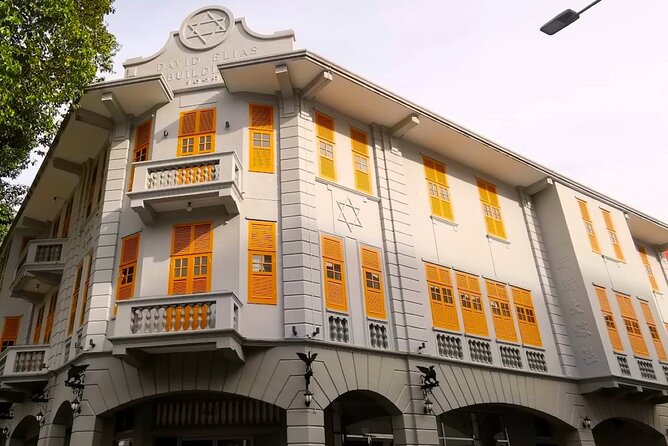
- A scooter route that stitches together 5-plus districts without wasting time on transfers
- 7 vegetarian-friendly food/drink stops, including a giant dosai cone
- Temple stops across different religions, from Kali worship to Goddess of Mercy
- Old-world lanes plus modern nightlife, including Haji Lane and Sultan Mosque
- Small-group pacing, with a guide keeping you moving and answering questions
Kick scooter at night: how the route helps you see more
This tour runs from 5:00 pm for about 3 hours 30 minutes, which is a smart time choice. Daytime in Singapore can be hot and draining, while early evening lets you enjoy streets, storefronts, and food without feeling cooked. You end at 73 Dunlop St near several MRT lines, so it’s easy to keep your night going after the last bite.
The main reason I like a scooter format here is simple: the itinerary covers a lot of ground and a lot of change in culture. You’re not just hopping between food stalls—you’re moving from Little India into areas tied to Jewish and Japanese communities, then into Albert Mall (known locally as Today’s Chinatown), and onward through Old European Town and Kampong Glam.
The trade-off is balance. If you’ve never ridden one, plan to start slow and keep your focus during the first couple of minutes. The tour is designed for most people to participate, but there are firm limits: no kids age 7 and under and a 100 kg weight limit. If either of those applies, you’ll want another option.
You can also read our reviews of more food & drink experiences in Singapore

The food plan: seven vegetarian-friendly stops that work as a tasting menu
The food is the heart of the tour, and it’s built like a guided tasting sequence rather than random snacking. The experience is vegetarian-friendly, and you’ll get 7 different types of street food/drink. The list is nicely varied, with both savory items and sweet desserts, so you don’t end up with a sugar-only night.
You start with a signature stop at Komala Vilas Restaurant, famous for the huge dosai cone. This is not a small “try a bite” moment. It’s a full, photo-ready treat, and it works as a satisfying base before you move into more toppings, puddings, and fritters.
From there, the hawker centre spread is designed to cover textures and flavors. You’ll try:
- Masala tea
- Popiah (Chinese spring roll)
- Chwee kway (steamed rice pudding topped with radish and sambal)
- Muah chee (glutinous rice pieces coated with nuts and sugar)
- Bubur pulut hitam (black glutinous rice with coconut cream dessert)
Later, in Kampong Glam, you finish with pisang goreng, a Malay-style banana fritter. That ending makes sense: crunchy and warm after a stretch of different dishes.
If you’re vegetarian and want a night where ordering feels simpler, this layout is a big plus. You’re not translating menu items on your feet. You’re also not stuck trying to guess what to eat next, because the guide keeps the flow moving.
Little India first: a Chinese merchant’s villa and a Kali temple stop
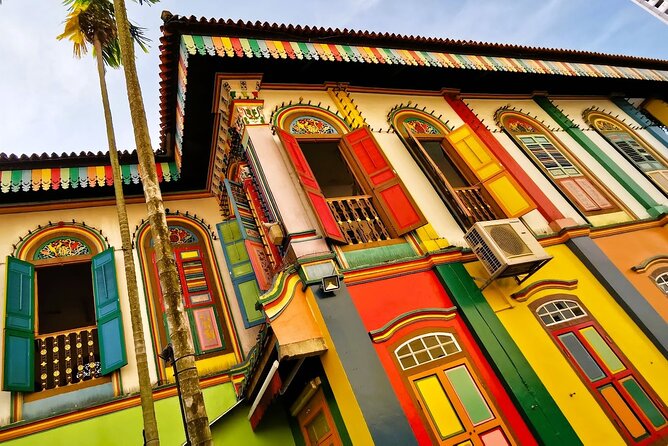
The tour opens in Little India with a colorful architectural gem: House of Tan Teng Niah. This brightly painted villa was built in 1900 by a Chinese merchant for his wife, and it’s described as the only Chinese villa still standing in Little India today. Even if you’re not a “buildings person,” it’s a strong first stop because it sets up the whole idea of Singapore as layered neighborhoods.
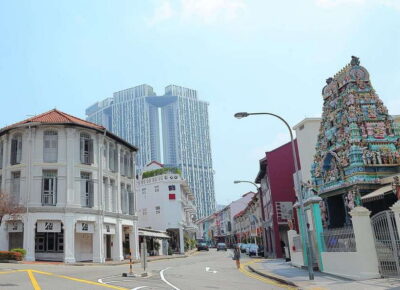
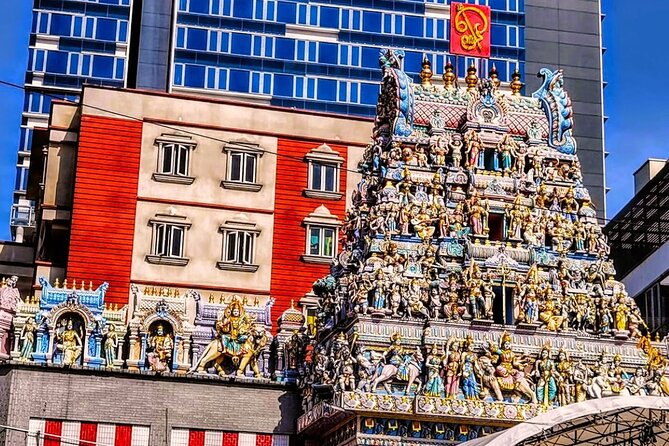
Right after that, you visit Sri Veeramakaliamman Temple, dedicated to Goddess Kali. The temple dates back to 1855, and that history matters because it helps you read the rest of the route. You’re seeing how different communities settled, built, and kept their spiritual spaces going in the middle of a modern city.
This pairing—one heritage home and one active temple—does something useful for your trip. It stops you from treating Little India as only food and shopping. You start seeing it as a place with long-standing identity.
Komala Vilas dosai cone: the stop that gives you a Singapore “wow” moment
The Komala Vilas stop is the big meal anchor, and it’s timed well. You get around 40 minutes here, which is long enough to order, eat, and not feel rushed. The “dosai cone” idea is exactly the kind of Singapore twist that makes street food more than just calories. It’s playful, it’s practical, and it’s the sort of thing you’ll remember the next day when you’re back home.
Also, the tour keeps it vegetarian-friendly. For people who don’t usually eat Indian street food, this is a friendly entry point because the format is familiar—an impressive fried/steamed starch-and-filling situation—just served in an eye-catching way.
Selegie and the idea of erased neighborhoods
One of the more interesting parts of this tour is the way it points out what used to exist. You move by kick scooter toward Selegie, where you’ll see remnants tied to the Old Jewish Quarter and Little Japan once found in Singapore. Even in a short stop, the message sticks: cities don’t just change names; they rearrange whole communities.
This is also where a guide’s explanations really matter. Without context, it’s easy to walk past a street corner and feel like nothing happened there. With context, those streets start acting like a timeline.
You can also read our reviews of more tours and experiences in Singapore

Hindu temples back-to-back: Sri Krishnan and Kuan Yin Thong Hood Cho
As you keep riding, you’ll hit two more spiritual stops that broaden what you think a “temple tour” can look like.
First is Sri Krishnan Temple, dedicated to Lord Vishnu and built in 1870. What makes this stop stand out is the shared worship mentioned in the tour description: Buddhist and Taoist followers also worship here. That’s a useful takeaway for Singapore. It’s not always strict separation on the ground. People often share space in ways that feel practical and respectful.
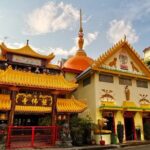
Then you visit Kuan Yin Thong Hood Cho Temple, dedicated to the Goddess of Mercy and built in 1884. This temple is noted for fortune telling and for being one of the busiest. If you’re curious about the human side of religion—rituals, questions, prayers that people come with this stop will likely feel alive even during a quick pass.
Albert Mall and Today’s Chinatown: hawker centre vegetarian tasting
The tour heads to Albert Mall, described as Today’s Chinatown, for a 30-minute hawker centre food stop. This part is valuable because it matches the tour’s core promise: a street-food tasting that’s simple if you’re vegetarian.
You sample a variety of vegetarian-friendly hawker items here—those include chwee kway, muah chee, and bubur pulut hitam, plus popiah and masala tea across the overall meal plan. The guide keeps you fed through the middle of the route, which is exactly when energy often dips.
Hawker centres can be overwhelming if you arrive hungry and undecided. This is the opposite of that problem. You’re not scanning menus for 20 minutes. You’re eating an ordered set of classic dishes.
Bugis area: from red-light past to street-level shopping
After Albert Mall, you shift toward Bugis Street. The tour frames it as a place that once had a red-light district reputation, and it’s now a busy marketplace. The useful part of this stop isn’t judgment—it’s that you’re seeing how a place can change identity while keeping its bones: trade, crowds, and street-level commerce.
You then go near Bugis Junction, searching for streets associated with Japanese-owned businesses that existed before World War II. The description leans into how hard it can be to imagine a different past when the present looks so normal. That’s why this stop works: it gives you a mental contrast, even if you can’t pinpoint every old storefront.
Old European Town: St Joseph’s Church and Chijmes
Now the route changes tone. You pass St Joseph’s Church, established by the Portuguese mission in 1853. It’s one of several Catholic churches you’ll encounter in what’s called Old European Town. This is the kind of stop where you may only have a couple of minutes, but it helps you understand Singapore as a port city shaped by multiple European connections—not only one.
Right after that comes Chijmes, once a Catholic girls’ school and orphanage, now used as an F&B, entertainment, and lifestyle destination. This is a good example of heritage adapting rather than freezing. You’re not walking into a dead building; you’re seeing how the space continues serving people.
Raffles Hotel Arcade and Singapore Sling origins
The tour includes a visit to Raffles Hotel Arcade. It’s described as a world-famous location that once hosted celebrities like Charlie Chaplin, Elizabeth Taylor, and Michael Jackson, and it’s the birthplace of the Singapore Sling cocktail. You’ll spend about 20 minutes here.
Even if you don’t care about celebrity trivia, this stop gives you a sense of how Singapore markets itself and how colonial-era glamor shows up in modern branding. It’s also a good pause before you move into the more night-focused streets.
Haji Lane and Sultan Mosque: Kampong Glam at eye level
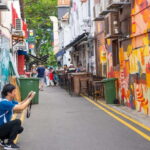
After Raffles-era glamour, you head toward Haji Lane for a 10-minute stop. This is where you slow down and take in the atmosphere of one of Singapore’s livelier nightspots. It’s practical too: you’ll be refreshed by walking streets with a different tempo than the earlier temple blocks.
Then you visit Sultan Mosque—named after Sultan Hussein Shah, who signed a treaty with Sir Stamford Raffles on 6 February 1819, allowing the British to set up the trading post. The mosque itself dates to 1824. That connection between a religious landmark and the trading-era story is a key Singapore theme.
Next is Bussorah Street, a pedestrianized street lined with royal palms plus halal restaurants, perfume shops, and more. This is a soft landing point for the end of the tour: you’re not rushing to “see everything,” you’re in the shopping-and-strolling zone.
Price and value: what $55.43 buys you in real terms
At $55.43 per person, you’re paying for more than food. You’re paying for:
- A guided route across multiple districts
- A kick scooter experience (small-group pacing helps with the learning curve)
- Seven planned street-food/drink stops, including desserts
- Time with guides at culturally important stops where context matters
The included meals aren’t just snacks; you get the dosai cone plus a hawker centre spread. Add the fact that the tour describes admission tickets as free at many stops, and the overall price starts to feel like a single bundled night rather than separate line-items.
One thing to keep in mind: this is a night tour with a weather dependency. If conditions are poor, the experience may be canceled and you’ll be offered a different date or a full refund. So check your schedule before you lock it in.
Who should book this kick scooter food tour
This is a great pick if you want a guided “greatest hits” night without cramming multiple neighborhoods into separate plans. You’ll likely enjoy it most if you:
- Like street food and want a structured tasting you don’t have to plan
- Care about seeing how different faiths and communities show up in daily life
- Prefer motion over long public transit rides
- Are comfortable (or willing to practice) with a scooter for a few minutes at the start
It may be less ideal if you dislike scooter riding, if you can’t meet the 100 kg limit, or if you’re bringing young kids (the tour states age 7 and below can’t participate).
Should you book it?
If your goal is to eat your way through Singapore’s ethnic quarters in one evening, this tour is a strong match. The food variety is clearly planned, and the route gives you context as you move—Chinese villa in Little India, multiple temple stops, Today’s Chinatown at Albert Mall, then Kampong Glam with the mosque and Haji Lane.
I’d book it when you want convenience and a guided structure more than when you want total freedom to wander. If you’re comfortable with the idea of a scooter learning curve, you’ll likely find the “cover a lot fast” format worth the price.
FAQ
How long is the Singapore Street Food and Ethnic Quarters Kick Scooter Tour?
It runs for about 3 hours 30 minutes.
When does the tour start, and where does it end?
The tour starts at 5:00 pm. It ends at 73 Dunlop St, Singapore 209401.
Is the street food on this tour vegetarian-friendly?
Yes. The tour highlights 7 different types of street food/drink that are vegetarian-friendly, including items like popiah, chwee kway, muah chee, bubur pulut hitam, and pisang goreng.
What food and drinks are included?
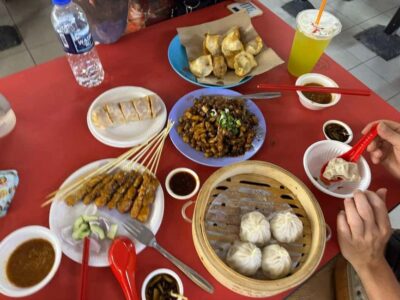
You’ll get a giant dosai cone and masala tea at Komala Vilas and a hawker centre tasting that includes popiah, chwee kway, muah chee, and bubur pulut hitam. The route also includes pisang goreng in Kampong Glam.
Are there age or weight limits for the kick scooter?
Yes. Children aged 7 years or below are not allowed to participate, and people who weigh more than 100 kg are not allowed.
What happens if the tour is canceled due to poor weather?
The tour requires good weather. If it’s canceled due to poor weather, you’ll be offered a different date or a full refund.
If you want, tell me your travel dates and whether you’re a confident scooter rider—I can help you decide if this is the right evening plan for your exact schedule.