REVIEW · SINGAPORE
Singapore Titanic Immersive Voyage Ticket Pass
Book on Viator →Operated by GlobalTix Pte Ltd · Bookable on Viator
A Titanic story you can walk through. In Singapore, Titanic: An Immersive Voyage turns the legend into a guided experience with 90+ original artifacts, life-sized room reconstructions, and cinematic 3D visuals.
I also like the VR exploration of the wreck site about 2.5 miles beneath the ocean. One thing to consider: if you already know Titanic history well, the storytelling may feel thin, especially if some effects are offered as paid extras beyond the base ticket.
In This Review
- Key things I’d zero in on before you go
- Titanic: An Immersive Voyage in Singapore, in plain terms
- What you actually see: artifacts, reconstructed rooms, and 3D
- The collision sequence: where the drama does the heavy lifting
- VR wreck-site exploration and the question of add-ons
- How long it really takes (and how to time it in your day)
- Ticket value: $24.53 and whether it’s a smart buy
- Practical rules that affect your visit
- Who should book Titanic: An Immersive Voyage
- Price and logistics: what to watch before you commit
- Should you book? My practical verdict
- FAQ
- How long does Titanic: An Immersive Voyage take?
- What does the ticket include?
- Where is the experience located?
- Is there a free admission option for young children?
- What are the age categories for tickets?
- Can I bring my service animal or pet?
- Is photography allowed?
- Can I enter late?
- What’s the cancellation policy?
- When do I receive the official ticket?
Key things I’d zero in on before you go
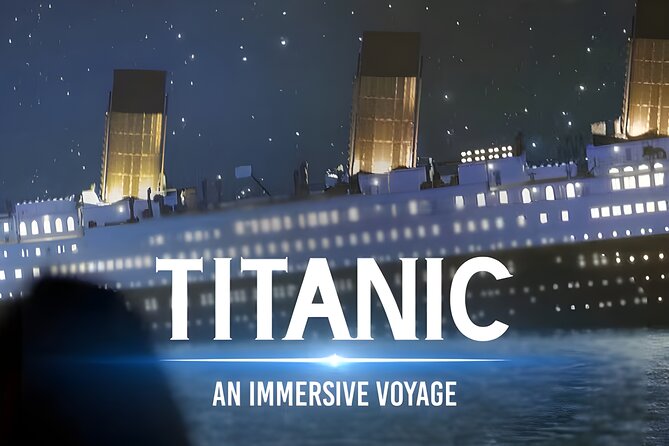
- 90+ original artifacts and large-scale room reconstructions that help you place yourself inside the ship
- Construction-to-collision storytelling with 3D visuals and video animations that keep the pace moving
- VR wreck-site exploration that brings the depth of the tragedy into sharper focus
- Photography is allowed for personal use, so you can capture memories without derailing others
- A short time commitment (60–90 minutes) that fits easily into a full day in Singapore
Titanic: An Immersive Voyage in Singapore, in plain terms
If you’re in Singapore and want something that feels more like an experience than a museum, Titanic: An Immersive Voyage is built for exactly that. You’re guided through the ship’s story—starting with the grandeur of construction and moving toward the iceberg and the final moments. Expect 3D visuals, video animations, and “stage” lighting that makes the scenes hit emotionally, even if you’ve read the story before.
The whole visit is designed to be fast. Plan for about 60–90 minutes, which is perfect when you don’t want to lose half a day to indoor time. And because it’s near public transportation, it’s easy to slot into a sightseeing route without complicated logistics.
You can also read our reviews of more tours and experiences in Singapore



What you actually see: artifacts, reconstructed rooms, and 3D
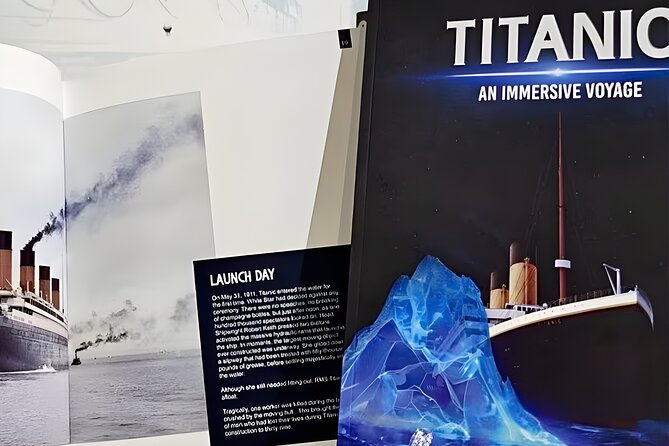
This show leans hard on atmosphere and tangible details. The experience highlights more than 90 original artifacts, and it also references over 300 authentic artifacts across the storytelling. Either way, the big idea is the same: you’re not just watching a screen. You’re walking past objects and environments that try to recreate what passengers might have experienced.
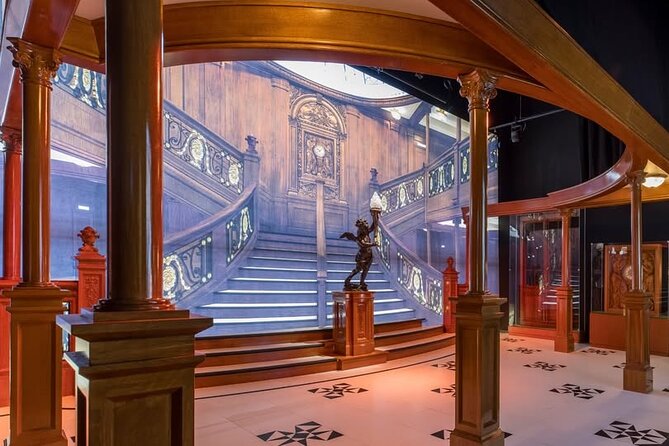
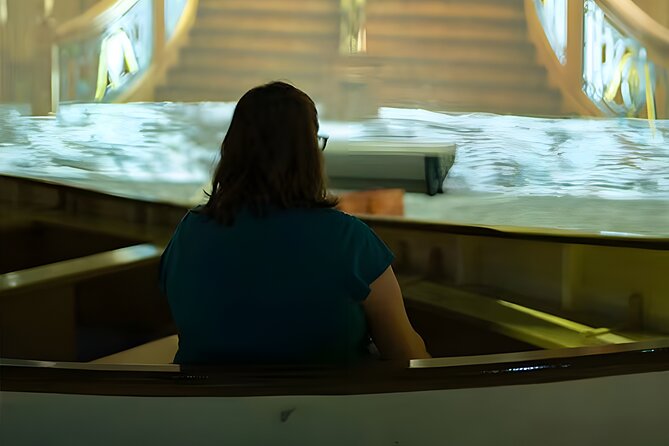
A lot of the impact comes from the life-sized room reconstructions. You don’t have to imagine the scale. The exhibition is structured so you move from one major chapter to the next—deck and dining spaces earlier on, then the tense build-up as the iceberg enters the story. Along the way, you’ll see video animations and 3D perspectives that show key moments more clearly than a static exhibit.
Here’s the practical takeaway: if you’re the kind of person who likes to learn by seeing (not by reading), this setup is a good match. The visuals help you follow what’s happening even if the timeline isn’t your strongest topic.
The collision sequence: where the drama does the heavy lifting
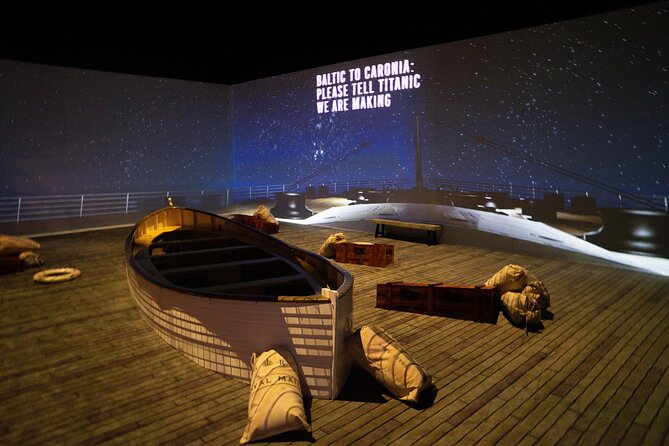
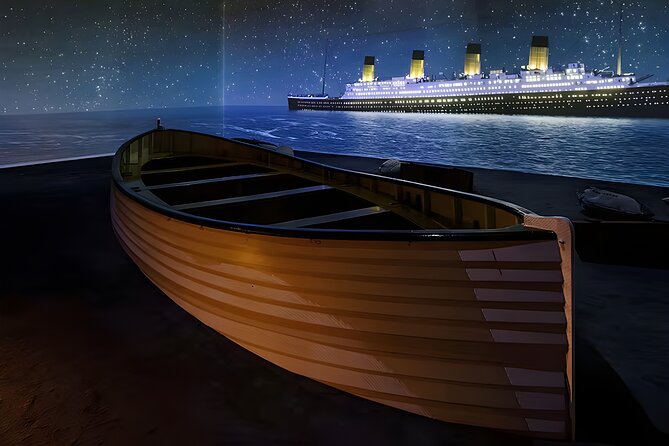
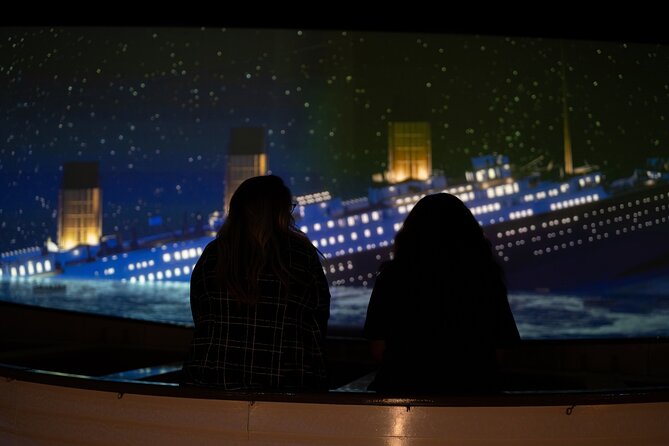
The experience is clearly paced like a story. You’re led through the period leading up to the collision, then you’re shown the moment of impact and the dramatic final moments inside the ship. The goal isn’t to argue history or debate dates and theories—it’s to recreate the emotional arc of the event.
That approach can be a strength. The lighting, sound, and staged presentation make the tragedy feel immediate. It’s not just Titanic as a far-away headline; it’s Titanic as something happening around you. If you’ve ever wished a museum would make the story feel more human, this is the reason to consider it.
Still, a balanced note: one disappointment mentioned the show can feel uninformative if you already know the major events. So if you’re looking for a rigorous, historian-style explanation of every detail, you might want to pair this with additional reading or a separate museum stop. Think of this as emotionally driven storytelling plus visuals—not a deep academic seminar.
VR wreck-site exploration and the question of add-ons
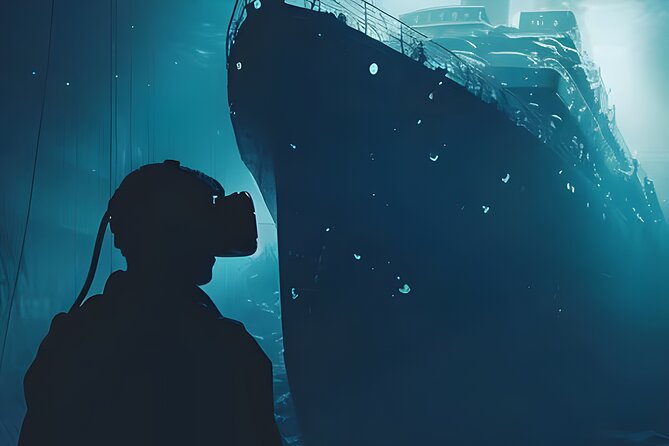
The VR element is one of the big draws. The experience includes a virtual reality exploration of the Titanic’s wreck site, located over 2.5 miles beneath the ocean. That depth detail matters. VR is often good at “making things feel real,” and the wreck-site setting tries to connect you to the scale of what was found down there.
One review also flagged the VR as a must. If VR is your thing, this is the part you’ll likely remember. It can turn the story from a ship on land into a location in space—and that shift is powerful.
That said, be alert to the word “add-on.” The base ticket is for the experience, but at least one mention suggests some CGI-style walk-through content may come at extra cost. Translation: before you go in, scan how your ticket is described so you know what you’re getting included versus what might be sold separately.
How long it really takes (and how to time it in your day)
This is a short visit by design: about 60–90 minutes. For most people, that means you can plan it like a “morning activity” or an “after-lunch reset” rather than a big production.
Also plan around entry timing. You’re asked to arrive at the time stated on your ticket. Entry is still permitted within 30 minutes after the scheduled time, but don’t treat that as a plan. If your schedule is tight, arrive close to the stated slot so you don’t feel rushed at the start.
Because it’s near public transportation, you can usually build it into the day without spending extra time figuring out parking or long taxis. In a city like Singapore, that flexibility is real value.






Ticket value: $24.53 and whether it’s a smart buy
At $24.53 per person, the price sits in the “doable” range, especially for something that combines walkthrough exhibits with 3D storytelling and VR content. The value mostly depends on what you want out of it.
Here’s how I’d judge whether it’s worth it for you:
- If you like cinematic, guided storytelling, you’ll likely feel you got your money’s worth. The show is built to keep you moving and engaged rather than passively reading wall text.
- If you want classic museum depth, you might find it too short or too story-driven. The one disappointment I saw comes down to expectations: people who know the Titanic story may find the content doesn’t add much new.
- If VR and optional CGI content matter to you, check what’s included in your exact ticket description. If key effects are add-ons, your final cost can creep up.
In other words: for the $24.53 ticket, you’re paying for an experience format. If you’re expecting a full, academic deep dive, adjust your expectations.
Practical rules that affect your visit
Small rules can change the vibe, so it’s worth knowing them ahead of time.
Photography is encouraged for personal use, but professional cameras, tripods, and filming equipment are not allowed. That helps other visitors move through without being stopped by big gear.
Alcohol and disruptive items are strictly prohibited. And pets aren’t permitted, while service animals are welcome. If you’re traveling with children, note that children under 4 enjoy free admission, which can make it easier to bring a family.
Also consider the age pricing: adult tickets apply to 18–64, child tickets are for 4–12, and reduced admission may apply to seniors (65+), students (18–25), juniors (13–17), and persons with disabilities with valid proof of identity.
Who should book Titanic: An Immersive Voyage
This experience is a good fit if you want a structured, emotional retelling that uses technology and reconstructed spaces to make history feel close.
I’d particularly recommend it for:
- Families who want an indoor activity that moves and doesn’t drag
- People who enjoy VR experiences and want to see what the wreck site feels like conceptually
- Anyone who wants a short, high-impact activity in Singapore that’s easy to plug into a day
If you’re the type who only enjoys very factual, highly detailed narration, you might get more out of visiting with realistic expectations, or pairing it with a second source for deeper context.
Price and logistics: what to watch before you commit
One important reality: the ticket is non-refundable and cannot be changed. That’s not unusual for timed attractions, but it matters here—especially if you’re prone to schedule changes. The safe move is booking the correct date the first time.
You’ll also receive an official ticket within 24 hours after confirmation. A separate booking confirmation may be sent earlier, but it may not be the official ticket itself. If you’re the type who likes to have everything ready on your phone before you leave, plan for that 24-hour window.
For entry, arrive at your stated time and keep in mind the 30-minute grace period for late entry. If your day is full and you’re using transit timing, give yourself a little cushion.
Should you book? My practical verdict
Yes—with the right expectations. If you want a fast, visually driven Titanic experience that uses artifacts, reconstructed rooms, 3D visuals, and VR, this is a solid choice for Singapore. The VR wreck-site element is the part that can turn a familiar story into something you feel in your body, not just your head.
But I’d think twice if you’re looking for dense, new historical information. One disappointment pointed to a lack of substance beyond the more fantasy-like components, especially when paid CGI walkthrough options are involved. If you already know the main timeline and facts, treat this as entertainment plus emotional storytelling, not a replacement for deep historical study.
If you like cinematic exhibits, you’ll probably enjoy it. If you’re chasing maximum facts per minute, you may be better served by pairing it with something more detailed—or choosing a different experience altogether.
FAQ
How long does Titanic: An Immersive Voyage take?
The experience lasts about 60–90 minutes.
What does the ticket include?
The ticket includes admission to Titanic: An Immersive Voyage Singapore. The experience also features VR exploration of the wreck site as part of the overall offering, and some effects may be offered as additional add-ons.
Where is the experience located?
It’s in Singapore and is described as being near public transportation.
Is there a free admission option for young children?
Yes. Children under 4 enjoy free admission.
What are the age categories for tickets?
Adult tickets apply to ages 18 to 64. Child tickets apply to ages 4 to 12. Reduced admission may apply to seniors (65+), students (18–25), juniors (13–17), and persons with disabilities with valid proof of identity.
Can I bring my service animal or pet?
Service animals are welcome. Pets are not permitted.
Is photography allowed?
Photography for personal use is encouraged. Professional cameras, tripods, and filming equipment are not allowed.
Can I enter late?
You should arrive at the time stated on your ticket. Entry is still permitted within 30 minutes after the scheduled time.
What’s the cancellation policy?
This experience is non-refundable and cannot be changed for any reason.
When do I receive the official ticket?
An official ticket will be sent to you within 24 hours.