REVIEW · SINGAPORE BIKE & CYCLING TOURS
Trails Of Tan Ah Huat : Singapore 1920s. A storytelling guided bicycle tour!
Book on Viator →Operated by Lets Go Tour Singapore Pte Ltd · Bookable on Viator
A bike tour with a 1920s plot twist. This one uses Singapore landmarks as set pieces for a guided storyline about Tan Ah Huat, with you pedaling through areas like Kampong Glam and Chinatown while characters explain what you’re seeing. Expect guided bicycle touring plus 1920s storytelling that connects places you’d otherwise walk past.
I especially like the way the tour keeps giving you a reason to look closely. You’re not just clocking sights; you’re following Tan Ah Huat’s angle on tea, rickshaws, trading shophouses, and the street-level life behind big-name buildings. I also like the pace: it’s designed as an easy, flat ride where the group stays small and you can move at a comfortable speed.
One consideration: there’s no hotel pickup, and the start is at 9:00 am near 462 Crawford Ln. If you’re traveling far from the city center, you’ll want to plan your ride in early, and since the tour depends on good weather, you may need a backup day if conditions are rough.
In This Review
- Key things that make this tour work
- Why Tan Ah Huat’s story fits Singapore so well on a bike
- Getting there: Crawford Lane at 9:00 am, no hotel pickup
- Stop 1: Kampong Gelam, where the story begins at a Muslim settlement
- Stop 2: Raffles Hotel Arcade and the feel of old-world prestige
- Stops 3 and 4: Queen Elizabeth Walk and Cavenagh Bridge on Singapore River
- Stop 5: Read Bridge (Malacca Bridge) and the pull of evening crowds
- Stop 6: Pek Sin Choon Pte Ltd and Nanyang Tea through change
- Stop 7: Jinrikisha Station and why transport shaped a city
- Stop 8: Singapore Centre coffee shop culture, plus Tan Ah Huat’s favorite coffee
- Chinatown turns darker: Trengganu Street and Sago Street (Street of the Dead)
- The ride experience: flat route, small group energy, and real guidance
- How long it lasts and when to plan your day
- Price and value: $79.89 for bike, guide, stops, and coffee
- Should you book the Trails Of Tan Ah Huat bicycle tour?
- FAQ
- How long is the bicycle tour?
- Where do I meet the guide, and what time does it start?
- Is the tour limited to small groups?
- What’s included in the price?
- Do I need hotel pickup?
- Is the route difficult to ride?
- What happens if the weather is bad?
Key things that make this tour work
- A story-led route that threads Tan Ah Huat through major landmarks and everyday places
- Small group setup (maximum 10 travelers) that helps the guide keep things clear and personal
- Flat, easy riding that makes it approachable for most visitors who can bike
- Real stop locations tied to the narrative, from Kampong Gelam to Sago Street
- A coffee shop stop where you sample Tan Ah Huat’s favorite coffee and snack
- Hands-on touring tools like bottled water and lockers for your bags
Why Tan Ah Huat’s story fits Singapore so well on a bike
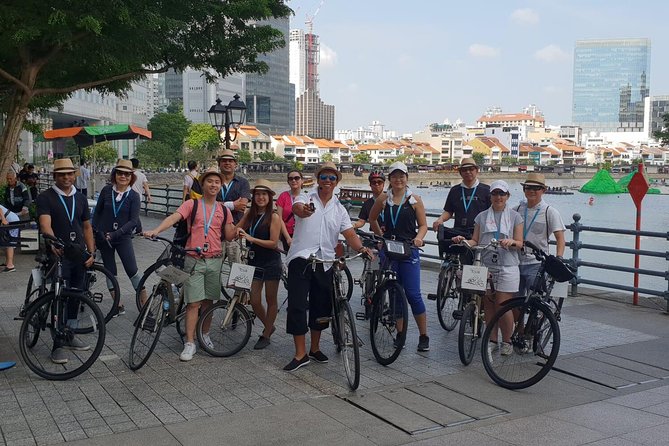
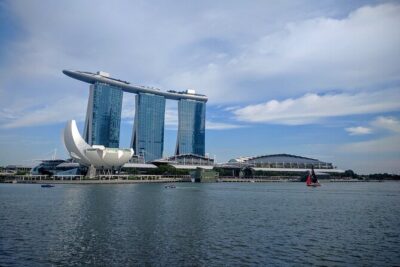
Singapore can feel like a city of layers: old trade routes, immigrant neighborhoods, and today’s sleek skyline all stacked together. This tour uses that layering on purpose. Instead of treating landmarks like museum objects, it frames them as props in a 1920s tale about people chasing fortune, making deals, and living with strict neighborhood traditions.
The other smart choice is using a named character, Tan Ah Huat, as your guide-through-time. The story touches big topics you’ll recognize (trade, immigration, the river as a lifeline), but it also points at smaller social details that change how the whole area makes sense. You hear about tea and “coolies,” burial rites, Chinatown street life, and even transportation history like rickshaws and the jinrikisha station.
And yes, it’s still a bicycle tour. That matters more than you might think. Walking can blur distances, and taking taxis can kill the sense of flow. On a bike, you get that in-between pace where you can actually compare neighborhood textures and street layouts without getting exhausted.
You can also read our reviews of more guided tours in Singapore
Getting there: Crawford Lane at 9:00 am, no hotel pickup
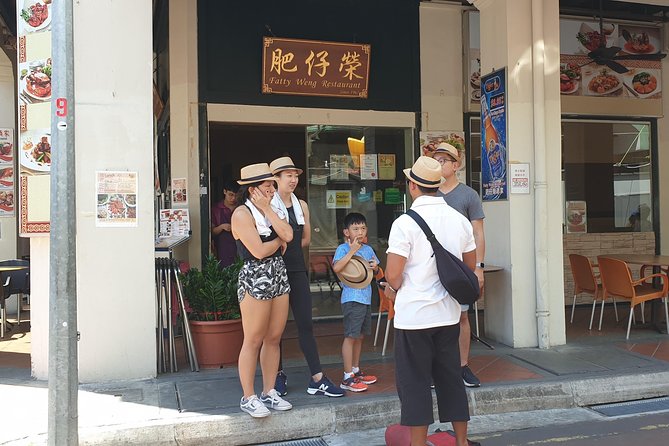
You start and end at 462 Crawford Ln, Singapore 190462. The tour runs for about 4 hours and kicks off at 9:00 am. There’s no hotel pickup, but the tour notes that taxis are inexpensive and safe and that the meeting point is in the city area near most hotels.
I like this setup because it keeps your morning simple. You don’t have to wait for a van, and you can time your breakfast to your own schedule. The tradeoff is you’re responsible for getting yourself to Crawford Lane on time.
The good news: it’s near public transportation. Also, you get mobile ticket access, plus the tour provides bottled water and lockers for your bags. That means less fuss with carrying things around the city.
Stop 1: Kampong Gelam, where the story begins at a Muslim settlement
Your first named chapter is Kampong Gelam. This is where the tour asks a key starter question: what was Tan Ah Huat doing in a Muslim settlement, and who did he meet? That angle is useful because it nudges you to pay attention to the neighborhood beyond the postcard version.
Even if you’re not a deep-history person, you’ll get value from the basic idea. Kampong Gelam sits at the crossroads of trade and community life, and the tour treats it like a meeting point rather than a scenic detour. You’re likely to notice how the streets feel different from the next districts you’ll cycle through.
It’s a short stop (about 10 minutes), so keep your expectations realistic. This isn’t a long sit-down exploration. It’s more like a brief orientation scene that primes you for the rest of the day.
Stop 2: Raffles Hotel Arcade and the feel of old-world prestige
Next up is the Raffles Hotel Arcade. The tour frames it as upmarket space from Tan Ah Huat’s era, and it asks what he saw there and who he met. When you’re cycling, arcades and passageways can be easy to miss. Here, you’ll have a reason to look at entrances, street rhythm, and what “high status” would have meant at street level.
The practical benefit is simple: this stop teaches you to connect architecture with social life. You’ll start spotting how neighborhoods could “grade” people by access, price, and proximity to trade. And since the tour provides a themed story thread, you’re not stuck guessing what significance a building might have.
Like most stops, it’s short (around 10 minutes). If you want time to wander inside at your own pace, plan on saving that for later after the tour ends, not during the ride.
Stops 3 and 4: Queen Elizabeth Walk and Cavenagh Bridge on Singapore River
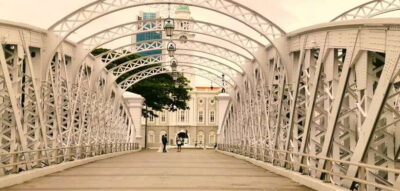
Two stops focus on the Singapore River, and they work as a pair. First is Queen Elizabeth Walk, framed around Chinese immigrant arrival and why the river mattered so much. Then you cross or view Cavenagh Bridge, where the tour plays a love-and-hate theme: why did Tan Ah Huat care about this river, and what stories live in its bridges?
This is one of the most effective segments because rivers are “infrastructure with emotions.” They aren’t just scenery. They shape where people settle, where goods move, and who controls access. When the tour connects the river to immigration and then to bridge stories, you get a clearer picture of how commerce and daily life tangled together.
The stop time is about 10 minutes at each location, so again, this is focused rather than exhaustive. But it’s enough time to get the key idea and then move on while the area still feels fresh.


Stop 5: Read Bridge (Malacca Bridge) and the pull of evening crowds
At Read Bridge (Malacca Bridge), the tour dials in on a social question: what was Tan Ah Huat doing there, and why does it become a people magnet, especially in the evening? This is where the tour shifts from “big historical forces” to “street behavior.”
On a bike, you’ll feel how the river zone acts like a corridor. The crowd energy becomes more believable when you picture it as routine. Bridges connect destinations, and this stop helps you see the neighborhood as an everyday meeting place, not just a landmark you pass.
Expect another 10-minute scene. If you’re taking photos, do it quickly at the start of the stop rather than the end, so you still absorb the story while standing in place.
Stop 6: Pek Sin Choon Pte Ltd and Nanyang Tea through change
Your tea chapter lands at Pek Sin Choon Pte Ltd, with the tour explaining the history of Nanyang Tea and how a heritage business transformed through the years. This stop stands out because tea is one of those topics that sounds like trivia until someone ties it to community habits and economic survival.
You’ll likely walk away with a clearer idea of why tea shops and trade networks mattered for immigrant communities. Tea isn’t only a drink here; it’s part of the social infrastructure. And the tour connects that to the idea of how businesses evolve after the Tan Ah Huat era.
Again, it’s about 10 minutes, so use it as a storyline checkpoint. If you want a longer look at the shop itself, you can always continue exploring after the tour.
Stop 7: Jinrikisha Station and why transport shaped a city
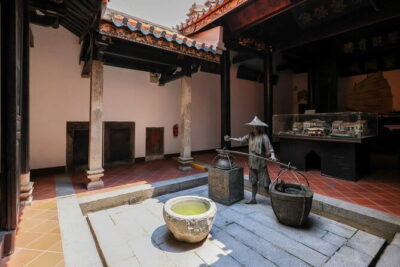
Next is the Jinrikisha Station, with a simple but powerful prompt: what importance did this building have in the past to Singapore’s transportation needs? Then the tour tells the story through Tan Ah Huat’s eyes.
This is a smart inclusion because it stops history from being only about buildings and instead brings it down to motion. You’re also on a bicycle, so the theme plays nicely with your own experience. You’ll probably think about how people used to move goods and themselves before modern transit took over.
This stop is shorter (about 5 minutes), which makes sense. It’s a quick factual anchor that gives context to the earlier talk about rickshaws and transportation.
Stop 8: Singapore Centre coffee shop culture, plus Tan Ah Huat’s favorite coffee
The tour shifts from street and transport to daily life at Singapore Centre. Here the emphasis is on the significance of coffee shop culture for Chinese communities during Tan Ah Huat’s days. The tour also teases a personal “destiny” angle about who he met and how it changed his path.
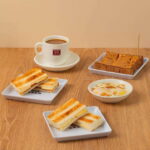
Then comes the best practical perk: you sample Ah Huat’s favorite coffee and snack at this coffee shop stop. This is one of the moments where the storytelling becomes genuinely useful. Food and drink are often the fastest way to understand what people actually did between major events, and the tour builds that into the route instead of treating it like an optional extra.
The stop time is around 15 minutes, so you’ll have a little breathing room. Still, keep an eye on your group and guide flow so you don’t get separated.
Chinatown turns darker: Trengganu Street and Sago Street (Street of the Dead)
The back half of the tour leans into Chinatown’s intensity with two street-focused stops.
Trengganu Street is where you learn about dark secrets behind the streets and how Tan Ah Huat’s twist of fate landed him there. Then the tour heads to Sago Street (Street of the Dead), with a focus on what Sago Street was like in Tan Ah Huat’s days and what fate had planned.
These stops matter because they give the neighborhood texture. Chinatown isn’t just temples and shopping streets. It’s also a place of survival networks, local identities, and stories that people kept alive through time. When a tour frames the streets this way, you start seeing alleys and pedestrian lanes as part of a larger human map, not just geometry.
Both are about 10 minutes each, so keep your senses switched on. If you blink, you’ll still move on quickly. If you slow down and notice signage, street layout, and the feel of the blocks, the story lands harder.
The ride experience: flat route, small group energy, and real guidance
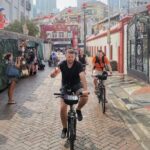
This tour is built for visitors who want “a lot of seeing” without the usual walking grind. The route is flat and easy, and most travelers can participate. It also welcomes all ages as long as you’re able to ride a bicycle.
The group size caps at 10 travelers, which is a big quality factor. With a smaller group, the guide can stop more cleanly at each scene and keep the narrative clear instead of racing to fit time. It also makes it easier to ask questions on the fly.
Lockers and bottled water are small details, but they remove common trip friction. You don’t have to worry about where to stash your bag during stops, and you can stay hydrated without stopping for it.
Guides you might meet include names like Alfie, Yap, and Simon, and the pattern from past groups is consistent: the guides explain Singapore in plain language and tie details to the story instead of dropping facts like a slide deck.
If you’re worried about language, you’ll likely be fine. The stops are short, the route is straightforward, and the guide’s job is to make the story land in real time.
How long it lasts and when to plan your day
The tour takes about 4 hours (approx.). It starts at 9:00 am and ends back at the meeting point. That makes it a good morning activity if you want to keep your afternoons free for markets, museums, or simply wandering where the tour made you curious.
Also note the weather requirement: it depends on good weather. If there’s rain or stormy conditions, you might face changes to your schedule. The good part is that the tour operator sets expectations clearly that weather matters for the ride.
If you’re the kind of traveler who hates last-minute schedule scrambling, pick a trip day with some breathing room. Build in a fallback plan for that same area afterward.
Price and value: $79.89 for bike, guide, stops, and coffee
At $79.89 per person, this is not a “cheap and cheerful” activity. But it also isn’t overpriced when you count what’s included.
You’re getting:
- Use of a bicycle
- A licensed guide
- Bottled water
- Lockers
- A coffee shop drink and snack during the tour
And the tour stops are designed around specific locations (most with free admission ticket noted for the stop time). Even when the stop is free-entry, the value is the organized access and the guide’s context.
The real value is the format. A bicycle tour compresses distance, and the story format reduces the mental work of making sense of what you see. You leave with a connected understanding of how tea, trade, immigrant arrival, transport, and street life fit together.
Is it worth it for everyone? If you only want panoramic city views and don’t care about context, you might find the narrative heavy. If you like your sightseeing with an angle and you enjoy learning by moving, this price starts to feel fair fast.
Should you book the Trails Of Tan Ah Huat bicycle tour?
I’d book it if you want Singapore that feels human. The best match is you if you like cultural stories, small-group guiding, and a route that keeps things easy on the body.
I’d think twice if you prefer long, quiet exploration at each stop. This is a paced, guided sequence of scenes. It’s short on each location by design, with the payoff coming from the overall story thread by the time you reach the final street stops.
Also, because there’s no hotel pickup, make sure you’re comfortable getting yourself to 462 Crawford Ln by 9:00 am. If you can handle that, you’re in for a fun mix of cycling and history that doesn’t feel like homework.
If you’re planning a first visit to Singapore, this tour can be a strong starting move. It gives you a framework for what you’ll notice later when you’re exploring on your own.
FAQ
How long is the bicycle tour?
It’s about 4 hours long (approx.), and it ends back at the same meeting point.
Where do I meet the guide, and what time does it start?
The tour starts at 462 Crawford Ln, Singapore 190462 at 9:00 am.
Is the tour limited to small groups?
Yes. The tour has a maximum of 10 travelers.
What’s included in the price?
The tour includes bicycle use, a licensed guide, bottled water, and lockers for your bags during the tour. You also get a coffee shop drink and snack as part of the route.
Do I need hotel pickup?
No. There is no hotel pickup. The meeting point is in the city area near most hotels, and taxis are described as inexpensive and safe.
Is the route difficult to ride?
No. Most travelers can participate, the route is flat and easy, and all ages are welcome as long as you can ride a bicycle.
What happens if the weather is bad?
The tour requires good weather. If it’s canceled due to poor weather, you’ll be offered a different date or a full refund.