REVIEW · HAWKER & STREET FOOD TOURS
Singapore: Architecture and Food Tour with Tastings
Book on GetYourGuide →Operated by GrabServices Pte Ltd · Bookable on GetYourGuide
Singapore has a way of mixing worlds fast. This tour pairs the city’s sleek skyline with classic street-food flavors. You’ll get Marina Bay Sands sightlines and guided storytelling, then follow the food trail through dishes that sit at the center of everyday Singapore life, from hawker stalls to movie-scene nods.
I especially like that you’ll taste the big hitters like Hainanese chicken rice and laksa, not just snack-sized “maybe bites.” I also like the way the stops connect architecture and food, so you’re not bouncing between random attractions. One consideration: attraction entry fees are not included, so if your route includes ticketed spots, you may pay extra on the day.
In This Review
- Key takeaways before you go
- Skyline first: how Marina Bay Sands sets the tone
- ArtScience Museum: lotus shape, tech mind
- The food shift: from hawker culture to everyday Singapore
- Crazy Rich Asians flavor moments (without turning it into a gimmick)
- Architecture detours: Helix Bridge, Esplanade, Merlion (if your route includes them)
- Customization that actually helps: built around your interests
- Small group energy (and what it means for your time)
- What’s included, and where you might spend extra
- Logistics that can affect how smooth the tour feels
- Accessibility note: wheelchair access vs. mobility suitability
- Who should book this tour (and who might skip it)
- Should you book Singapore: Architecture and Food Tour with Tastings?
- FAQ
- How long is the Singapore Architecture and Food Tour with Tastings?
- How much does the tour cost?
- What languages are the live tour guides?
- What food will I taste on this tour?
- Is transportation included to and from the tour starting point?
- Are fees to attractions included?
- What should I bring with me?
- Is the tour wheelchair accessible?
- How big is the group?
- What is the cancellation policy?
Key takeaways before you go
- Marina Bay Sands views meet food-story context, so the skyline isn’t just photos.
- Hawker classics are part of the tasting set, including chicken rice, laksa, and satay.
- ArtScience Museum (lotus-shaped design) fits the theme of art + science + tech.
- Small group size (up to 8) makes it easier for your guide to tailor the pace.
- Guide flexibility is real, including adjusting to what you care about most.
- Attraction fees may be extra, depending on which sites you visit.
Skyline first: how Marina Bay Sands sets the tone
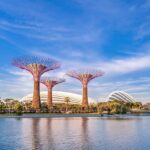
The tour starts with the skyline, because Singapore’s look is more than decoration. The city’s modern architecture is tied to how it plans for people, business, and identity all at once. When you look at places like Marina Bay Sands, it helps to think of it as a symbol: built to be seen, built to move people through an entire district, and built to project confidence.
You’ll also learn how the guide reads the skyline. That part matters. Lots of tours point at buildings and move on. Here, the focus is on what the design represents and how Singapore’s “future city” idea shows up in everyday life, including the food culture you’ll tackle next. It’s a smart pairing because food in Singapore is also about mixing influences, not copying one tradition.
And yes, you’ll want your camera here. Not because the views are just pretty, but because Singapore’s architecture photographs well from the right angles. Bring comfortable shoes, because a skyline “quick walk” still adds up.
You can also read our reviews of more food & drink experiences in Singapore

ArtScience Museum: lotus shape, tech mind
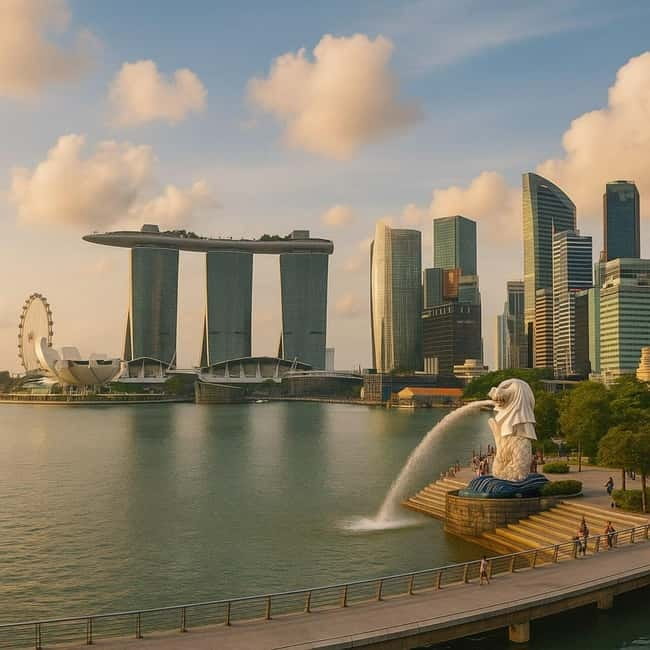
Next, you’ll head to the ArtScience Museum, known for its lotus-inspired form and for exhibits that sit at the intersection of art, science, and technology. Even if you only get time for the key areas tied to the tour, the building itself works as part of the lesson. It’s the kind of structure that makes you think about design choices as communication, not just aesthetics.
This stop is valuable for two reasons. First, it reinforces the tour theme: modern Singapore is built on creativity. Second, it gives your guide a natural way to connect “future-thinking” architecture with “future-thinking” food. Singapore chefs are known for balancing tradition and technique, and your guide uses that bridge so the tour feels like one story instead of two separate ones.
One practical note: parts of the experience are indoor and outdoor. So dress for both light sun and cooler indoor spaces. Water is worth it.
The food shift: from hawker culture to everyday Singapore
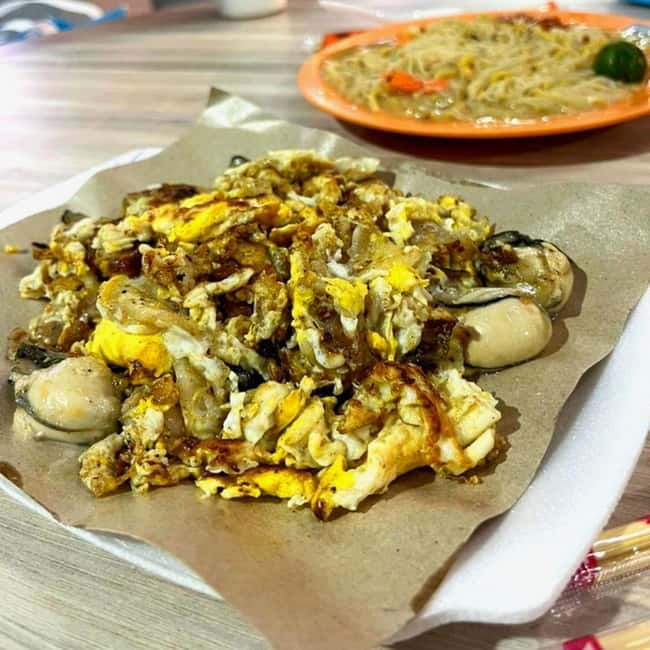
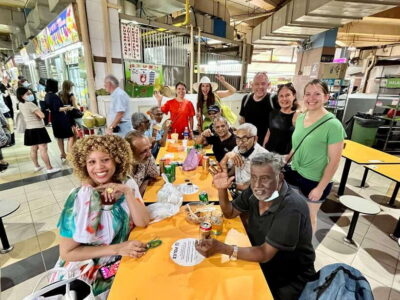
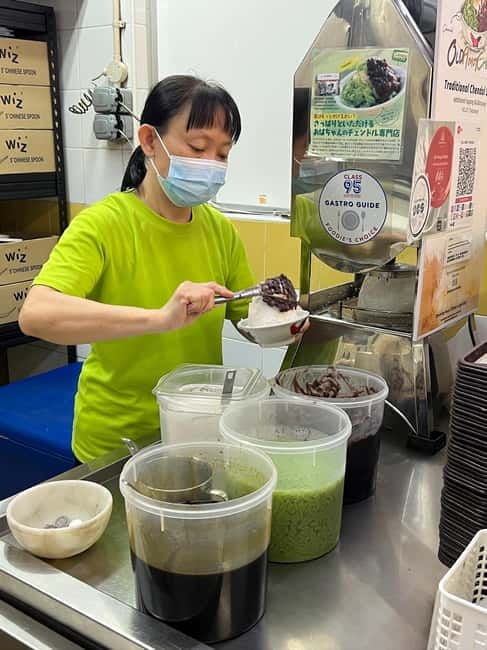
Then comes the fun part: food. This is not a buffet. It’s curated tastings that walk you through Singapore’s street-food logic and the multicultural roots behind it. Your guide will explain how hawker culture developed and why it matters culturally, not just gastronomically. In Singapore, hawkers are more than cheap eats. They’re social infrastructure. You see families, workers, students, and visitors all eating side by side, which is exactly the kind of “Singapore in one view” that fits this tour.
You’ll taste local favorites that many people use as entry points to the country’s food scene. The standout items listed include:
- Hainanese chicken rice
- Laksa
- Satay
I like the inclusion of these dishes because they’re familiar enough to be approachable, but different enough to show range. Chicken rice is comforting and simple in theory. Laksa gives you complexity from the broth and spices. Satay brings smoky, sweet-salty notes that work great as a street-food anchor.
If you’re someone who wants to understand what you’re eating, this tour is set up for you. Your guide provides insights into food traditions alongside the architecture.
Crazy Rich Asians flavor moments (without turning it into a gimmick)
Singapore’s pop-culture pull is real, and this tour leans into it carefully. You’ll enjoy food connected to scenes from the hit movie Crazy Rich Asians, including the idea of opulent meals and elegant desserts. The goal here isn’t to turn Singapore into a theme park. It’s to show how the same city can move between street-level hawker food and higher-end, showpiece dining.
Why that matters for you: it helps you “read” what you see once you’re back on your own. After this, you’ll recognize that Singapore can dress up for the cameras, but it keeps its core food culture rooted in tradition and constant movement.
Also, the tour is built around tastings rather than overstuffing you. You should leave fed, not exhausted.
Architecture detours: Helix Bridge, Esplanade, Merlion (if your route includes them)
Depending on the itinerary, you might also visit other iconic structures like:
- Helix Bridge
- Esplanade – Theatres on the Bay
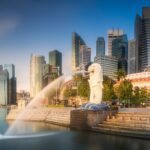
- Merlion
These aren’t just photo stops. Each one gives you a different angle on Singapore’s city identity. Helix Bridge adds a playful “biotech DNA” visual language. Esplanade brings in the arts and performance vibe tied to a landmark waterfront setting. Merlion is more of a cultural shorthand, a quick way to understand how Singapore packages identity for visitors.
The benefit of keeping these optional is that it supports the tour’s customizable feel. If you care more about design, you’ll likely spend more time on architectural interpretation. If you care more about food, your route can prioritize the tastings and the stories that explain them.
You can also read our reviews of more tours and experiences in Singapore

Customization that actually helps: built around your interests
One of the biggest strengths here is the personalization. The tour is designed to be tailored to your interests, which means you’re not stuck with a single rigid script. That’s especially useful in Singapore, where there’s a lot to see and a lot of it looks good on a map but not all of it connects to your personal “why.”
If you’re an architecture person, you’ll get the meaning behind what you’re seeing: why the skyline feels like it does, what certain buildings symbolize, and how design choices link to the city’s future-minded self-image. If you’re a foodie, you’ll get the why behind the dishes, including the origins and evolution of hawker culture and how multicultural influences show up in flavors and techniques.
And if you’re somewhere in the middle, you’ll like the structure: skyline, landmarks, museum, then food, with the guide acting like the connective tissue.
Small group energy (and what it means for your time)
This is a small group tour limited to 8 participants. That size matters in two practical ways.
First, questions don’t get swallowed. You can ask about what a dish is, how to order it later, or what you’re looking at on a building. Second, your guide can pace the route around your group, rather than forcing everyone to sprint between spots.
The listed guide languages are English and Chinese, which also helps if you want clearer explanations without the usual “tour speed-run” feeling.
From the feedback tied to the experience, one guide named EK earned praise for being extremely nice and for answering questions, even going above and beyond. If you get a guide with that kind of approach, you’ll probably feel comfortable asking follow-ups and getting specific suggestions.
What’s included, and where you might spend extra
You get:
- Guided tour of Singapore’s iconic architectural landmarks
- Tastings of local hawker favorites
- Multicultural cuisine food samplings
- Insights into Singapore’s food and architecture
You do not get:
- Transportation to and from the starting point
- Personal expenses
- Additional food and drinks not specified
- Fee to attractions
So here’s the honest value math. At $109 per person for 3 hours, a big chunk of what you’re paying for is the guided explanation and the curated tasting set. The food isn’t described as an open-ended “order what you want” situation. Instead, it’s selected for coverage: iconic dishes plus the architecture tie-in.
If you’re the kind of traveler who can snack on your own but wants real context, the price usually feels fair. If you plan to pay separate attraction entry fees and you’ll likely buy extra drinks or snacks beyond what’s included, the final cost climbs.
Logistics that can affect how smooth the tour feels
The meeting point is flexible because the tour is highly customizable, so you’ll coordinate with your guide. That’s good for fit, but it means you should plan to message ahead and arrive on time once you have the exact spot.
Wear comfortable shoes and plan for walking. Even a 3-hour tour needs enough leg time to move between skyline viewpoints and museum areas, plus the food stops. Bring a camera and water; the tour notes both for a reason.
One more thing: no pets, and smoking isn’t allowed.
Accessibility note: wheelchair access vs. mobility suitability
The experience is marked wheelchair accessible. At the same time, it’s also listed as not suitable for people with mobility impairments. That’s not something to ignore.
If you use a wheelchair or have a mobility limitation, I’d treat this as a “confirm details first” situation. Ask the provider or guide what routes and stops are planned for your specific day and whether any steps or longer walking sections are involved.
Who should book this tour (and who might skip it)
You should strongly consider booking if:
- You like the idea of pairing food and architecture in one guided thread
- You want tastings of key Singapore dishes like chicken rice, laksa, and satay
- You’d rather understand stories than just collect photos
- You prefer a small group pace (up to 8)
You might skip this tour if:
- You hate walking and need long, uninterrupted seating time
- You want full, all-inclusive attraction admissions and transport (those are not included)
- You’re extremely focused on one single landmark and don’t care about the food context
This is also a good option early in your trip. It gives you a framework for what to look for when you explore on your own.
Should you book Singapore: Architecture and Food Tour with Tastings?
Yes, if you want a practical mix of skyline viewing, landmark context, and tastings that teach you what matters. The best part is the connection: you’re not just eating and sightseeing in parallel. You’re learning why Singapore’s buildings and dishes grew into the city’s signature style.
Check the one big “maybe extra” item in advance: attraction entry fees and any additional food or drinks. If you’re comfortable with that, the $109 for 3 hours looks like solid value because the tour covers guided architecture plus a structured tasting set, not a DIY wandering game.
If you book, bring your camera, your water, and your curiosity. And if your guide is EK or someone with a similar approach, you’ll likely get the kind of Q&A that turns a nice tour into a memorable one.
FAQ
How long is the Singapore Architecture and Food Tour with Tastings?
The tour duration is 3 hours.
How much does the tour cost?
The price is listed as $109 per person.
What languages are the live tour guides?
The guide is listed as available in English and Chinese.
What food will I taste on this tour?
The tour description includes tastings of local hawker favorites such as Hainanese chicken rice, laksa, and satay, plus additional multicultural cuisine samples.
Is transportation included to and from the tour starting point?
No. Transportation to and from the starting point is not included.
Are fees to attractions included?
No. Fees to attractions are not included.
What should I bring with me?
Bring comfortable shoes, a camera, and water.
Is the tour wheelchair accessible?
The activity is marked as wheelchair accessible, but it is also listed as not suitable for people with mobility impairments. If this applies to you, it’s best to confirm your route details with the guide or provider.
How big is the group?
It’s a small group limited to 8 participants.
What is the cancellation policy?
You can cancel up to 24 hours in advance for a full refund.